

 admin
admin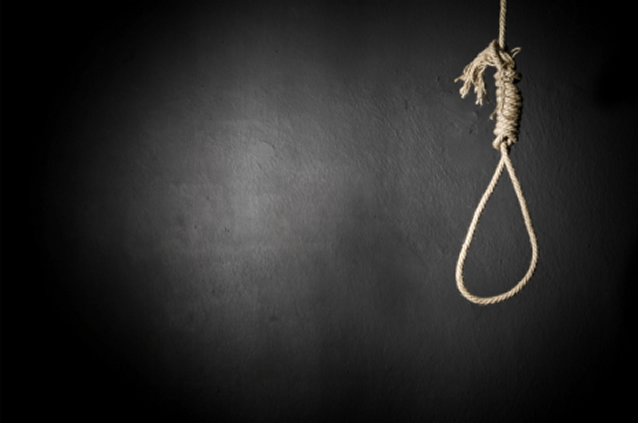
Blessing Musariri Shelling the Nuts
English composition was my favourite subject at school. The first memorable story I wrote was called The Hunt. It might have been called The Hunter, I don’t clearly recall. What I do recall, however, is that in Grade Five, we no longer had to accompany our compositions with drawings, but this story moved me so much I did one anyway. It was a surrealist rendition of a forest in which a hunt was taking place, or was it? This story was my first foray into magical realism married to stream of consciousness and to be honest I don’t know where it came from. I expected a bad grade from the teacher for straying so far from what was conventional, but I didn’t care. I was excited about what I had produced even though I didn’t quite know what it was. I do believe I was given an A.
Many years later, I find that this Grade Five pupil is still sitting somewhere in a corner of my head scribbling and scattering her interrogative impulses like breadcrumbs for me to follow, and follow them I do. When I started attending writing workshops, I kept hearing the advice that I should write what I know. The trouble with that is that the things I knew didn’t interest me quite as much as the things I didn’t know, the things I would like to explore and try to understand.
These are the things my 11-year-old muse keeps inciting me to write about, the mysterious, the present but invisible and what possibly lies beyond every horizon. Does this then mean that I am failing to live in the present and appreciate it for what it is, that I am not a realist? This, however, is a debate for another time.
I write to question the things I don’t know. The first and most compelling of these mysteries is death. I have long been fascinated by death. Not the process or the aftermath or even the ways of dying, but the simple fact that while you are living, you cannot even begin to fathom what it means to no longer exist in the form to which you have become accustomed.
Life itself is difficult enough to understand, so much so that some people fail to cope and choose death, and herein lies the paradox. Four years ago, my younger sister who was 22 at the time told me a friend of hers had committed suicide. I asked her if she knew why the girl had taken her own life. She said she didn’t know and neither did anyone else. She had closed herself somewhere away from home, messaged a few friends and seemed cheerful, telling them to have a great weekend, then she hung herself. She didn’t leave a note. No one guessed that it was something she might do. Much later, after the funeral, I asked my sister if anyone had ever discovered why her friend killed herself and she replied in the negative. By this time everyone had expounded their theories of what could have caused the suicide, but no one knew for sure. I began to think of all the other stories I had heard of young people taking their own lives and this bothered me deeply. I wondered if knowing why a person chooses to take their life, made it better. I explored in my head what it must be like for the parents left behind, with no answers, especially in a case where the suicide is totally unexpected.
All this wondering and wandering led me to write the story, Eloquent Notes on a Suicide: Case of the Silent Girl.
My 11-year-old muse took me back down the path of stream of consciousness, put me inside the head of a retired police detective who, in a coma, on his death bed and in his very last hour, relives, in between snatches of self-reflection, his investigation of a suicide case that had no answers for anyone and that greatly troubled him because the young girl in question had not spoken a word to anyone in years. Now I knew a girl like this. A girl who spoke to no one, no matter the provocation. She stood tall and straight and was unmoving, in every way. She didn’t seem sad, or depressed and I say this because there is an air around people who are sad and or depressed, their energy speaks for them. This girl simply seemed absent. As if perhaps her spirit had found itself lost in this dimension and unable to navigate and so, was simply waiting for a chance to transition. Is this what happens maybe? Counselling information tells us that, among other things, young people who are thinking about suicide might talk about suicide, or death in general.
They might talk about going away, about feeling guilty and/or hopeless, finding everything too difficult to bear and that they can’t take it anymore. What then, when the signs are just not there or when they are undecipherable?
Back in the story, retired Inspector Chawabata examines his own life, with his wife and children, his own upbringing, that of mission school boarding and strict rules and regulations.
His unexceptional expectations of his own life and the things he long accepted as well as those he neither questioned or completely accepted, mainly his religion and the traditional spiritual beliefs he finds he never completely rejected, now come to visit him in the hour of his death. Everything mingles peaceably in his failing mind except the question of the suicide that nobody could explain.
Of course, as is usual in our society, everyone had their own theory, mixing superstition, opinion and fact to come up with individual conclusions. As an investigator of the truth, Inspector Chawabata is not satisfied with what he senses is not exactly a cover up or any kind of foul play, but something which should have some kind of reasonable explanation. A young girl speaks to no one for years, except her younger sister who appears prone to flights of fancy and is not entirely credible in light of the fact that she is the only person who claims to ever have conversed with her older sister before her death.
The younger sister claims that they used to talk about Adam and Eve from the Bible and the Garden of Eden. Inspector Chawabata himself finds in the end that while he followed Christian teaching, he is ambivalent and willing to entertain other ideas, especially at that point. This brings in the second of my fascinations, religion, tradition, belief and things of the spirit.
Every culture has beliefs that are rooted in the fact that there exists beyond the physical, a force greater and inexplicable to current human understanding, that is the reason for who and what we are.
How this manifests and how the existence of this other is observed is what differs and this is where all the conflict lies. Internal conflict which ultimately translates to external clashes in the world. Why do we require others to believe as we believe to the extent that we would kill and persecute them in order to convince them that what we believe is what is right?
Is it perhaps because if we all believe the same thing then no one needs to worry about possibly being wrong: If we are all Christians or Muslim or traditional and believe in the same thing this makes it true and we can relax knowing that it all makes sense to everyone else and that when we die it’s all sorted. Are religious clashes just a manifestation of the internal insecurities of our own beliefs, of our own struggle to understand what it means to be alive?
Does life have no reasonable explanation then, that we should so question death? In the end it is two sides of the same coin. Does what we believe in, in life determine where we go when it all ends? No one knows for sure. We’re just making it all up as we go along and we depend on consensus to attest to the fact that indeed we are alive and that I exist because you exist and this is what it all means. Does it then follow that when I cease to exist, you too cease to exist? How can this be when you are left behind to question everything? Maybe we are the dead and those who have gone are now living and it’s only a misplaced sense of faith that keeps us believing in the validity of our illusions.



 Online Reporter