

 admin
admin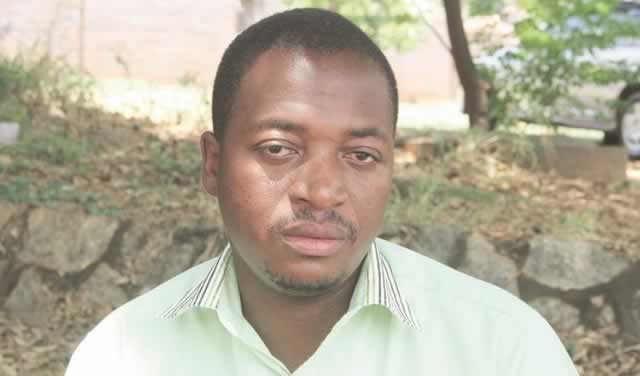
THE INTERVIEW Dian Nherera
Junior and middle level doctors went on a three-week strike over “poor salaries” and other working conditions. Some senior, provincial and district doctors also joined the strike, further crippling the country’s health delivery system. On Thursday, the Zimbabwe Health Doctors Association held meetings with its members countrywide resulting in doctors resolving to immediately return to work. Features Correspondent Diana Nherera (DN) spoke to ZHDA president, Dr Fortune Nyamande (FN) about the just ended strike by junior, middle level and some senior doctors working in Government referral, provincial as well as district hospitals.
DN: What is ZHDA’s role and what are your aims and objectives?
FN: ZHDA is a representative body for all doctors working in Government hospitals. It represents the interests of all our members. As ZHDA, we partner with Government and the private sector in attaining the right to health in Zimbabwe. We are also involved in advocacy, research and social responsibility programmes.
DN: When was the Zimbabwe Hospital Doctors Association formed and for how long have you been the president?
FN: ZHDA has been there since independence in 1980. I am part of a new executive that was recently elected and I have been president for a month now.
DN: How many members are there in ZHDA and who elects them?
FN: There are eight members forming ZHDA, four in the executive who include the president, vice president, secretary-general and the treasurer.
The four other doctors are stationed at other Government hospitals.
Members are elected by qualified medical practitioners working in Government hospitals around the country. Elections are held on an annual basis.
The previous ZHDA executive comprised Dr Arthur Mhizha from Chitungwiza Central Hospital, Dr Innocent Chikumi and Dr Bothwell Musarurwa, both from Parirenyatwa Group of Hospitals.
DN: Is ZHDA another doctors’ body or the same as what was previously called the Hospital Doctors’ Association?
FN: Hospital Doctors’ Association is the same doctors’ body that changed its name to the Zimbabwe Hospital Doctors’ Association to give it a national outlook.
DN: Since your term in office, what has ZHDA achieved and what do you hope to achieve future?
FN: Since we have been elected into ZHDA, we have worked on the improvement of doctors’ welfare in Zimbabwe. We have effectively mobilised communication through the establishment of a database for all doctors working in Government hospitals. ZHDA is embarking on community responsibility programmes such as those on HIV and Aids, doctors offering free advice and free consultation to those affected and infected by the scourge.
DN: Regarding the just ended strike, tell the readers about doctors’ grievances and what steps ZHDA took in communicating with your employer, the Health Services Board before you downed tools.
FN: The basic salaries of doctors are very low — $282 a month. The on-call allowance before Government rectified it this week and what we await in our January 2015 payslips was highly insulting to our profession. We are supposed to occupy hospital residences but because there is no space to build more flats, doctors have to look for accommodation elsewhere near the hospital they work at. This then requires Government to provide allowances for accommodation so that they can stay near hospitals. We are currently getting $250 a month and there are no flats with rentals that low near Parirenyatwa Group of Hospitals. Doctors no longer have a facility which allows them to buy cars duty-free. Government needs to be realistic and give us a reasonable transport allowance. Doctors should have a risk allowance because during the execution of their duties, they are at danger of catching diseases.
DN: Can you shed more light on what a risk allowance entails and why doctors think they deserve it?
FN: All health professionals are exposed or are at risk of contracting diseases when they are discharging their duties for example, tuberculosis can manifest after two to three years after catching it and if a doctor accidentally pricks themselves with a needle, they can contract HIV.
In the case of Ebola, if it is ever detected in the country, doctors are at great risk of dying from it. There should be an acknowledgement by Government that doctors work in an environment with risks.
DN: Government has accused doctors who were on strike of not following proper procedures, can you comment on that?
FN: I cannot comment much on that as it would jeopardize our on-going negotiations. All I can say is ZHDA has done its best in its negotiations, both formally and informally, which has resulted in Government rectifying some of the doctors’ allowances.
DN: Would you say that the current negotiations between ZHDA and Government are bearing fruit?
FN: Partly, because we have what has been put on the table, which is this week’s rectification of anomalies in some of the doctors’ allowances.
What Government offered doctors is bound by a date but falls short of doctors’ expectations. Because our patients were being turned away at hospitals due the shortage of manpower caused by the just ended strike, our members have decided to return to work. Doctors are making a painful sacrifice. The ball now is in the court of our employer, the Health Services Board.
DN: Do you think that doctors will have their demands met by the Health Services Board, for example, do you think junior doctors will get the $1 200 that they are demanding?
FN: Starting from next week, ZHDA will begin negotiating on salaries, housing allowances, and the duty free allowance for doctors to purchase cars, as they are still outstanding. Negotiations are still ongoing and ZHDA hopes that with the sincerity that doctors have shown, there will be a compromise on Government’s part.
DN: How many doctors are offered accommodation at Parirenyatwa Group of Hospitals, for example?
FN: There are about 60 doctors that have accommodation at Parirenyatwa Hospital out of more than 100 doctors.
DN: Do you have any parting words?
FN: As doctors, we are working under difficult conditions. The fact that we have returned to work is a huge compromise on our part because Zimbabwean doctors are the most dedicated to their work than any other country in Africa. Government needs to critically look at the challenges of doctors. The ball is in Government’s court and come January 2015, doctors hope that they would have upheld what they offered us, which is the rectifying of anomalies in some of the doctors’ allowances.


 Online Reporter