Vusumuzi Dube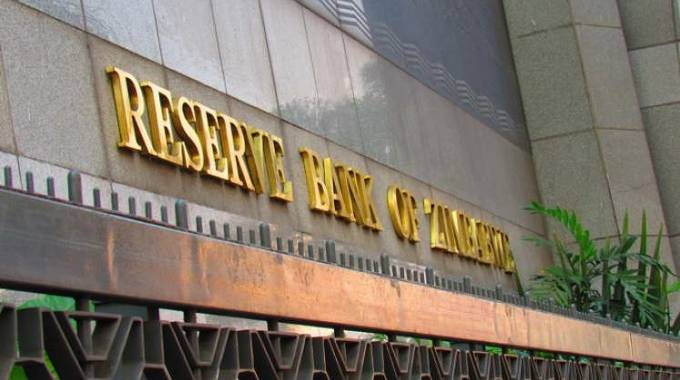
Nqobile Bhebhe, Zimpapers Senior Business Writer
THE Reserve Bank of Zimbabwe (RBZ), together with the banking sector and key stakeholders is fully geared for a seamless rollout of the enhanced BiG5 ZiG banknotes on Tuesday.
All banks have reportedly already collected their allocations, as authorities intensify a targeted push to deepen uptake, particularly in the southern region where the central bank has adopted a deliberate strategy focused on outreach, education and building trust in the domestic currency.
The much-anticipated injection of the upgraded BiG5 ZiG notes marks a significant step toward consolidating confidence in the country’s domestic currency, amid growing adoption across the economy.
Commercial banks have been adequately prepared to distribute the new notes, upgrade their systems where necessary and guide their customers through the transition.
Officials say the uptake of the ZiG has continued to strengthen from the initial transactional usage, which stood at around 26 percent at inception on 5 April 2024, to current levels above 40 percent.
A recent survey — ZiG Perception and Confidence Survey II commissioned by RBZ from 29 August to December 31, 2025 revealed that Zimbabweans are now keeping the ZiG for much longer periods than before, owing to its appreciating value and prolonged stability.
In a detailed written response to the Sunday News, RBZ Governor Dr John Mushayavanhu said the central bank has put in place comprehensive logistical, security and operational frameworks to ensure a seamless rollout.
He noted that the central bank has also encouraged retailers such as supermarkets, pharmacies, hardware, among others to offer cashback facilities to their customers.
“The Reserve Bank, in partnership with the entire Banking System, is fully prepared to handle all the logistical, security and other arrangements required for the rollout of the new and upgraded BiG5 ZiG banknotes. All banks have since collected their share of the new banknotes,” said Dr Mushayavhanu.
“The new notes will be available through Automatic Teller Machines (ATMs) and banking halls. The Reserve Bank has also encouraged retailers such as supermarkets, pharmacies, hardware, among others to offer cashback facilities to their customers.
“In addition, for customer convenience and increased usage of the local currency, cash withdrawal limits have since been increased to ZiG10,000.00 for individuals and ZiG100,000.00 for corporates per week.”
The central bank has long emphasised that the introduction of the new notes will be demand-driven and not inflationary, as banks will exchange electronic balances for physical cash without increasing reserve money, a move designed to safeguard price stability.
Added to that, economists say the timing of the roll-out is critical, coming at a period when inflation has remained in single digits and monetary authorities have maintained tight liquidity management. The ZiG has also benefitted from growing foreign currency reserves and a convergence between the parallel and official exchange rates, reinforcing confidence in the domestic currency. In March, Finance, Economic Development and Investment Promotion Minister Professor Mthuli Ncube gazetted new ZiG banknotes with enhanced security features.
The Statutory Instrument gave legal effect to the new notes, which will enter circulation on Tuesday, featuring advanced anti-counterfeiting measures including intaglio printing, magnetic security threads and colour-shifting elements.
The enhanced notes comprise of ZiG10, ZiG20, ZiG50, ZiG100 and ZiG200 Banknotes.
According to the SI, the new Ten ZiG and Twenty ZiG bank notes shall co-circulate with Zig10 ZiG20 bank notes issued under Statutory Instrument 60 of 2024 for an indefinite period.
The rollout comes at a time when the local currency is steadily gaining traction, underpinned by policy consistency and improving macroeconomic fundamentals.
Dr Mushayavanhu said the ZiG has recorded notable growth in usage since its introduction in April 2024.
“The Reserve Bank has observed a steady and encouraging progression in the adoption and usage of the ZiG across the economy, both for day to day transactions and for savings purposes since its introduction on 5 April 2024.
“Precisely, the uptake of the ZiG has continued to strengthen from the initial transactional usage, which stood at around 26 percent at inception to current levels above 40 percent. This upward trend reflects growing market confidence, supported by the Reserve Bank’s commitment to prudent money supply management and enhanced transparency in currency management,” he said.
The central bank expects further gains in local currency demand driven by complementary policy interventions.
“These include the Government’s roll out of the National Standard Price List (NSPL) which is a key tool in promoting price uniformity and reducing arbitrage in public procurement as well as the requirement for corporates to settle 50 percent of their tax obligations in local currency.
“Both measures are aligned with the Reserve Bank’s strategy to reinforce stability and strengthen the role of the domestic currency in the broader financial ecosystem.”
Findings from the 2025 ZiG Perception and Confidence Survey also point to strengthening trust in the currency, with economic agents increasingly holding ZiG balances for longer periods.
“This behavioural shift signals growing confidence in the local currency as a reliable store of value, consistent with the stabilisation outcomes the Bank has been targeting,” said Dr Mushayavanhu.
In border regions such as Matabeleland North and South, Chiredzi and parts of Manicaland, where the South African rand and Botswana pula are widely used, the RBZ governor acknowledged the continued influence of proximity-driven currency preferences.
“The dominant use of the South African Rand and the Botswana Pula in border regions such as Matabeleland North and South, Chiredzi and parts of Manicaland is consistent with the multicurrency system currently in place and proximity of economic agents to these neighbouring countries.
“As a result, residents in these areas mainly use the ZiG for domestic transactions and foreign currencies of a proximity country for the ease of cross-border trade and remittances.”
To address this, the RBZ has implemented targeted interventions to boost local currency uptake.
“In order to strengthen the uptake and acceptance of the ZiG in these regions, the Reserve Bank adopted a deliberate strategy focused on outreach, education and building trust in the domestic currency.
“Over the past two years, the Reserve Bank has conducted extensive awareness campaigns highlighting the benefits of using the local currency, particularly its role in supporting local economic activity, reducing transactional bottlenecks, and enhancing price competitiveness for domestic businesses.
“These engagements have contributed to a noticeable increase in ZiG usage even in areas where foreign currency traditionally dominated,” added Dr Mushayavhanu.
The central bank recently intensified these efforts through a nationwide campaign targeting border communities.
“The Reserve Bank anticipates further improvements following the recent month long intensive awareness programme, which targeted border districts through community engagements, radio programmes, business stakeholder meetings, and distribution of educational materials.
“This outreach coincided with the current period of sustained macroeconomic stability which is marked by low and stable inflation as well as stable exchange rate. This stability has helped preserve the purchasing power of the ZiG, with prices of goods and services remaining relatively predictable. The combination of consistent policy execution, improved communication, and a more stable economic environment has therefore played a critical role in strengthening acceptance of the ZiG in border regions.”
As the rollout date approaches, the RBZ says it has also undertaken extensive preparatory work to ensure smooth nationwide adoption of the enhanced notes.
“With the introduction of the enhanced ZiG notes on 7 April, the Reserve Bank has put in place a comprehensive set of measures to sustain and deepen public confidence, improve usage and consolidate the stability gains achieved to date.
“Over the past month, the Bank conducted an intensive nationwide awareness campaign, which ran until 31 March 2026. Public reception across all provinces was overwhelmingly positive.
“The campaign reaffirmed that confidence in the ZiG continues to strengthen, with many participants acknowledging that the currency has demonstrated a level of stability not previously experienced with earlier local currency frameworks. This outreach also helped increase understanding of the enhanced security features of the new notes and the role of the ZiG in supporting broader economic stability.”
Dr Mushayavanhu stressed that to ensure seamless adoption of the enhanced notes, the Reserve Bank has also been working closely with the banking sector.
“Commercial banks have been adequately prepared to distribute the new notes, upgrade their systems, where necessary, and guide their customers through the transition. This readiness, supported by coordinated communication between the Reserve Bank and financial institutions, is intended to ensure a smooth and uniform rollout across the country.”
As the country transitions to the new enhanced notes next week, authorities are confident that the combination of strong institutional preparedness, sustained policy discipline and growing public trust will anchor the ZiG’s continued uptake and stability.


 Online Reporter