Vusumuzi Dube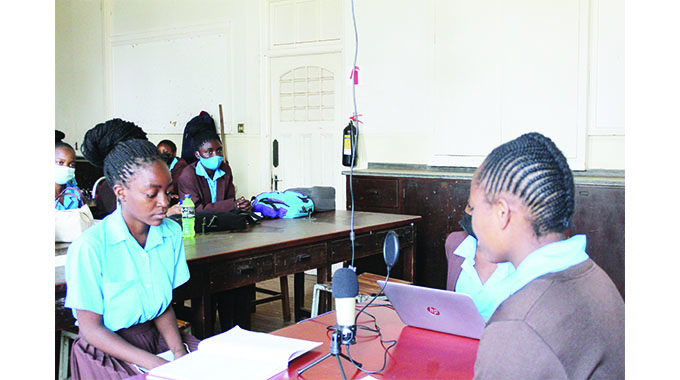
Joubert Ngwenya
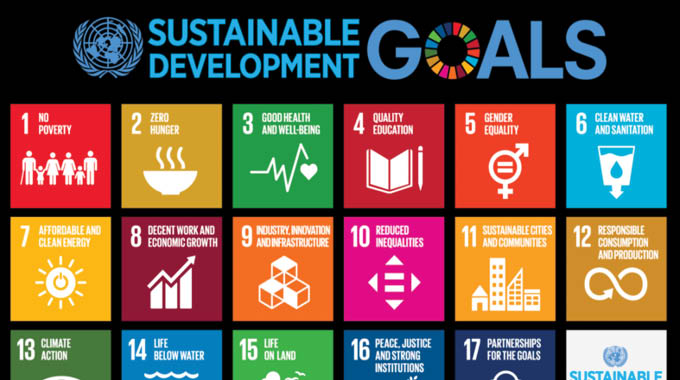
As the destination towards the Sustainable Development Goals (SDGs) gets closer, I paused and reflected on how, as a child, I excelled in an education system that I now view as rigid, outdated, and unresponsive to individual learner needs and strengths, as well as local and global competences.
A glimpse into the Nziramasanga Commission Report (1999) and the curriculum review of 2014-2017 spells hope for the future. One will agree with me that the Nziramasanga Commission Report is itself outdated, being more than 20 years old but what was borrowed into the Curriculum Review of 2014-2017 shows how the commission was on track.
Today, as an adult, with more than 10 years of experience as an educator, I am more passionate about seeing a competence-based education system in Zimbabwe that ensures that children are able to achieve their individual education and life goals.
One of the ways that I believe the system can be improved is through the proper implementation of Continuous Assessment Learner Activities (CALA) hereafter continuous assessments. With two years’ experience implementing continuous assessments, I find this a better form of assessment as it is learner-centred, enabling teachers to identify and develop individual skills in learners.
They provide autonomy to the teacher, enabling them to tailor their teaching methods to the needs of each individual student. Additionally, continuous assessment helps learners develop transversal skills, which are essential in the 21st-century economy locally and globally. In an era where knowledge is almost easily accessible (at least in urban settings and within communities that can afford the internet), developing life skills presents a logical way to address national and global challenges as the economies and the society no longer dictates what you know, but what you can do.
The traditional classroom and examination based summative assessments lack individual attention and customisation, which can be a major obstacle to most students’ success. With the national average pass rate always below 30 percent in the past 10 years, does that not call for better assessment methods?

The implementation of Continuous Assessment Learner Activities can help address this problem, by allowing teachers to identify and develop individual skills in learners, and by promoting the development of transversal skills that are essential in the 21st century economy.
Despite the potential benefits of continuous assessments for the learner, the teacher and the wider economy, there is still a great deal of resistance to their implementation.
This resistance is multi-dimensional and stems from a variety of sources. Parents and guardians, for example, often do not understand that education and learning go beyond the walls of the classroom. As a result, schools are seen as “baby-dumping sites” where children are simply deposited for the day, and the parent expects miracles at the end of the term or year.
Parents should co-operate with schools and teachers to ensure that their children’s learning extends beyond the classroom and the school, as educational institutions only play a co-ordinating role for a child who will have more of their life out of school.
Another challenge lies with the teachers themselves. When continuous assessments were first introduced, there was little professional development and training done to prepare teachers for their implementation.
The training that was offered was not well-co-ordinated or effective, and many teachers were left feeling ill-equipped to implement continuous assessment in their classrooms. Today, an average teacher still considers continuous assessments as a burden yet, from my perspective, I had fun as I witnessed the joy of learning among learners, not forgetting to add that my teaching burden was reduced as I used the assessments as a “learn to learn” method, albeit with challenges because of the general negativity and stigma.
Fortunately, it is not too late to reconsider the training and make this form of assessment work. This highlights the need for comprehensive and effective in-service teacher training programmes that can equip teachers with the necessary skills and knowledge to implement new teaching methods.
Going back to my primary and partly secondary education, I am persuaded to believe that one of the major successes of our education system was the motivation of our teachers. Being the closest profession we were close to, it was a no-brainer that we wanted to be teachers too.
As such, another very important aspect of reviving our education system is incentivising. On this one point, I will not say more, at least for now! That said, the success of any policy implementation is the strength of its human resources and the wider social capital.
In conclusion, let me stress that the introduction of the Competences Based Curriculum might have come at a time when the teachers were at their lowest point, when the average parents had mistrust in the curriculum review, looking at it from a “future of work” and “future of education” perspective, the time was ripe.
The overt and covert resistance from the educators to the parents to the students, only came from some of the shortcomings highlighted here. The bad news is, we may further sink in our educational goals and miss the 2030 SDGs target on quality education. The good news is, we can still look back at our shortcomings from the Government level down to the learner in Early Childhood Development and take the corrective steps.
Jobert Ngwenya is an award winning educator, Fulbright TEA Fellow, National Geographic Education Grantee, author and academic audio content creator. He holds an MA in Development Studies (MSU), Bachelor of Arts (UZ) and Post Graduate Diploma in Education (ZOU). He can be contacted by email on jobert.ngwenya@gmail


 Online Reporter