

 admin
admin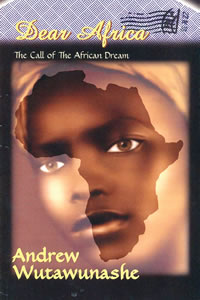
some cases, a slavery prompted by forces that are larger than life. Has Africa forgotten who it is and whence it came from? If Africa is in a state of amnesia, how can it dream, and more critically, how can it chart its future course?
Psychological bondage is the most dangerous, which the enemy can use against Black people, making them believe that they are the world’s second class citizen, the wretched of the earth who are so cursed that the only thing they are good at is saying “yes baas”.
Five decades after the first African country attained independence and more than four centuries after the genocidal slave trade and colonialism, Africans and Black people everywhere are still unable to say in unison, “they stole us; they sold us (and) they owe us reparations”. Meanwhile, the Jews are doing that with the holocaust, but it is as if Black people have been sworn to secrecy!
A case in point is the Sepp Blatter issue. The president of the world’s soccer governing body Fifa is so blind to the naked racism that goes on in a sport that unites millions across the globe, and some Black people who have been victims malign with him.
Last week, Blatter denied that racism is an issue and said any race-related incidents during games should be settled by a handshake. A HANDSHAKE INDEED!
He told Al Jazeera, “After the 2010 World Cup in South Africa, it was my opinion that racism, discrimination has disappeared because the World Cup proved that you can connect people.”
The election of the United States of America’s first Black and African president Barack Obama has also made some people argue that racism is no longer an issue.
It feels good defending racism just like one reviewer wrote about the African-American author Terry McMillan’s “Disappearing Acts”: “McMillan enriches our knowledge of other people’s lives by writing about relationships rather than race.” This paternalism has silenced many Black people as they are made to believe that in a world with competing and diverse viewpoints, the best thing is to accommodate.
But, a recently published book, Dear Africa: The Call of the African Dream by a leading man of God Andrew Wutawunashe and published by Xlibris Corporation is a reawakening. Wutawunashe has written this letter to Africa. Letters by nature are personal, appealing and passionate outpourings of feelings – sometimes pain, and in other cases joy. They can be long or short.
Some letters convey a mood and feeling that leaves an indelible mark on the reader. Letters also need to be acted on. You don’t just file it away.
Letter writing can be laborious and time consuming. It also requires patience and good will, doing it with the hope that the person receiving the letter will benefit from the contents. The pros and cons did not deter Wutawunashe from using this unique technique to address some fundamental issues facing Black and/or African people. Thus, Dear Africa is a journey in the past, the present and the future. It raises critical issues, which are regarded as inconsequential in some quarters.
In Dear Africa, Wutawunashe tells readers that lest they forget, as Africans they have a rich history, which does not need to be narrated by third parties; and, the continent is richly endowed with mineral resources and a human resource base.
Wutawunashe reminds Africa that it has heroes and heroines whose achievements still have to be celebrated and should inspire various generations. Some were visionaries, freedom fighters and experts whose dreams would change the state of the African and the Black person. Dear Africa says, Africa has to wake up from its slumber and start addressing critical issues from a self-knowledge and self-appreciation.
That Wutawunashe chose the letter writing mode to address Africa and Black people’s issues speaks of someone who has reflected on the African state and made a number of pointers, while at the same time encouraging Africa to look at its strengths rather than concentrating on self-pity.
In the preface he says, “I hope you are one of those enlightened people who are concerned about the state of the Black people, people of African origin who are both on the African continent and in all nations of the world. It is with this reference to this people that the term ‘Africa’ or ‘African’ is used throughout this book.”
Wutawunashe says, Dear Africa is “a letter to all Black people and to those who choose to be their partners, to help them understand the strategic areas that need to be dealt with for the rise of Black people.”
Wutawunashe’s reflective mood mirrors what Gerald Stern said in ‘When I have reached the point of suffocation’: “It takes years to learn how to look at the destruction of beautiful things; to learn how to leave the place of oppression; and to make your own regeneration out of nothing.”
However, he draws inspiration from an expansive historical and spiritual base in the African cauldron, a history which he vividly brings to life and cautions Africa about the tragedy of forgetting that history, let alone allowing other people to tell their narratives using terms that are not representative of their being.
In Dear Africa, Wutawunashe is nudging Africans to wake up from their slumber and realise that they have a God-given right to lift themselves up with pride.
The African story has been told by other people for too long and in a majority of cases with glaring distortions. So, Wutawunashe says, “It is to you that I write, for you are my people, my natural family – I am part of you – you are close to my heart. I am, because you are . . . Your prosperity, your peace and your dignity is my exaltation. Your division and weakness is my undoing. Your unity and strength is my making my livelihood.
“Dear Africa, you are not just a line encircling a piece of land on the world map. You are every Black man, woman and child on the face of the earth who originated from this continent. You are the Jamaican, the Haitian, the West Indian, the Black Brazilian and the African American. Some of us may not live on your ground, but you live eternally in our hearts, in our minds, in our blood and in our veins.”
He ends with an emotive call to action, “Dear Africa, rise up, for the future lot of your youth and children depends on the path you now take. Your people may be silent, but they have strong dreams and there are fires of hope in their hearts. They look on with expectation that leaders will arise and take them to the Promised Land. Why do you sleep? Arise, build yourself up and fight for yourself, dear Africa. It is time!”
This is an endorsement of Bob Marley’s prophecy in “Redemption song”, an immortalised rally to action for Black people everywhere to stop acting like victims.
. . . Emancipate yourselves from mental slavery
None but ourselves can free our minds
Have no fear for atomic energy’
Cause none of them can stop the time
How long shall they kill our prophets
While we stand aside and look?
Ooh Some say it’s just a part of it
We’ve got to fulfil the book
Won’t you help to sing
These songs of freedom?
Dear Africa is also the icing on the cake of what the Algerian Franzt Fanon says in ‘The Wretched of the Earth’: “Europe undertook the leadership of the world with ardour, cynicism and violence. Look at how the shadow of her palaces stretches out ever farther! Everyone of her movements has burst the bounds of space and thought . . . So, my brothers, how is it hat we do not understand that we have better things to do than follow the same Europe? . . . Let us not decide to imitate Europe; let us combine our muscles and our brains in a new direction. Let us create the whole man, whom Europe has been incapable of bringing to triumphant birth.”
With Dear Africa, Wutawunashe joins great visionaries like Amilcar Cabral, Marcus Garvey, Malcolm X and many more for he believes that the African dream is not a mirage. The 159-page volume with graphics and anecdotal information is a must read for every Black person and African who knows that the season has indeed arrived.



 Online Reporter