Moffat Mungazi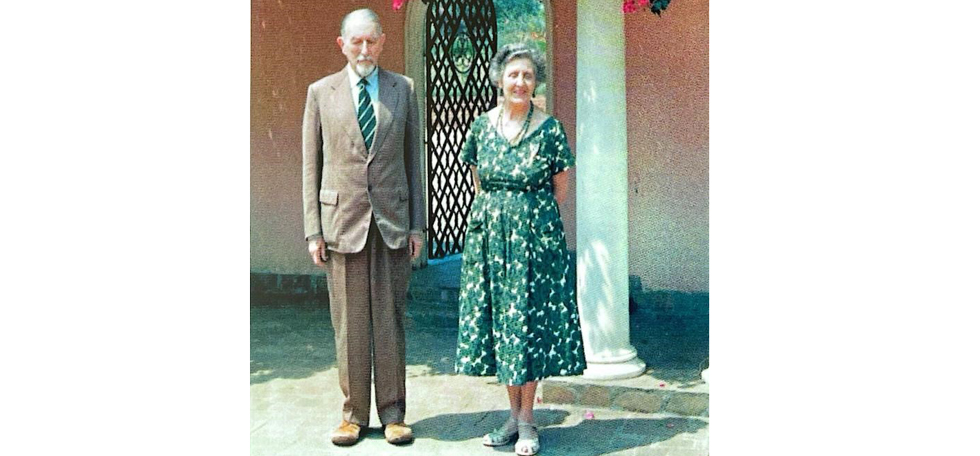
Lloyd Makonya
Correspondent
THE recent repossession of Courtauld Theatre by City of Mutare marks more than the conclusion of a legal battle, it signifies the revival of a powerful legacy left by two remarkable benefactors: Sir Stephen and Lady Virginia Courtauld.
Their philanthropic vision transformed the cultural and civic landscape of Umtali, as Mutare was then known, and their contributions continue to shape the city’s identity to this day.
Sir Stephen Courtauld, a member of the renowned British textile dynasty, and his wife, Lady Virginia settled in Penhalonga in the 1950s, establishing their estate at La Rochelle.
Their move to Southern Rhodesia (now Zimbabwe) did not signal retirement from public life, rather, it was the beginning of a new chapter of civic and cultural investment in the Eastern Highlands.
Driven by a shared love of the arts and deep social conscience, the Courtaulds became instrumental in funding and developing several key institutions in the region.
At the heart of their vision was a desire to uplift local communities through culture, education, and access to quality infrastructure.
One of the most visible and enduring symbols of their generosity is the Courtauld Theatre.
Fully funded and built through the Courtaulds’ patronage in 1955, the theatre was designed as a hub for the performing arts, a place where theatre, music, and community gatherings could thrive.
The building quickly became a jewel in Mutare’s civic life, attracting performers, artistes, and audiences from across the country.
It represented more than just bricks and mortar, but a beacon of cultural pride, creativity, and cosmopolitan aspiration, built to international standards and offering world-class acoustics and design.
It became a nurturing ground for artistic talent and a cornerstone of the city’s cultural identity.
Beyond the arts, the Courtaulds extended their generosity to the realm of public administration.
In 1959, they provided an interest-free loan to the Umtali Municipality for the construction of the Civic Centre.
This gesture which is uncommon in any era, demonstrated their deep commitment to supporting public service infrastructure in the city.
This act, not only enabled the establishment of a vital administrative hub for the city which still stands up to this day, but also laid the groundwork for orderly urban development, allowing Umtali to grow with dignity and foresight.
The Courtaulds in 1957 also supported the construction of the Queens Hall now known as Mutare Hall.
In recent years, Courtauld Theatre suffered under unauthorised occupation, neglect, and misuse.
The deterioration of the structure and the deviation from its original purpose caused public concern. What was once a sanctuary of the arts had become a source of contention and disrepair.
Following a recent much publicised ruling by the Supreme Court of Zimbabwe, the City of Mutare has finally regained control of the theatre.
This resolution, not only restores public ownership of the historic venue, but also protects the legacy of its original benefactors.
The city’s plans to renovate the facility and integrate it with the Mutare City Museum promise a future in which the theatre once again becomes a place of inclusion, creativity, and cultural enrichment.
As the city moves forward with its restoration plans, it is imperative to remember the values that inspired the Courtaulds, which were equity, education, civic pride, and access to the arts.
Their contributions were, not acts of charity, but investments in a shared future, a belief that culture and community go hand in hand.
Today, Courtauld Theatre, Queens Hall and Civic Centre stand, not only as architectural landmarks, but as moral reminders of what generosity, vision, and partnership can achieve.
As the City of Mutare moves to restore the theatre back to its original purpose to serve the people of Mutare, we put back on course the dream that Sir Stephen and Lady Virginia Courtauld once envisioned.



 Online Reporter