Online Reporter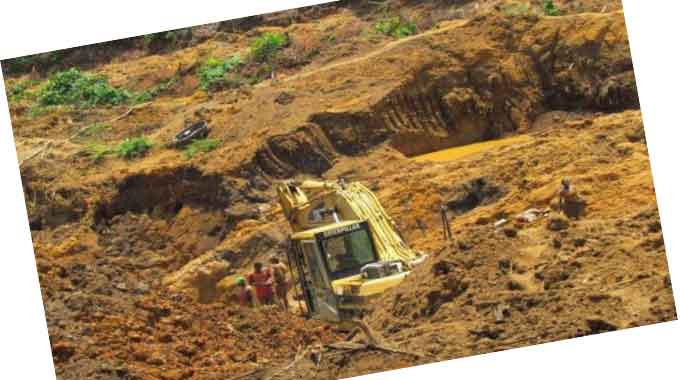
Check Point Desk
THE current construction boom, probably unprecedented in recent years, has led to soaring demand for construction materials, including timber, cement, tiles, as well as river sand and pit sand.
But one of the unintended consequences of the current phenomenon has been the alarming increase in sand poaching, which is taking a huge toll on the environment through severe land degradation, destruction of infrastructure and concomitant threats to public safety.
Despite a Government ban, illegal sand poaching continues unabated in Harare and other parts of the country.
Sand poachers are operating openly along Chitungwiza Road, in Hatcliffe, Epworth, the Mutamba area of Retreat and other places, exposing glaring enforcement gaps and raising questions about who is driving and shielding the illicit trade.
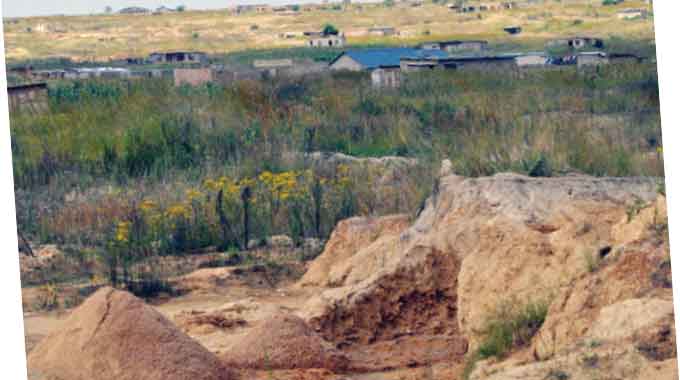
From dusk to dawn, tipper trucks and haulage vehicles scoop sand from riverbeds and open spaces, leaving behind deep craters and eroded land.
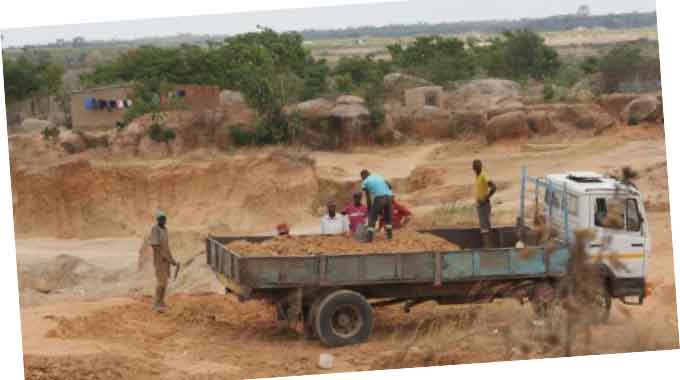
Although banned due to its destructive environmental impact, the activity has become so routine that residents say it now feels normal.
“Every day they come here with trucks — sometimes more than 10 in a single day,” said a Mutamba resident, who requested anonymity for fear of reprisals.
“We have reported these many times but nothing changes. They stop for a few days and then return.”
The authorities acknowledge that while sand poaching has existed for decades, it has now escalated to unprecedented levels.
Legal framework and environmental impact
Sand poaching is a crime under Statutory Instrument (SI) 3 of 2001 and was outlawed under SI 7 of 2007, part of the Environmental Management Act (Environmental Impact Assessment and Ecosystems Protection Regulations).
Environmental experts warn that unchecked sand extraction accelerates land degradation and increases the risk of flooding, especially during the rainy season.
“Sand poaching destabilises riverbanks and alters natural water flow,” said Felix Chari, an environmental management specialist.
“The damage is often irreversible, and downstream communities usually pay the price.”
Residents and observers remain baffled at how poachers continue operating in full view of the authorities. Some trucks are allegedly escorted, while others pass freely through roadblocks.
“These people are organised. You cannot tell me the authorities do not know about this. Someone is benefitting,” argued a Retreat resident.
Past crackdowns have mostly targeted small-scale operators, but critics argue that such actions fail to dismantle the well-funded syndicates behind the trade.
Environmental activist Monica Baneling believes the persistence of sand poaching points to deeper systemic issues.
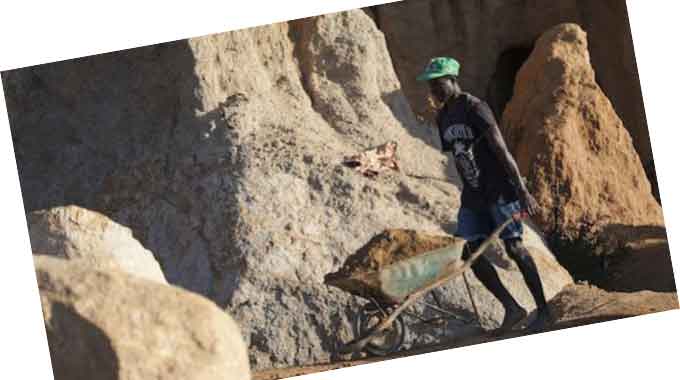
“This is not about desperate individuals digging sand with shovels. This is a business run by cartels supplying the construction industry. Until those financing and protecting them are exposed, the poaching will continue.”
A wider pattern
Bulawayo’s Hyde Park Cemetery once faced a similar problem, which only eased after angry residents besieged council offices, forcing the authorities to act.
Sand poachers, often armed with picks and shovels, are known to be violent when confronted.
Harare provincial police spokesperson Inspector Luckmore Chakanza said police are working closely with the Environmental Management Agency (EMA) to enforce the law.
“The issue of protecting the environment falls under EMA, but they engage us during blitz operations against sand poachers so that we enforce the law,” he said.
The sand extracted across Zimbabwe feeds the booming construction sector, where demand for cheap building materials remains high.
In 2024, real estate and construction projects attracted nearly US$2 billion in investment, much of it flowing into residential developments in and around Harare.
With a national housing backlog of more than 1,25 million units, developers are racing to meet demand through new homes and cluster housing.
Sand, an essential ingredient in concrete and mortar, is in high demand in the construction sector, creating powerful commercial incentives that may be underpinning the illicit extraction.
Locals often wonder whether the same forces driving Harare’s visible skyline transformation are also fuelling the hidden, destructive sand trade.
EMA Harare provincial manager Leon Mutungamiri confirmed that raids are being conducted in collaboration with the police to prevent illegal sand transportation and extraction in hotspots such as Mabvuku, Retreat and Epworth.
“We have made arrests of illegal sand miners and those transporting without a permit,” he said.
“However, EMA has ordered all local authorities in Harare Metropolitan province (Harare City, Epworth, Ruwa and Chitungwiza) to establish designated sand extraction sites. Once identified, it will be easier for councils to monitor and rehabilitate.”
Harare City Council head of corporate communications Stanley Gama was not forthcoming when contacted for comment, saying only: “Just give me a moment and I will get back to you.”
Residents remain sceptical.
“We just want answers! Who owns these trucks? Who gives them permission?” queried one community leader.
As sand continues to be hauled away from fragile landscapes, the recurring plunder highlights not only an environmental crisis but also a governance failure, where a banned activity persists in plain sight, daring the authorities to act and leaving the public to ask: Who is really behind the sand cartels?