


 Online Reporter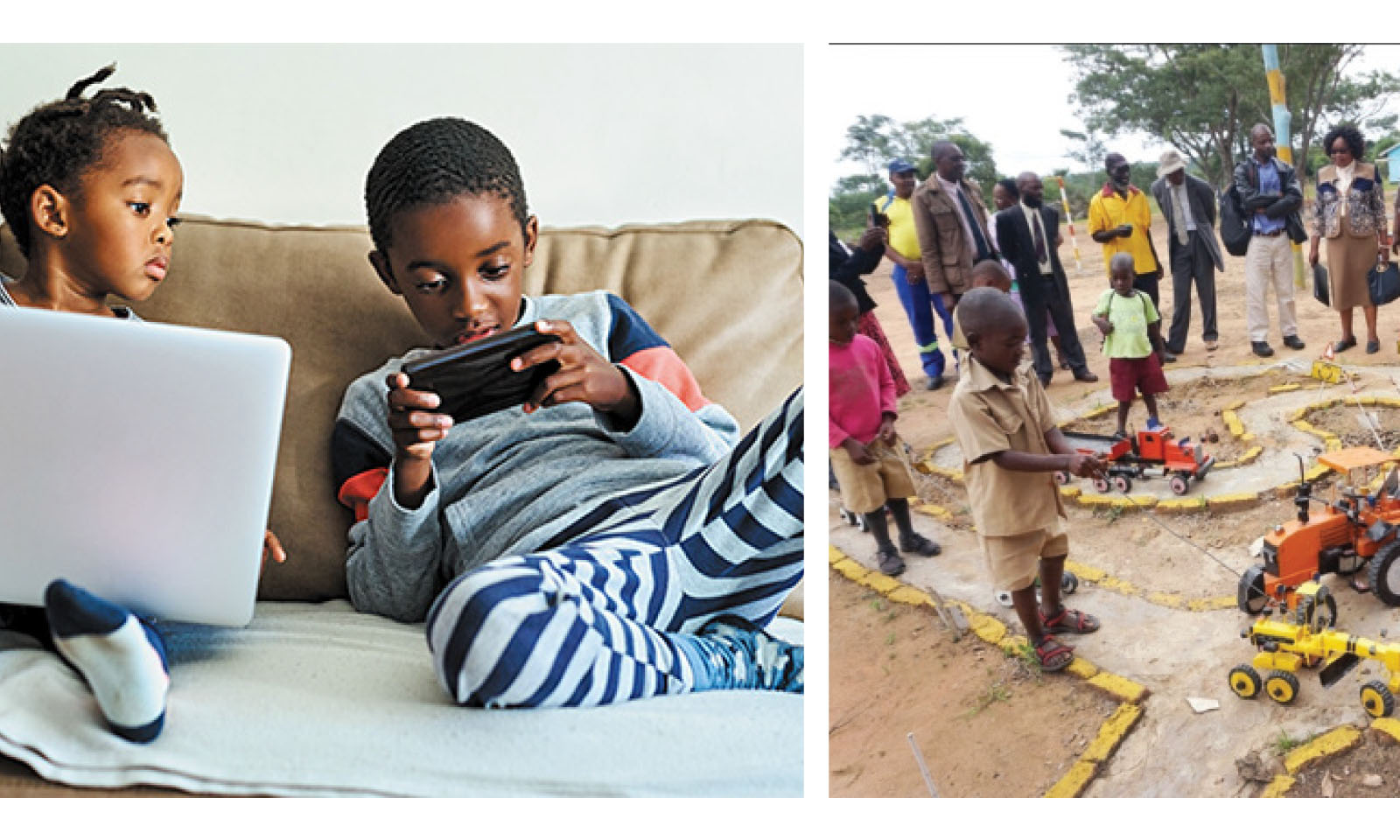
Theseus Shambare
UNLIKE the period when the internet was not common, children are now spending most of their time glued to their smartphones and voraciously consuming content on social media.
However, the content is often unfiltered and increasingly becoming obscene and vulgar.
And this is negatively affecting the way kids are being socialised, leading to rising cases of juvenile delinquency.
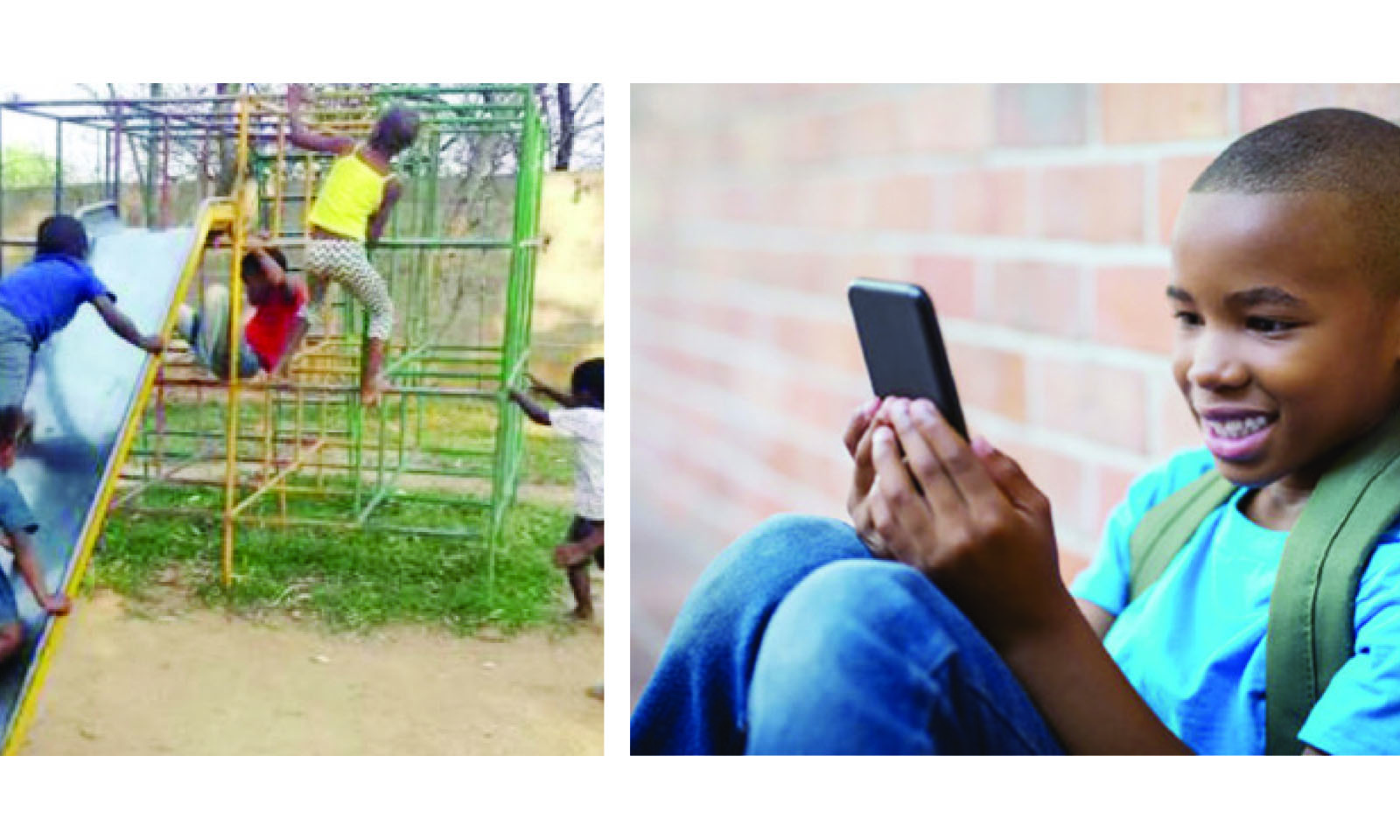
Long before the glow of screens replaced the warmth and vibrancy of sunlight, childhood in Zimbabwe blossomed in the open air.
At sunrise, boys chased plastic balls across dusty fields, their laughter echoing like the rhythm of freedom.
Girls sang, their melodies weaving through villages and towns.
Childhood invariably meant bruised knees, bare feet and boundless imagination.
At dusk, boys would return home with ashen feet — that tell-tale coating of dust that parents or guardians both frowned at and admired in equal measure.
In the old days, a child’s mischief was easy to trace: Parents knew who their children played with, where they went and when they would return.
Seismic shift
This has, however, all changed.
Children now silently sit indoors, with their eyes fixed on a world their parents cannot see.
But this world is gradually eroding their innocence, as they are increasingly being exposed to adult content.
There is no limit to the vulgarity on social media. Explicit sexual content, violence and provocative behaviour have become pervasive online. In fact, it is precisely this content that trends.
Unlike a book or magazine, platforms like Twitter, TikTok and Facebook offer bottomless and algorithmically curated content.
Dr Anesu Chinoperekwei, a psychiatrist at Serenity Mind Centre, warns that children are being exposed to hyper-sexual content online, which affects their understanding of relationships, modesty and consent.
“They see influencers who dress provocatively, engage in risky behaviour or promote nightlife and substance use — even illicit drugs — before they fully understand what those things mean or their long-term consequences,” she explains.
This premature exposure often engenders anxiety, shame, confusion and a distorted self-image.
Screens are not just showing drug and substance abuse — they are normalising it.
In countless online videos and social media posts, teenagers see peers experimenting with cough syrup cocktails or other substances portrayed as “cool”, vaping or smoking.
Vulgar language, often actively promoted by influencers and celebrities, abounds.
“Seeing peers or influencers using substances sends a message that if others do it without immediate harm, why not me?” Dr Chinoperekwei explained.
In urban areas like Epworth, community health worker and youth counsellor Tendai Chiguvare reports seeing those aged between 12 and 16 years experimenting with inhalants, alcohol and prescription cough syrup after watching online videos.
“Parents often have no idea this is happening until it is too late,” he said.
Cyberbullying has also become a significant issue among Zimbabwean high school learners.
A 2022 study by Vincent Mabvurira identified motives such as peer pressure, exposure to violent media, boredom, jealousy and low self-esteem.
The effects include poor mental health, low school attendance, emotional instability and even suicidal thoughts.
Perpetual Masarira, principal of SOS Hermann Gmeiner High School, recalls incidents where learners arrived at school in tears after humiliating images or messages about them circulated online.
“Some learners are so afraid of checking their phones that they skip school entirely. The emotional trauma lingers long after the posts are deleted,” she said.
Legal control
Denmark recently announced that the country would ban social media for under-15s, blaming mobile phones and social networks for “stealing our children’s childhood”.
This follows an earlier notice to ban mobile phones in all schools and after-school clubs.
Danish Prime Minister Mette Frederiksen indicated that never before have so many children suffered from anxiety and depression, and that screens expose them to things “no child or young person should see”.
This move is similar to what Australia has done by introducing a ban on social media platforms for under-16s.
These countries agree that politicians must intervene to protect children from the “power of algorithms”, as digital platforms do not have the minor’s well-being at heart.
In India, the Information Technology Rules (2021) mandate social media platforms to remove sexual or violent content within 24 to 36 hours of a complaint, require age verification and proactively detect unlawful content accessible to minors.
Zimbabwe, which is not oblivious of these risks, is following the global trend of developing a policy framework for digital protection.
Information Communication Technology, Postal and Courier Services Minister Tatenda Mavetera has sounded the alarm over online dangers, warning that posting personal information exposes children to predators.
Research by the Government shows that about 47 percent of children aged eight to 18 have been exposed to sexual content and 13 percent have experienced cyberbullying at least once.
“A child online protection policy is on the cards. We look forward to bringing sanity to our internet,” she said.
Crossroads
High school learner Nyasha (15) shared her concerns about social media.
“I see videos of older teens drinking, smoking and dancing in ways that make everything look fun. But sometimes it is scary and I do not know if I should copy it or not.”
In Mahusekwa, Mashonaland East province, Headman Luke Gondo watches the struggle between traditional norms and the digital allure.
Over the years, he has seen folk songs being replaced by viral tunes on the internet.
“The screen offers a quick thrill. But it does not nourish the spirit like the stories of our ancestors,” he said.
He is worried that ancient melodies that speak of lineage and land cannot compete with fleeting viral tunes.
“The pull is strong but the risk is greater. Values, respect, identity are slipping away.”
Dr Chinoperekwei notes that children overexposed to explicit and mature content often display desensitisation, impulsivity, aggression, envy and mimic behaviours far beyond their years.
Avoidance of traditional plays and outdoor activities compounds anxiety and leads to poor attention spans, weaker physical health and difficulty in face-to-face interactions.
Legal expert Advocate Fungai Chikodzi revealed that Zimbabwe’s Cyber and Data Protection Act obliges platforms and schools to protect minors online, but enforcement remains inconsistent.
“We have the laws, but implementation lags behind the pace of technology and children continue to bear the brunt,” said Chikodzi.
Zimbabwean youths are clearly at the crossroads. While the past taught through stories and playing, the present tutors through trending content, peer pressure and unsupervised exposure. Technology needs not be the enemy, but without guidance, it becomes a tyrant. In the dust of vanished playgrounds and the hush of homes lit by screens, there is a path forward — one that reconnects, protects and restores what once made childhood whole. But, as night falls, the screens glow brighter than ever.
And somewhere, a child clicks, unaware that the world he is discovering might be one his parents, teachers or even the law can no longer reach.
How countries are fighting children’s exposure to harmful content
Many countries are taking action to shield children from explicit, adult and violent content online through a combination of new laws, age verification technologies and international cooperation. Approaches vary, ranging from outright bans for younger teens to stricter privacy and content standards. Here are some examples:
- United States: There are measures at both state and federal levels. States like California have passed laws requiring platforms to configure high privacy and safety settings for minors by default. States like Utah and Arkansas have laws requiring parental consent for users under 18. Proposed federal laws, such as the Kids Online Safety Act, aim to establish nationwide age limits and parental controls.
- United Kingdom: The UK’s Online Safety Act places a legal duty on platforms to prevent children from encountering harmful content relating to suicide, self-harm, eating disorders and pornography. The Office of Communications, the regulator, enforces these rules and can impose hefty fines for non-compliance. The UK also has a strong Age-Appropriate Design Code that mandates strictest privacy settings be turned on by default for users under 18.
- European Union: The Digital Services Act requires social media companies to assess and mitigate risks to minors, including exposure to harmful content. These EU-wide rules are complemented by national initiatives, such as France’s consideration of more rigorous age verification to block underage access to adult content.
- China: The government has implemented some of the strictest controls, including time restrictions that limit minors to no more than one hour of social media and online gaming per day. Platforms are also required to use algorithms to filter out inappropriate content, and real-name registration is enforced.
- Australia: In a significant move, Australia became the first country to ban social media access for children under 16. This law gives social media platforms one year to implement the necessary measures to block underage users.
The global challenge and future directions
Protecting children online is an ongoing global effort. International bodies like the United Nations highlight that one in three children globally has been exposed to pornographic content before the age of 12. In response, countries are pushing for more robust measures:
- Spain and eight other countries have signed a joint declaration to strengthen online child protection, focusing on preventing early exposure to pornography through effective age verification.
- The World Health Organisation recommends implementing school-based educational programmes that teach children about online dangers and healthy relationship skills, moving beyond the concept of “stranger danger”.



 Bongani Ndlovu