Online Reporter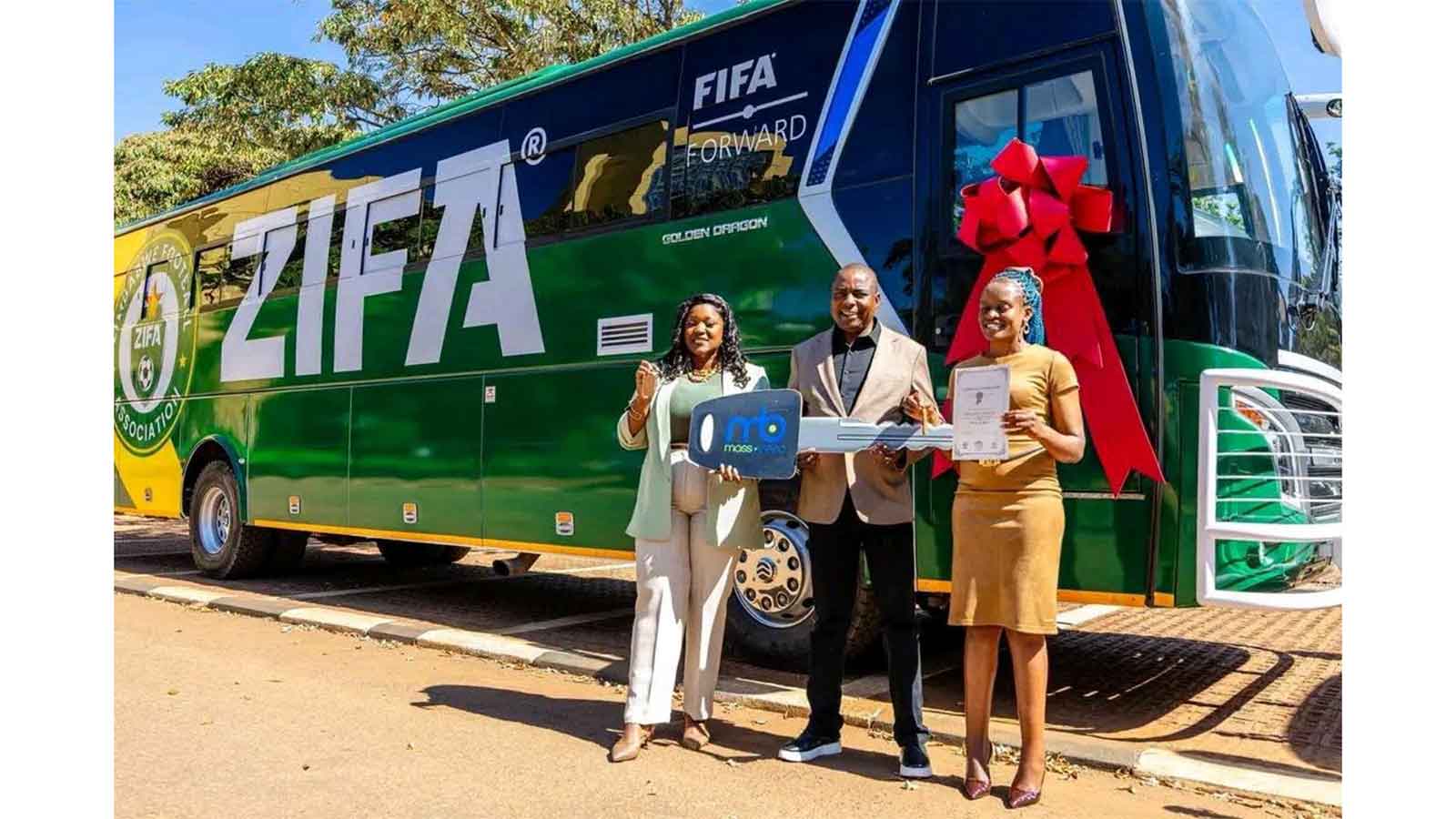
Nqobile Magwizi-Inside ZIFA
Every FIFA World Cup tells two stories.
The first is the one the world sees: 90 minutes of drama, breathtaking goals, unforgettable celebrations and players carrying the hopes of entire nations.
The second story begins years before a ball is kicked.
It is the story of decisions made in boardrooms, investments made in development, structures put in place and opportunities deliberately created.
Long before players get the chance to make history on the pitch, someone has to create the conditions that allow them to get there.
That is one of the most important lessons of modern football.
Players may score the goals and lift the trophies, but the decisions made by football leaders often determine who gets the opportunity to compete in the first place.
For African football, perhaps no decision illustrates this more clearly than the expansion of the FIFA World Cup from 32 to 48 teams.
Africa’s guaranteed representation has increased from five places to nine, with the possibility of a tenth through the intercontinental play-offs.
That change has fundamentally altered what is possible for our continent.
For the first time, more African nations can look at the road to the FIFA World Cup and genuinely believe that qualification is within reach.
This is about far more than numbers.
For decades, Africa competed for just five World Cup places despite being home to 54 FIFA member associations, some of the finest footballers in the world and millions of supporters whose passion for the game is beyond question.
The mathematics made qualification brutally difficult. Five places for an entire continent was simply inadequate.
Today, the equation is different.
The dream has not suddenly become easy, but it has become more realistic.
The road remains demanding, but more nations now have a genuine opportunity to travel it.
Across the continent, countries are showing that football ambition does not belong only to the traditional giants.
Nations such as Cape Verde continue to demonstrate that smaller football countries can compete with Africa’s established powers, while the Democratic Republic of the Congo, with its proud football heritage, can pursue a return to the FIFA World Cup knowing that a wider pathway now exists.
The door has not been opened only for football’s giants.
It has been opened for football’s believers. Zimbabwe should be among them.
But opportunity on its own is never enough. Opportunity must be met by preparation.
That is why another important part of FIFA’s evolution matters just as much: increased investment in football development through the FIFA Forward Programme.
Since its introduction, more than one billion United States dollars has been invested across African football, supporting member associations, infrastructure and football development programmes.
Zimbabwe has experienced those benefits directly.
The acquisition of motor vehicles, including three buses for the Zimbabwe Football Association, has helped address a longstanding operational challenge.
On the surface, transport may appear to be a simple logistical matter, but in football administration reliable transport means greater efficiency, improved planning, better movement of teams and personnel and more responsible use of limited resources.
It is an investment in professionalism.
More support is expected, reflecting a broader philosophy that the development of football should not be concentrated among a small group of wealthy countries.
The game grows when opportunity reaches every corner of the football world. That principle matters because football cannot truly develop if opportunity remains the privilege of a few.
Leadership, ultimately, is judged by what it leaves behind.
We remember great footballers for the goals they scored, the matches they won and the moments they gave us.
Football leaders should also be remembered for the opportunities they created – for the players who were given a pathway, the coaches who received better education, the associations that became stronger and the nations that were given a genuine chance to dream.
There is, however, an important distinction between opportunity and achievement.
FIFA cannot qualify Zimbabwe for the World Cup. FIFA cannot identify every talented young player in our communities, strengthen our domestic competitions for us, develop our coaches, prepare our national teams or ensure that the Warriors are ready when the decisive qualifying matches arrive.
Those responsibilities belong to us.
What FIFA can do is help create a fairer global football environment in which more nations have an opportunity to compete and develop.
It is then up to us to make that opportunity count.
Whether we look at expanded FIFA World Cup qualification, greater investment in member associations or the belief that football development should reach every part of the world, African football has entered a different era since Gianni Infantino became FIFA President in 2016.
Zimbabwe has been a direct beneficiary of that shift. Through FIFA Forward support, our operational capacity has been strengthened, and we are better positioned to invest with confidence in the future of our game. That is exactly why Dream2030 matters.
For many years, Zimbabwe’s World Cup ambition was constrained not only by challenges within our own football structures, but also by the reality that only five African nations could qualify.
That reality has changed. The destination is still difficult to reach, and nobody should pretend otherwise.
Qualifying for a FIFA World Cup will demand planning, discipline, investment, talent development, strong competitions and sustained commitment.
But the destination no longer feels as distant as it once did. The pathway is wider and the opportunity is greater. Now our level of preparation must rise to meet it.
Through programmes such as the BancABC Roots Impact initiative, the ZIFA Munhumutapa Challenge Cup, expanded youth competitions, improved coach education and stronger technical structures, Zimbabwe is working to build the foundations required to compete more consistently and successfully.
None of these initiatives, on their own, will take Zimbabwe to a FIFA World Cup.
Together, however, they form part of something much bigger: a football system designed to identify talent earlier, develop it better, create stronger competition and give future generations of Zimbabwean footballers the environment they need to succeed.
That is how football progress is built.
History reminds us that great sporting achievements rarely arrive overnight. They are imagined long before they are celebrated. They begin with vision, are strengthened through investment and are sustained by people who remain committed even when the rewards are still years away.
Zimbabwe should, therefore, be grateful for the opportunities that have been created, but gratitude must never become complacency.
More World Cup places do not qualify us automatically. More development funding does not guarantee success.
Greater opportunity simply gives us a better chance. What we do with that chance is entirely up to us.
Dream2030 must be more than a slogan. It must become a shared national football ambition that brings together administrators, coaches, players, clubs, supporters, schools, communities, corporate partners and every Zimbabwean who believes that our flag deserves to fly on football’s biggest stage.
The pathway is there. The opportunity is greater than it has ever been. What remains is for us to prepare, invest, believe and work with purpose.
History does not belong only to those who are given an opportunity; it belongs to those who recognise it, prepare for it and have the courage to seize it.
For Zimbabwe, this is our opportunity. Let us turn it into our moment. Let us build together, believe together and carry the Warriors towards 2030 together – one nation, one badge, one destiny.
The journey continues.