Online Reporter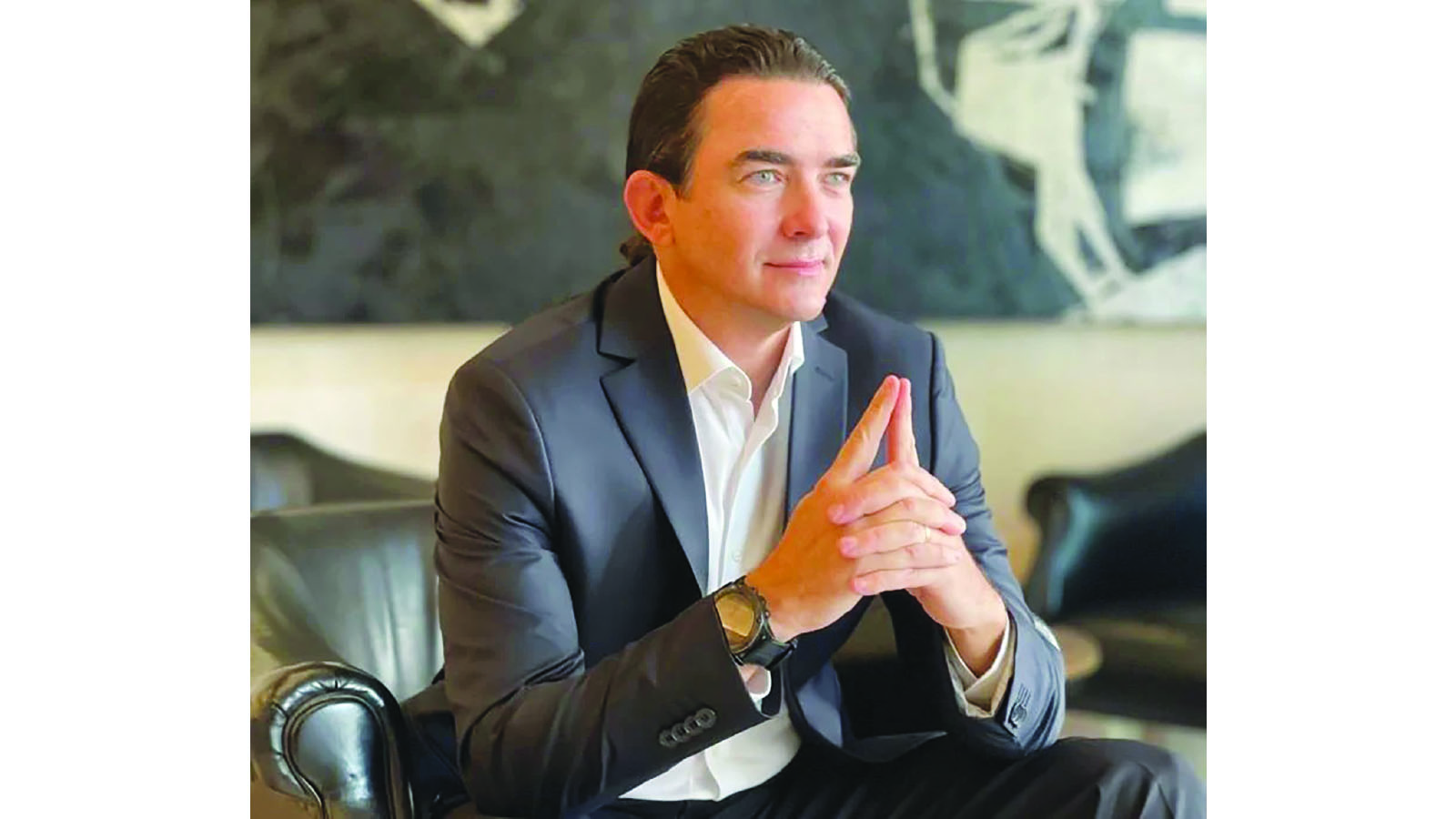
The real estate sector last week hosted the ZimReal conference under the theme “Cementing Growth and Growing Value” to deliberate on issues affecting the industry. In an interview with Zimpapers Business Hub, one of the major participants at the event, the chief executive officer of WestProp Holdings, Mr Ken Sharpe, spoke on the state of the real estate sector in Zimbabwe.
**********
Q: What role do Government policies play in shaping investment decisions in the property sector in Zimbabwe?
A: The biggest challenge we have in Zimbabwe right now is that we need more prioritisation of our sector by the Government. We believe it should be given more priority. Yes, in terms of the Government’s National Vision for 2030, I think it is clear that they want to provide housing. And the backlog is up to two million units, we are told. The Government has already provided half a million or more houses.
So, they continue to look at ways in which to solve those housing needs. But that does not address, for me, the overall sector. The sector in Zimbabwe today is around 1,8 percent of gross domestic product (GDP) officially. The contribution to the GDP of Zimbabwe in the real estate sector is around 1,8 percent.
But Nigeria is at 9 percent. South Africa is at 12 percent. The developing country’s average is between 12 percent and 15 percent of GDP. So, even if we were to take the lower side of 12 percent, why are we at 1,8 percent? Six, seven times less than we should be. If you look at the opportunity, our GDP was rebased recently in the budget by the Minister of Finance.
It is now around US$50 billion; 20 percent of US$50 billion is US$10 billion. But we are only at 2 percent, which means we are less than US$1 billion a year of property, when we should be at US$10 billion. We, as a company, say our opportunity is 10 times smaller than it is because the support is not there from the financial sector. We are not getting the right priorities.
Q: What are the key challenges property developers face in Zimbabwe and how can they be overcome?
A: The biggest elephant in the room are mortgages. For those developed economies to be at 20 percent GDP being real estate, it means the mortgage market has to be available for people to buy properties. In Zimbabwe, there’s no mortgage. The national percentage is less than 0,1 percent, but the average in the world is around 10 percent.
So, we have 100 times fewer mortgages than we should be having. We are going to start speaking about it and lobbying the Government, lobbying the financial institutions and playing our role. I have just come back from my road show. I was in different countries in Europe, talking to investors. There is appetite, but we need to persuade them that the political risk is no longer there in Zimbabwe, that Zimbabwe is open for business, and that the country is growing. It is stable.
Q: On mortgages, have you in the past tried to do any lobbying on that front? Or what actually is the problem?
A: You see, it is a structural problem because, on the one hand, the banks complain they do not have enough long-term deposits. Most of the money in the banks is short-term, overnight, one-week, one-month kind of money; one-year or two-year money. But no one is putting money in the bank for 20 years or 30 years.
So, the banks are saying, ‘How can we lend for 20 years or 30 years when we don’t have those deposits?’ Yes, there is an argument to that. And the other structural problem is that of the lender of last resort.
The Reserve Bank is taking the limited US dollars and putting them into reserves. While it is helping to protect the local currency, the ZiG (Zimbabwe Gold), it is not helpful that the money is not in circulation because they are removing it from circulation to put it into reserves. So, we have a double problem. The banks do not have money, and the national bank, the Reserve Bank, does not have money.
Q: You have been developing many properties in Zimbabwe. Some may wonder why you are doing that in such a market, which you have described in terms of lack of mortgages and the like.
A: If I were to sit back and do nothing, that 1,8 percent of GDP would become maybe 1 percent because I won’t be contributing towards it. So, by contributing towards it, I’m doing my part to grow it. On the other hand, I’m encouraging others to see that through our confidence. If we can do it, why can’t they do it? If you look at developments, even Highland Park, it was not there two years ago, but they were encouraged by what we had done before with the Mall of Zimbabwe.
Even though the Mall of Zimbabwe is not there, we did a lot of work, planning and the Mall of Zimbabwe will be built.
The development around Highland Park, you can see, of mixed use, it’s been inspired by what we brought to the table three years back in Zimbabwe for doing mixed-use developments.
So, cumulatively, collectively, if we collaborate as an industry, we can have a better result than if we were to selfishly just say we want all this cake for ourselves to eat it or keep it.
We have to build our country, we have to believe in the future and that’s maybe the third reason. The most important one is I believe in the future of Zimbabwe. By 2050, we will be a different country, a different city and we have to build it; we have to make it a reality every day.
Q: There has been talk of demand for housing units, but there has been very little talk about demand for shopping malls in Zimbabwe. What is your assessment? What is the demand like?
A: Of course, it’s huge. The fact is that when we did the assessment of the market for malls in Zimbabwe five years ago, the total market was half the size of what it is today. The total potential market — they do a demographic study on the ground, desktop and in the field, and the feasibility study proved that the current demand for retail is more than 200 000 square metres (sqm) of space.
When we did the Mall of Zimbabwe, we were saying probably 100 000sqm of space was demanded.
That’s why we sized the mall at 30 000sqm, about 30 percent of the estimated market. Now, we’re saying the market is over 200 000sqm, and the Mall of Zimbabwe, we are now saying it should be around 60 000sqm, which is still about 30 percent. The study was done, I think, end of last year.
Q: Can you talk more about the ZimReal 2025 conference, where players in Zimbabwe’s real estate sector converged last week to discuss strategies for “Cementing Growth and Growing Value”?
A: We joined the Africa Property Investment (API) movement, let’s call it that, about three years ago, as the headline sponsor. And then we were encouraged by the amount of support it got from the industry, from our fellow competitors and suppliers.
We saw an opportunity to make it the major annual conference for real estate in Zimbabwe. That’s how confident we are with it being the annual lead conference in Zimbabwe. At the moment, there’s been little participation from the Government, both local and national Government. We would like to say to the Government, why not join us, as the private sector player and also the conference organisers?
It’s also a forum where they can be educated on the latest techniques in AI (artificial intelligence), residential management skills in water reticulation, how to incorporate the environment and how to be good custodians of the environment. It’s a wonderful think tank to really be armour bearers to the industry.
Q: Tell us about the way you are giving back to society, considering the vast support you have been receiving in Zimbabwe; your corporate social responsibility (CSR) programme.
A: We have embarked on some social enterprise projects, part of our CSR programme, both as West Properties and my family, through our philanthropy. And we invested in an individual — an artist. He actually painted for us two paintings, lions, two shumbas (lions). But when I met him, it was a few years ago; he’s a medical doctor. He worked at Parirenyatwa. We’re now investing in him to become the head of our, I wouldn’t say it’s a hospital, but it’s a clinic. It’s called West Point Clinic. And the equipment we’ve purchased from China is on the way. So, I imagine in the next two, three months, it will be open.