Online Reporter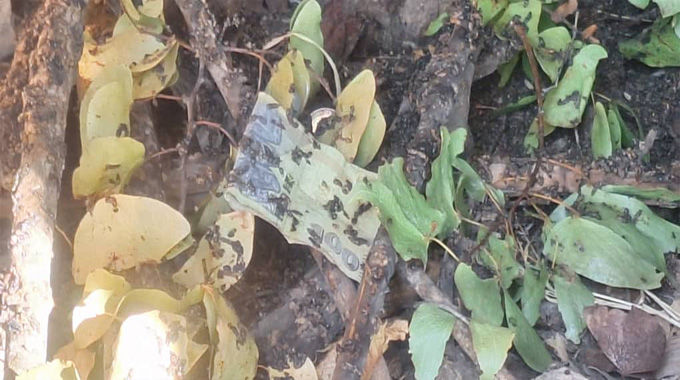
Mkhululi Ncube, Features Writer
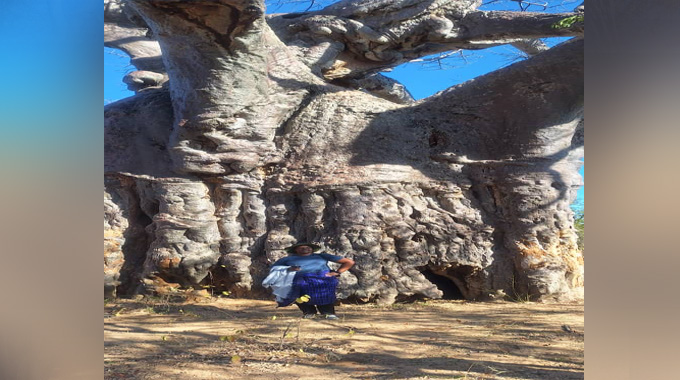
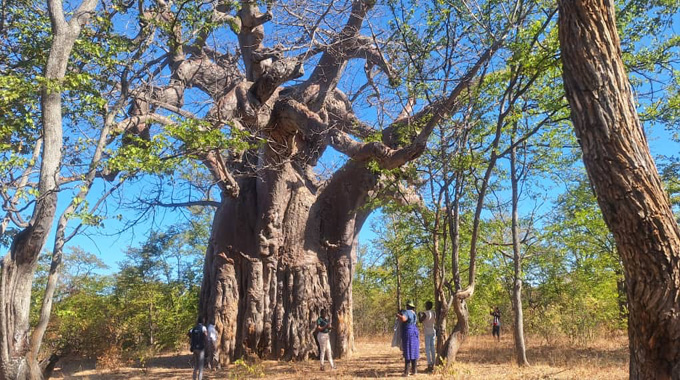
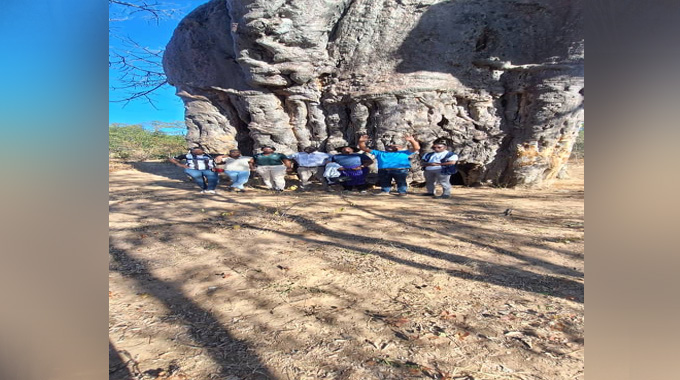
ABOUT 45 kilometres from Tsholotsho Centre due west, in Tshithatshawa stands a giant tree, towering taller and bigger than the rest in the vicinity. Although unfamiliar to many, this is believed to be one of the biggest trees in the land.
The tree soars metres into the air with a number of big branches spreading to its sides.
It has a gaping hole in its trunk which is said to have been used by the San people as shelter long back.
Inside the gaping hole is an old ZW$100 note and some South African rand coins said to have been left by people who visit the sacred tree for “prayers” as offerings.
 It is said to be taboo to take the money.
Legend has it that a man from the San community called Tjitatjawa, which means the enemy has fallen in Kalanga, was stung to death by bees while trying to harvest honey from the tree.
To see the tree, one has to drop off at Tshithatshawa Adventist Secondary School and travel south west, past Tshithatshawa Dam into the forest and past some fields.
Due to its location far away from the road, this baobab tree has remained hidden with only locals knowing about it.
The tree, which is known by its Kalanga name, Mbuyudema, which means black baobab tree, is now a shrine for rain making ceremonies.
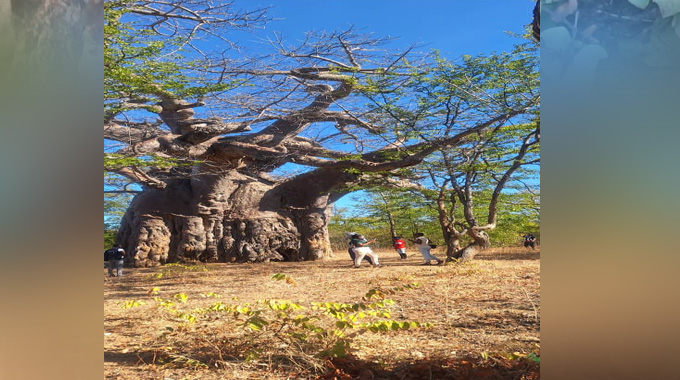
During a recent visit to the area, one young man had to delay his soccer practice with his teammates to assume the role of a tour guide.
“The community conducts rain making ceremonies at the tree before the onset of the rainy season. People also come here to conduct traditional rituals. It is much respected and it is believed that the tree has amalinda (ancestors). There are also bees which have sheltered in the tree for years and no one is allowed to harvest honey from the tree. It is a respected tree,” he said.
A woman who spoke on condition of anonymity said the tree was chosen as a sacred place where traditional rites are conducted.
She said the tree used to be a mini Njelele for them as voices would be heard from the tree.
“It is a sacred tree for traditionalists. When they brew beer for ceremonies, it is placed inside the gaping hole in the tree’s trunk because it is believed that kuhlala abantu phakathi (there are ancestors who live inside).
“What affected that place is the fact that those of religious persuasion working with some of our traditional leaders downplayed the importance of the tree and it has lost its relevance somehow,” she said.
Mr David Ndlovu who has over the years worked to document and preserve the San people’s history said San community leaders have shared many stories about the tree.
Mr Ndlovu said they measured the tree and found that its circumference is about 25 metres.
“I once interviewed Gogo Motjwa who was born in 1917 and is late now. She said the tree was important to them as it provided shelter and a place for their cultural activities like the Boro dance. She also said the tree helped to give them direction as there were no roads then. The story about the man who died trying to harvest honey from the tree is also true. They believe the bees were sent to preserve the tree because if one attempts to defile the tree, they will be attacked by the bees,” he said.
Chief Tategulu, whose jurisdiction covers the area, said a lot used to happen at the tree but things have since changed.
He said the tree is not an ordinary one.
“The tree is in Ward 8 which is part of my area. The elders told us that kulamalinda laphana (there are ancestors there). The sounds which used to come from the tree mimicked those of people pounding mortar and pestle. But because we have abandoned our culture, those sounds have stopped. Rain making ceremonies are still conducted under the tree. Nxa ufika kuso uzwa kusukuma inwele (When you get closer to the tree, you feel your hair rising), it would be good for people to know that about it,” he said.
Chief Tategulu said the tree could serve as a cultural tourism draw card for the district.
Tsholotsho Rural District Council Chief Executive Officer Mr Nkululeko Sibanda, while admitting that they had not given much attention to the tree, said measures would be put in place to protect and market it.
Mr Sibanda said the council is working on preserving and marketing the tree so that people visiting Tsholotsho can also visit it.
“We need to engage the traditional leadership and see how best we can popularise the tree. It has the potential of becoming a tourist attraction. A study should be done so that we have its accurate history,” said Mr Sibanda.
The council measured the circumference of the tree which is at 24,7 metres with a diameter of 12,3 metres.
Meanwhile, Forestry Commission spokesperson Ms Violet Makoto said such trees fall under the mandate of the National Museums and Monuments of Zimbabwe (NMMZ) with their interests mainly on conservation. She said some of the biggest trees in the country are found at Chirida Forest in Chipinge District, Manicaland Province.
Ms Makoto said in terms of baobab trees, the biggest is in Victoria Falls which, according to records, its height is 24,3 metres and has a circumference of 22,8 metres.
“The documentation of such trees falls under the NMMZ as they have cultural beliefs associated with them. You will find that communities hold sacred beliefs on such trees. We only look at the ecological and conservation side and our recognition of such is based on the respect of culture because there is a strong nexus between culture and conservation,” she said.
National Museums and Monuments of Zimbabwe regional marketing officer Mr Phineas Chauke said they have a department that handles such trees adding that they would visit the tree, document it and have it declared a national monument. — @themkhust.