Online Reporter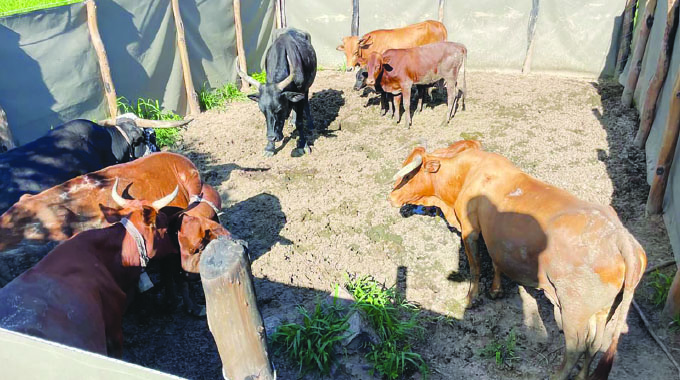
Obert Chifamba
Agri-Insight
IN an era in which the pressures of climate change and rural industrialisation are fast reshaping the agricultural landscape, farmers need to re-evaluate their livestock management systems to ensure they not only survive, but even flourish under that rapidly changing environment.
It is a fact that rural industrialisation or urban expansion are happening all over the country, pushing the stakes higher than ever for farmers who currently stand at the crossroads where traditional practices interface with modern processes and challenges.
On the one hand, the current climate change challenges have also not made the situation any better, with pastures dwindling under the onslaught of recurrent droughts while sprawling settlements have added to the squeeze that has left very little grazing space for livestock.
To keep or not to keep livestock has therefore become the biggest question, but the answer seems to be cast in stone here – farmers want to keep their animals. To them, those animals are a symbol of wealth, and to dispose of them would be tantamount to disempowering them economically.
Essentially, this requires them to rewrite the playbook on livestock management and step up with creative solutions to maintain their livestock units. Cattle, for instance, are one livestock category that will need farmers not to just think outside the proverbial box but to completely dismantle it to get unobstructed vision of where they are going.
I have noticed that in regions like Seke rural, most of the land that used to be under the communal sector have since been converted to urban, yet there are farmers who keep cattle there. In all fairness, such farmers are not going to dispose of their cattle but will keep them despite being a part of the new urbanised setting.
One effective way of retaining livestock farming under such conditions will be through diversifying livestock units under domestication. By integrating different types of animals into their operations, farmers can enhance resilience and optimise land use.
Combining cattle with sheep or poultry, for instance, allows for better utilisation of resources, as these animals can occupy different ecological niches and complement each other’s grazing habits.
Additionally, selecting breeds that are more adaptable to changing climates can improve productivity and reduce mortality rates, ensuring that livestock units remain viable.
Improved pasture management is another critical strategy. Farmers can easily implement rotational grazing practices to maximise pasture recovery and productivity, enabling them to make the most of their available land.
By allowing pastures time to regenerate, they can enhance forage quality and quantity. Moreover, investing in soil health and pasture restoration techniques, such as agroforestry, can significantly improve pasture resilience and yield, providing a more sustainable source of feed for livestock.
Innovative feeding strategies also play a vital role in maintaining livestock health during challenging conditions. Supplemental feeding can reduce reliance on diminishing pasture resources, ensuring that animals receive adequate nutrition even during dry spells. Growing drought-resistant forage crops also provides farmers with alternative feed sources, which can be crucial when traditional pastures fail.
Farmers may also need to adopt technological innovations for farming to enhance productivity. Precision agriculture tools, for instance, allow farmers to monitor soil health, moisture levels, and livestock conditions more effectively, thereby optimising resource use and improving overall yields.
By leveraging data analytics to track livestock performance, farmers can make informed decisions about breeding and feeding, thus enhancing efficiency.
Furthermore, collaboration among farmers can also yield substantial benefits. Community farming initiatives allow neighbouring farmers to share resources and knowledge, making it easier to manage larger livestock units. Joining cooperatives can provide access to better pricing, shared equipment, and collective marketing strategies, enhancing the viability of livestock operations.
Engagement with policymakers is crucial for securing support programmes that promote sustainable farming practices. By advocating for financial assistance and resources, farmers can alleviate some of the burdens associated with adaptation to climate change.
They can also seek incentives for adopting environmentally friendly practices to help offset costs related to transitioning to more sustainable methods.
Finally, continuous education and training are essential for farmers looking to innovate and adapt. Staying informed about the latest research and techniques in livestock management and sustainable practices empowers them to implement effective solutions.
This entails farmers participating in workshops and seminars to enhance their skills and knowledge in critical areas such as pasture management, animal health, and climate adaptation strategies.
It is exciting to note that as pastureland continues to shrink with climate variability increasing, the future of large livestock farming hangs in the balance. Yet, amidst these challenges, a new wave of farming practices is emerging, showcasing resilience and adaptability as key components for success.
Most farmers I chanced to meet in most of the affected areas indicated that they were effectively managing their large livestock units through a combination of diversification, improved pasture management, innovative feeding strategies, technological adoption, water management, collaborations and ongoing education.
They all blatantly acknowledged that even though pastures had shrunk with human settlements and sometimes industry claiming much of their space, they were embracing various strategies to safeguard the sustainability and productivity of their operations in an increasingly uncertain future.
It is, however, important for farmers to start appreciating that the dual pressures of climate change and rural industrialisation are not just local phenomena but are part of a global trend that is redefining agricultural practices everywhere. Understanding these dynamics can help them better navigate their challenges.
Of course, they might find it rather unsettling considering that livestock farming is not just about sustenance to them since it plays a crucial role in the economy of rural communities. The income generated from cattle can support local businesses and contribute to the overall economic stability of these regions.
The example of farmers in Seke communal lands comes to the fore once again. They have successfully integrated agroforestry practices, combining tree crops with livestock grazing, which has not only improved soil health but also provided additional income streams.
Technologies such as automated feeding systems and drones for monitoring livestock health are also becoming increasingly accessible, offering farmers innovative solutions to optimise their operations. Emphasis should also be put on community resilience for adapting to these challenges. Farmers can always band together to share resources to not only enhance their individual operations but also strengthen the agricultural sector as a whole.