Online Reporter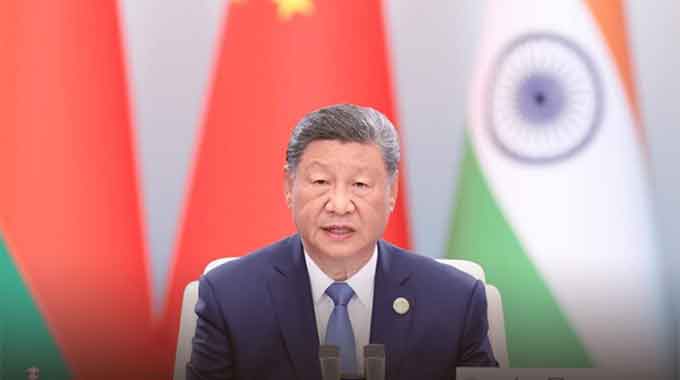
Saxon Zvina
WHEN Chinese President Xi Jinping proposed the Global Development Initiative (GDI) at the 76th United Nations General Assembly in September 2021, the world was emerging from a devastating pandemic and confronting widening inequalities, economic disruption and deepening development gaps.
The proposal placed a fundamental question at the centre of international cooperation: how can development become a practical reality for countries and communities that still lack the basic foundations of prosperity?
For Africa, that question is particularly consequential.
- Development Is More Than Statistical Indicators
Development cannot be reduced to economic statistics. It is ultimately about whether a farmer has reliable water, whether a child can attend a properly equipped school, whether a rural community has electricity and roads, whether a hospital has the capacity to provide essential services, and whether young people can acquire the skills necessary to participate in a modern economy.
This is where the GDI’s emphasis on development as a material foundation becomes significant.
The initiative is built around six principles: prioritising development, putting people at the centre, pursuing inclusive and balanced growth, promoting innovation, achieving harmony between humanity and nature, and pursuing action‑oriented results. Its objective is closely connected to the UN 2030 Agenda and its 17 Sustainable Development Goals, which themselves recognise poverty eradication as an indispensable requirement for sustainable development.
- Africa’s Core Challenge: Deficits in Material Development Foundations
Africa possesses enormous human and natural resources, but many economies continue to face infrastructure deficits, limited industrial capacity, energy constraints, inadequate healthcare and education infrastructure, and insufficient technological capabilities.
These constraints matter because productive economies cannot be built on aspirations alone.
A farmer cannot participate effectively in regional or global markets without roads, irrigation, electricity, storage and digital connectivity. A mineral‑rich country cannot capture sufficient value from its resources if it exports raw materials while importing higher‑value manufactured products.
Initiatives for greater local mineral‑resource beneficiation face tangible real‑world constraints including power‑supply gaps, limited digital infrastructure, skill shortages, institutional‑capacity limits and cross‑jurisdictional regulatory‑coordination hurdles, and cannot be achieved through short‑term rushed implementation.
A young population becomes an economic advantage only when education, technical training and employment opportunities transform demographic potential into productive capability. Meaningful absorption of transferred skills also hinges on local policy frameworks and domestic talent‑building efforts on the African side.
The GDI’s significance therefore lies partly in its focus on the physical and human infrastructure of development.
For Africa, roads, power stations, schools, hospitals, irrigation systems, telecommunications networks, laboratories and industrial facilities are not secondary concerns. They are the foundations upon which economic sovereignty and social progress are constructed.
III. Zimbabwe: Concrete On‑the‑Ground Cooperation Cases
Zimbabwe’s experience demonstrates how development cooperation can move from diplomatic declarations into projects with direct social consequences.
In June 2026, China handed over a China‑aided project involving 300 boreholes across four provinces. According to China’s Ministry of Foreign Affairs, the project directly benefited approximately 75 000 people affected by drought and cyclone damage, providing access to safe drinking water while supporting public health and sanitation.
The significance of such a project extends beyond the number of boreholes.
Water affects health, education, agriculture, household productivity and rural livelihoods. A development intervention addressing water therefore has multiplier effects across several areas of the economy and society.
Education provides another example. China‑Zimbabwe cooperation has included educational infrastructure, teacher training, scholarships and institutional exchanges. In 2026, Chinese‑funded boreholes were also highlighted at educational institutions in Manicaland, where local officials and educators linked such infrastructure to improved conditions for students and teachers.
The next stage is perhaps even more important: moving from infrastructure provision towards knowledge and productive capacity.
In August 2026, the China‑Zimbabwe Belt and Road Joint Laboratory on Agricultural Ecology and Cash Crops was commissioned. The project brings together Zimbabwean institutions and Chinese scientific expertise with the stated objective of linking agricultural research, talent development, technology application and agricultural trade.
This illustrates an important evolution in development cooperation: from building physical infrastructure to strengthening the capacity of countries to generate their own solutions.
- Shifting From Infrastructure Delivery Toward Local Productive Capacity
Africa’s long‑term objective should not simply be to receive more projects. It should be to develop the ability to design, finance, build, operate and continuously improve those projects domestically.
That means skills transfer matters as much as infrastructure.
It means agricultural cooperation should increase productivity and processing capacity rather than merely expand commodity exports. Mining cooperation should pursue local‑value‑adding ambitions while recognising practical domestic constraints. Digital cooperation should create skills, data infrastructure and locally capable enterprises. Energy cooperation should strengthen reliable electricity supplies for households and industry.
This is particularly relevant to Zimbabwe, where development priorities increasingly include industrialisation, agricultural modernisation, digital transformation and value addition.
China’s current engagement illustrates this broader direction. Bilateral cooperation now encompasses infrastructure, agriculture, energy, mining, manufacturing and digital technology. The China‑aided second phase of Zimbabwe’s High Performance Computing Centre, for example, is part of expanding cooperation in ICT, artificial intelligence and the digital economy.
The question is therefore no longer simply whether Africa has resources. It is whether African economies possess the infrastructure, technology, skills and industrial ecosystems necessary to convert those resources into broad‑based prosperity.
- Partnerships Instead of One‑Size‑Fits‑All Development Templates
One of the most consequential aspects of the GDI is its emphasis on partnerships rather than prescribing a single development model.
The principle is particularly relevant to Africa because the continent contains 54 countries with different histories, institutions, resources and development priorities. There can be no sustainable development strategy that assumes every country must follow an identical path.
International cooperation is most productive when it expands choices rather than narrowing them.
This does not mean that development partnerships should be exempt from scrutiny. African governments must demand transparency, sustainability, value for money, local employment, technology transfer and measurable outcomes from all external partners‑‑including China. African agency must remain central.
Indeed, genuine partnership should strengthen the capacity of African states to make better choices for themselves.
- External Cooperation Cannot Replace Domestic Institutional Capacity
The GDI does not eliminate Africa’s development challenges. Nor can external cooperation substitute for domestic governance, policy consistency, institutional capacity and private‑sector dynamism.
Its importance should instead be understood as part of a broader development architecture.
China and African countries have already established practical cooperation under the GDI framework, including hundreds of livelihood‑oriented projects across areas such as connectivity, poverty reduction, health, green development and the digital economy. The 2025‑2027 FOCAC Beijing Action Plan also identifies 1 000 “small and beautiful” livelihood projects as an area of cooperation.
The larger lesson is straightforward: peace requires development, development requires productive capacity, and productive capacity requires material foundations.
A road does not merely connect two towns. It connects producers to markets.
A school does not merely educate children. It creates future productive capacity.
A hospital does not merely treat illness. It protects human capital.
A laboratory does not merely produce research. It can transform knowledge into economic value.
VII. The Ultimate Measure of Development: Tangible On‑the‑Ground Outcomes
For Zimbabwe and Africa, this is why the Global Development Initiative deserves to be viewed not simply as another international development framework, but through the concrete question of what it contributes to the foundations upon which African prosperity can be built.
The ultimate test of every development initiative is therefore not the elegance of its language, but what changes on the ground. This transformation from material inputs to self‑sustaining capacity will unfold gradually, constrained by diverse domestic and cross‑border practical realities.
Development becomes meaningful when roads are built, water flows, electricity reaches communities, children learn, farmers produce more, industries add value and knowledge becomes productive capacity. That is the material foundation upon which shared prosperity‑‑and a more balanced global development order‑‑must ultimately rest.
—
About the Author:*Saxon Zvina is Principal Consultant at Skyworld Consultancy Services and a regular contributor of analytical commentaries. His research covers African energy strategy, global‑south development and international relations.
Email: [email protected] | X: saxonzvina2