

 admin
admin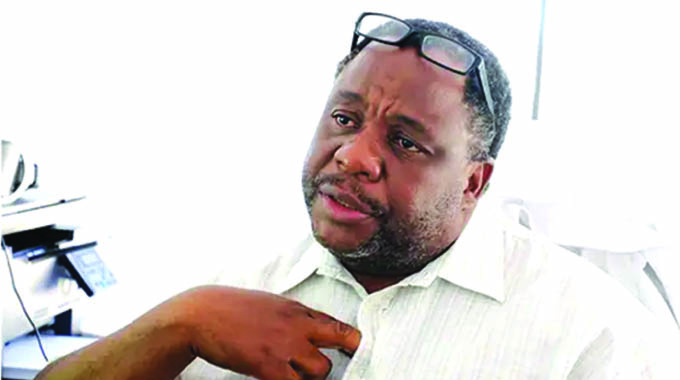
From the identification of 157 bodies of Cyclone Idai victims exhumed in neighbouring Mozambique, use of forensic evidence in dealing with both criminal and civil matters, tracking of cattle theft and to identifying many bodies burnt beyond recognition in various road traffic accidents in Zimbabwe, the work of forensic experts is never an easy one. In this report, Sifelani Tsiko (ST) Herald Innovations Editor speaks to National University of Science and Technology – Applied Genetic Testing Centre (AGTC) director Prof Zephaniah Dhlamini (ZD) about the complexity of DNA analysis in tracking the victims and the hopes this growing science holds for the country.
***
ST: Fire and other natural disasters such as cyclones devastate communities and families and it makes identification of victims challenging. Can you tell us briefly about forensic science, what it is and its importance in all this?
ZD: Well, forensic science entails the use of different scientific fields to evaluate evidence, be it a crime scene, or looking at the body of any person who is found dead. You may want to apply certain principles of chemistry, physics or biology to actually ascertain the cause of death. The field that I work in is forensic biology, specifically forensic genetics. This is where we are looking at the genetic material. And the genetic material predominantly is DNA – deoxyribonucleic acid. That is the genetic material which we inherit from our parents and is unique to each and every individual.
ST: And how do you carry out the DNA analysis?
ZD: The DNA analysis obviously has to be done on a biological specimen because all life forms have DNA or some nucleic acid, maybe RNA. So you have to isolate the DNA from a portion of the biological material you want to investigate. In a typical forensic investigation, DNA is extracted from a sample — whether some blood, pieces of tissue or bone — collected from the scene of the disaster or crime. This process chemically separates the DNA from other components of cells within the sample, such as proteins, and purifies it. This creates a sufficient amount of DNA for subsequent tests. DNA analysis can help identify victims by comparing genetic similarities between people.
ST: What are the key areas that you have used this science to help identify victims or produce evidence for criminal and civil matters?
ZD: Well, under forensic genetics we obviously do relationship testing where we want to establish whether two individuals are related. These can be human beings or your paternity, your grand parentage testing or a sibling testing. We also do this for animals, predominantly cattle in cases of stock theft. You may want to identify the remains of an animal found at the crime scene and if it matches say meat, for instance, found in someone’s butchery.
And then you are matching the DNA from the two samples. So on the forensic side of things we are trying to identify perpetrators of violent crime such as sexual assault. During sexual assault, a lot of DNA is left by the perpetrator. On a murder victim, a weapon is found, so you may want to analyse the handle, the trigger, be it a gun and see if you can get touch DNA from there. You know, you get a lot of DNA just from your sweat, as you sweat. So you can then link the particular suspect to a particular weapon that was used. And let’s say a knife or a spear was used to harm someone and a perpetrator is found or a suspect is found with that knife. Then we can swab the blade of the knife to see if the person who was harmed, if his DNA is on that knife and then the suspect will have to explain how that person’s DNA got to his piece of weapon.
ST: The Applied Genetic Testing Centre (AGTC) has become renowned for providing these services. To date how many DNA tests have you done successfully?
ZD: Right, our main activity is human identification or relationship testing. I can safely say that since we started working in 2014, we have done well over 5 000 paternity tests. And then when it comes to disasters, especially road traffic accidents, where people are burnt beyond recognition, we have done a number of major accidents. The biggest one, obviously, that we are still working with is the victims of Cyclone Idai, where we lost over 300 people, but we have only managed to exhume not more than 20 people who disappeared and were buried in Mozambique. So that is ongoing work, exhumations will continue. I don’t know when we will finish that, then we have the road traffic accidents where especially buses, public transport, we had the Brooklyn bus disaster between West Nicholson and Gwanda, where we had about 35 or people who were burnt beyond recognition. Yes, around there and we identified all those. We also did the Mvuma accident in which 23 victims were burnt beyond recognition in the accident that occurred on April 5, 2017. This one had 23 victims and we also did the Mvurwi accident in which the bodies of 11 people were burnt beyond recognition when a commuter omnibus collided head-on with another vehicle in 2017. Yeah, we have done a lot and recently the air traffic accident that happened in Mashava, we did that one which had three people. This was the first time we handled an aircraft accident disaster. And then, we have a lot of sexual assault cases that we have done for the police – forced entry in cases where people are breaking into buildings and they always leave DNA evidence behind.
ST: So for the road traffic accidents, would you say the numbers may be now close to a hundred or more than that?
ZD: Road traffic accidents? Yeah, maybe between 100 and 200 victims. But remember, when you are doing a road traffic accident, you may want to consider the reference samples. Those samples that you are using of the relatives of the other fates of the deceased. So, yeah, it’s a lot. You know, it’s a lot.
ST: So could you tell us how the use of DNA analysis has been helpful to the relatives of the victims?
ZD: Yes, it is very useful in that it certainly brings closure. There’s nothing as distressing as seeing relatives watching piles of charred bodies and not knowing where their loved ones or who their loved ones are among those of those bodies. And when you then come and say, okay, this one belongs to family A and the other one belongs to family B, you actually see the relief when people take possession of their beloved remains and they go and bury them.
ST: And, how do they feel when they learn about the results you provide them?
ZD: Yeah, we have always said look, it has happened and now we have to use science to bring closure to the disaster that happened. And yeah, they always appreciate the use of science in solving these cases.
ST: When victims get burnt beyond recognition, how do you go about carrying out your work?
ZD: The process is — when an accident happens, what we usually do, the police – traffic police usually attend the scene and then the forensic department of police will also attend the scene together with the forensic pathologist because as forensic scientists we are not allowed by law to handle dead bodies.
It’s the preserve of the government pathologist. So the government pathologists will go, the police will remove the victims from the accident scene and take them to the nearest hospital mortuary. It has to be a government establishment. And then the pathologist comes. When we started we would go together with the pathologist to sample so that we could help each other to say which samples would best give us results in the shortest possible time. And then we will be showing him body by body that on this body we will use the brain, in that body I think we can use the muscle and this body is badly burnt and we may need to use long bones or teeth, and so on and so forth. And in these accidents bodies get dismembered and as bodies get burnt we have realised the long limbs break. So you will find debris of body parts. Those must be identified individually.
ST: And, looking at the latest Anglican pilgrims accident, what could probably have caused the accident? Can you also give us an update on the DNA tests for the victims?
ZD: I, I am not privy to the details of that accident. All I heard was when we were called by the police and the relatives to say they need us to do the DNA tests. And then, of course, the relatives were saying they don’t have the money to pay for the service. Then we refer them to the Civil Protection Unit, which has been very helpful for most of these disasters. I must commend the Ministry of Local Government and Public Works under which the Civil Protection Unit falls. So they have really come through and have been paying for this service. It’s expensive to service our machines and to buy the reagents that we use for testing. And the Civil Protection Unit has really come through and helped us. So they said they will pay for the and for the service for these Anglican victims. So we spoke to the pathologist and we got the samples. We did the DNA analysis for the eight bodies and the victims were identified. The ZRP has since released the names of the victims. They are in the process of liaising with the relatives to help collect the remains. We have now perfected our work throughput. In the past, accidents like this would take us two or three weeks, but now we have streamlined our processes. We can easily do that within 3 to 5 days if everything is in place.
ST: What are some of the challenges you face when working on this forensic work?
ZD: Well, the major challenge has been power cuts. Once you start the process, the machines don’t have to stop. Now, imagine you have a disaster like this and you have 10 – hour power cuts, it cannot work.
But we managed at least to solve that by installing a 10kva solar system in our innovation hub and we now have uninterrupted power supply. And, of course, another challenge is the procurement of the reagents that we use. You can’t buy in bulk because they have expiry dates. So we have managed through government proclamations that the kind of work that we do doesn’t have to go through the rigorous process of bidding and going to tender for some of these things. In most cases we are buying directly from the manufacturers. So the procurement units have given us leeway to buy directly and that has really helped us in the sense that we can buy our reagents and bring them into the country on time.
ST: Forensic science is a growing field in the country. What do you think needs to be done to advance the science in the country?
ZD: Obviously, it’s a new field. I know the University of Zimbabwe now offers a degree in forensic science. I don’t know, maybe Bindura as well, at NUST we haven’t offered or developed a program for forensic science.
ST: Why?
ZD: Why? We cannot do everything. I had my vision to bring forensic genetics into the country and we were the pioneers in this. And we focused on the practice of the science. And we were happy to say most graduates coming from our biological sciences and biochemistry departments can easily be trained in that, either as postgraduate and you know, just general hands-on experience learning.
ST: Looking ahead, how do you see this field of forensic science moving in Zimbabwe?
ZD: Of course, we need widespread use, adoption of this technology and we would want to have the police empowered to have, you know, police officers who are competent in sampling, collecting the forensic evidence that can be successfully tested and such evidence used in courts of law. So there is a need for capacity development. Capacity development on the users in terms of the police, capacity development in the judiciary — when you present DNA evidence in court, the judge and the magistrate have to understand, the prosecutor must understand what questions to ask you. The defence lawyer has to understand what aspects of the evidence they should interrogate so that the evidence is useful. Otherwise, if people don’t know what DNA evidence is, what’s the point of us doing it? So there is a need for capacity development in the entire value chain.
And lastly, we have acquired additional skills and equipment to be able to manufacture kits. These are the reagents that we use in our PCR evaluation of this DNA evidence and we would soon be starting to manufacture some of these. By the way, forensic genetics goes beyond what I have just been talking about. When Covid came, we were doing Covid tests. We did Covid tests for the southern parts of the country, that included Bulawayo Province, Mat North and South, Masvingo and Midlands. We were testing using the AGTC equipment. We took it to Mpilo Hospital because the containment level three, which we were using at Mpilo. And in total, when we were stationed there for nine months, we tested over 50 000 people for Covid. So the Covid test is a simple DNA test. So we have now acquired a machine called Oligo Marker which is used to make primers that are used for PCR testing.
ST: Another major problem we face as a country is the flight of skilled forensic experts to other countries with better working conditions. What can we as a country do to retain this skilled labour force?
ZD: Yeah, I think that’s a challenge. That’s a challenge and from the numbers I have given you, I am sure you do see that the institution is making some decent money. So we ask that supplementary pay should be paid to these young people who are working in these specialised projects so as to retain them. Because if we fail, they will leave. We just had one of our key forensic scientist, molecular scientist, resign and going overseas. I mean, it’s a gap that would be difficult to fill, but yet if we had taken just a little from what they are making and remunerated them, they would probably have been incentivised to stay.


 Peter Tanyanyiwa
 Online Reporter