Chronicle Editor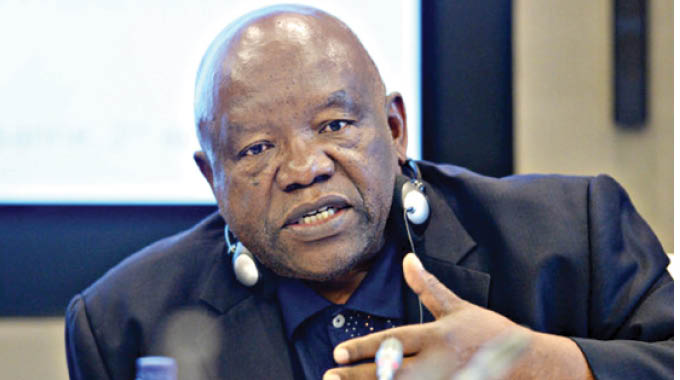
Jonathan Maphenduka
THE development of African Journalism in the field of print media in this country has a long and colourful history, beginning with the foundation of The Bantu Mirror which I first saw in Bulawayo in 1948.
Then followed the African newspapers group in the late forties. The group were the publishers of the original Daily News which has been imitated in subsequent years, without great success and fame that the original newspaper attained.
Both newspapers mirrored and promoted the African view in a climate which was dominated by discrimination and white racism. The Bantu Mirror, whose editor was for many years Masotsha Hove who also first doubled up (I understand) as its reporter.
The Bantu Mirror was the newspaper of the day when Benjamin Burombo (barefooted) led the first organised anti-discrimination protest in Bulawayo.
The Daily News was already well established in Salisbury when I found myself in the capital in 1956.

I’m writing from memory but its first editor (I think) was a man named Jasper Savanhu, who during the ill-fated Federation of Rhodesia and Nyasaland became a Member of Parliament. His successor (if my memory serves me right) was none other than the late Nathan Shamuyarira.
Among those I remember as having become staffers of this memorable newspaper were figures like Abby Rusike, Alexander Mahlangu and Enos Ndlovu who, in 1962, became the founding staff members of Times of Zambia group based in Kitwe on Zambian Copperbelt, and I joined them as a junior reporter.
These newspapers became a major challenge to the Rhodesian Printing and Publishing Company in the twin British colonies of Southern Rhodesia and Northern Rhodesia.
In order for the reader to understand well how my humble involvement in the field of journalism began, it is necessary that I must give some background information. It was not straight from school to the newsroom. In 1954, working in agricultural college in Monze in Northern Rhodesia, I had become what in those days was called a touch typist, an occupation in Southern Rhodesia which was a preserve of white women. I returned home in 1956 and found myself in Salisbury looking for employment.
I had one job offer at African Newspapers and another in an agricultural estate in the then Sabi Valley, nearly 200 miles away. I was living with a cousin in a cramped little place named Old Bricks in a corner of what was then Harare Township. We used to kill time on Sundays by strolling to the fence of a nearby football ground to watch Enock Dumbutshena and a friend (a Gwanzura I believe) playing a game of social golf. That football ground is today named Gwanzura.
Instead of taking the job offer with the newspaper, my cousin urged me to take that offer from agricultural station. There was simply not enough room for two in that match box at the famous Old Bricks. But that missed me an opportunity which was to enter a field which was to become a passion of my life.

It was from Sabi Tanganda Estate, therefore, that I wrote a letter to the editor defending the right of African people to have as many children as God had decreed, amid growing calls by the government for Africans to adopt birth control methods. It was through that letter I first saw my name in print.
That point about God’s will was a naïve and short-sighted piece of argument.
When I left the Sabi Valley in 1958 I returned to Northern Rhodesia, choosing Kitwe from where I started stringing for The Daily News and Drum magazine in South Africa which is where Titus Mukupo, first editor of Times of Zambia group, saw my name and invited me to join the new group.
Earlier, I had left my job with a roof and floor tile company to join Chibuluma Mines, working as a lasher underground which is where money could be earned, so word went.
My interest in journalism was rapidly growing to become a lifetime career. In January 1965, I was sent to the International Press Institute in Nairobi on a six-month course of training but I could not return to The Times of Zambia because the weekly Zambia News had published under my by-line a news story which offended a local governor, just before I left for Nairobi.
That was to become my first professional hazard which prevented my return to the newspaper group in Kitwe.
It was an innocent little story based on President Kenneth Kaunda’s general circular to party regional leaders warning them against leaving their wives to marry young girls.
The offending circular, which identified no one by name, had fallen on my lap from local official of the ruling United National Independence (UNIP) party.
Because of that story I lost my job with the group and found myself returning home to join Kenneth Ndlovu at The Bulawayo Chronicle on July 1 1965. Ndlovu had the honour of becoming the first African to join the newspaper.
Back in Kitwe the new group was gaining popularity.
The trio of Rusike, Mahlangu and Ndlovu had come from the Daily News to seek greener pastures, with Rusike becoming the newspaper’s first chief sub and Mahlangu and Ndlovu among others on the subs’ desk. The reader will notice that I occasionally use terminology of the profession. This is the language of the newsroom.
In 1966 Kenneth Ndlovu and I were joined by Tony Chiutsi, emerging from the then University of Rhodesia. This marked the first phase of my career as a journalist in Southern Rhodesia. The printing and publishing industry was in both Southern Rhodesia and Northern Rhodesia still dominated by the Rhodesian Printing and Publishing Company, since 1894 when The Bulawayo Chronicle first appeared in the streets of the Royal city.
In Northern Rhodesia the group published The Northern News based in Ndola. The group’s employment slowly changing to open opportunities for blacks in the early 1960s. We will see how this policy was affected by the new order which followed independence.
A major change in the print, publishing and radio industries in Southern Rhodesia followed the attainment of independence in 1980 when the first crop of black editors appeared on the scene with the founding of what we know today as the Zimpapers Group of Newspapers.
I must mention at this stage the role that was played by David Ncube in the field of journalism, with his excellent command of the English language and reporting skill, both of which were the envy of many. He was already working for The Chronicle when I returned to re-join the newspaper in 1981 and he rose to become Sports Editor.
Here was a man who became the greatest in the field of sports journalism and, being an all-rounder, could have risen to the very top if his ill health had not intervened.
The first black editor of The Chronicle was none other than the group’s current chairman, Tommy Sithole, a great Olympics enthusiast who later moved to the Olympics International Committee in Geneva, Switzerland.
I had at the end of July 1967 been fired after my younger brother, Agrippa was killed fighting Rhodesian forces at Sinamathela in what is known as the Battle of Wankie which pitted a coalition of Zipra and Umkonto Wesizwe against Rhodesian forces backed by units of members of the South African Defence Forces.
I had been detained at Bulawayo Central Police Station and released without a charge after two weeks, returning to work to be fired. That was not to be my last arrest as a journalist. After leaving The Chronicle I became a bus inspector with a local company before moving to what was then Fort Victoria to avoid police harassment. It was in Fort Victoria where a young reporter named Innocent Kurwa found me in April 1981 when Sithole offered me my job back, nearly 14 years to the month when I was fired in July 1967.
Among the first crop of black editors in the new Zimpapers group was none other than Geoff Nyarota of the Willowgate Scandal fame, Charles Chikerema and the inimitable Willie Musarurwa who became editor of the group’s weekly flagship, The Sunday Mail.
My work under Sithole was the most memorable one for two main reasons: he was not a run of the mill newspaper editor and his sense of justice and fair play was beyond reproach. When I was arrested in July 1982 and detained at Donnington Police Station for four weeks on an allegation of subversive activities, linking me with my cousin, the late Vote Moyo who spent four years in detention at Whawha without trial, Sithole retained me on his staff after my release.
I can imagine him going to the police station and confronting the officer in charge with “are you going to charge this man or release him?” I have said he was no ordinary newspaper editor and the grapevine had it that the then Prime Minister Robert Mugabe gave him a lot of ear. No ordinary newspaper editor commands the use of an Airforce of Zimbabwe aircraft with him at the controls.
It was indeed a rare treat to watch his flying skill. I had only once before flown on an assignment in a light aircraft, when in 1964 I was flown from Kitwe’s Kandeke airstrip to Fort Jameson where Reuben Kamanga was officiating in the launch of a local co-operative organised by villagers, flying back to base to file the story for next morning’s paper.
Sithole once flew me and another reporter from head office, from an Airforce of Zimbabwe base near the then Harare International Airport to Chimoio and Beira. This was at a time when units of Zimbabwean armed forces were in Mozambique to help put down a Renamo insurgency, amid reports that members of the army were involved in smuggling contraband from the neighbouring country.
If these reports needed verification, Sithole was the only person to investigate and report back to the Prime Minister. When we landed at Beira, he was driven away to an unknown destination, leaving us to be led to a seedy part of Beira harbour where we spent hours of idleness.
I remember that the only thing I did to justify a day’s jaunt with the editor on a secret mission to a neighbouring country was a piece on mass graves of Zimbabwean refugees who were bombed by Rhodesian forces. I think there are at least 3 000 graves of the victims in Chimoio, an extremely unsettling experience for me.
Sithole, though forbidding in appearance, was indeed deep down his heart an understanding disposition and a fair judge of a situation.
I had on the spur of the moment and inexcusable naivety, complained to him regarding failure by a newspaper for which I worked to report my arrest. I can still remember his response to that piece of indiscretion on my part. “If we had reported your arrest, you wouldn’t be back here with your job”, he reprimanded me.
I had on two occasions already lost my job on flimsy, unfounded and unjustifiable grounds. I was not looking forward to another job loss episode based on false accusations.
I quickly walked out of his office with my tail between my legs. I was scared that I had perhaps offended him by raising that silly question. But later he chose to fly with me to a neighbouring country on a secret mission during which my colleague and I were left alone to kill a long time doing nothing, on a trip which only Sithole could justify.
Can you ever desire a better relationship with your editor?
When Sithole left to become editor of The Herald, Nyarota took over at The Chronicle, an occasion for me which proved to be fraught with uncertainty. A new Editor-reporter relationship with the new chief had to be endured. It was under Nyarota’s editorship that my name (according to the late Willie Musarurwa) was raised at editorial board meetings. It was said I was someone who did not toe the line.
That posed a direct threat to my job security.
I was now Business Editor and poised to become Senior Assistant Editor in due course when Nyarota was transferred to assume editorship of The Herald. A year or two later Musarurwa had left the group to become a public relations consultant, and we met at the Lonrho Zimbabwe pavilion at the Zimbabwe International Trade Fair where he entertained senior media people with drinks and steaks. I was now Senior Assistant Editor under the new editor Stephen Mpofu. Musarurwa remarked “I see you are still with The Chronicle and have also climbed a few rungs. You must be a great survivor.”
I have never desired to use any political connections (and I have none) as a means to attain recognition of my work as a journalist. And I have no intention to change that professional standpoint. But I think I have suffered as a result.
Once Nyarota and I travelled to Victoria Falls for the annual Confederation of Zimbabwe Industries (CZI) and we stopped at Gwayi River Hotel to buy some drinks and sticks of biltong. That night Nyarota visited a casino and won $600. He decided to ask his wife to fly to the resort town to join him.
It was at a CZI annual conference that I first met George Charamba who had come from university to become Prime Minister Robert Mugabe’s Press Secretary, a position he held for many years during which he became the darling of the media fraternity.
Though on the opposing social strata, we have since those days maintained an amiable though distant friendship. Whenever we meet (the last time was in 2015 soon after I had just published my controversial book, The Rule by Conquest: The Struggle In Mthwakazi ) when we were seen (in a public house) when we were seen hugging and thumbing each other’s backs like long brothers.
Here is a man I consider a great survivor, if ever there was one! I was looking forward to renewing our friendship during this year’s Independence celebrations which I stole with the publication of that open letter to the British Ambassador, which I hear has gained me notoriety and anger in high places.
Unfortunately the celebrations have been forestalled by the coronavirus pandemic.


 Online Reporter