Online Reporter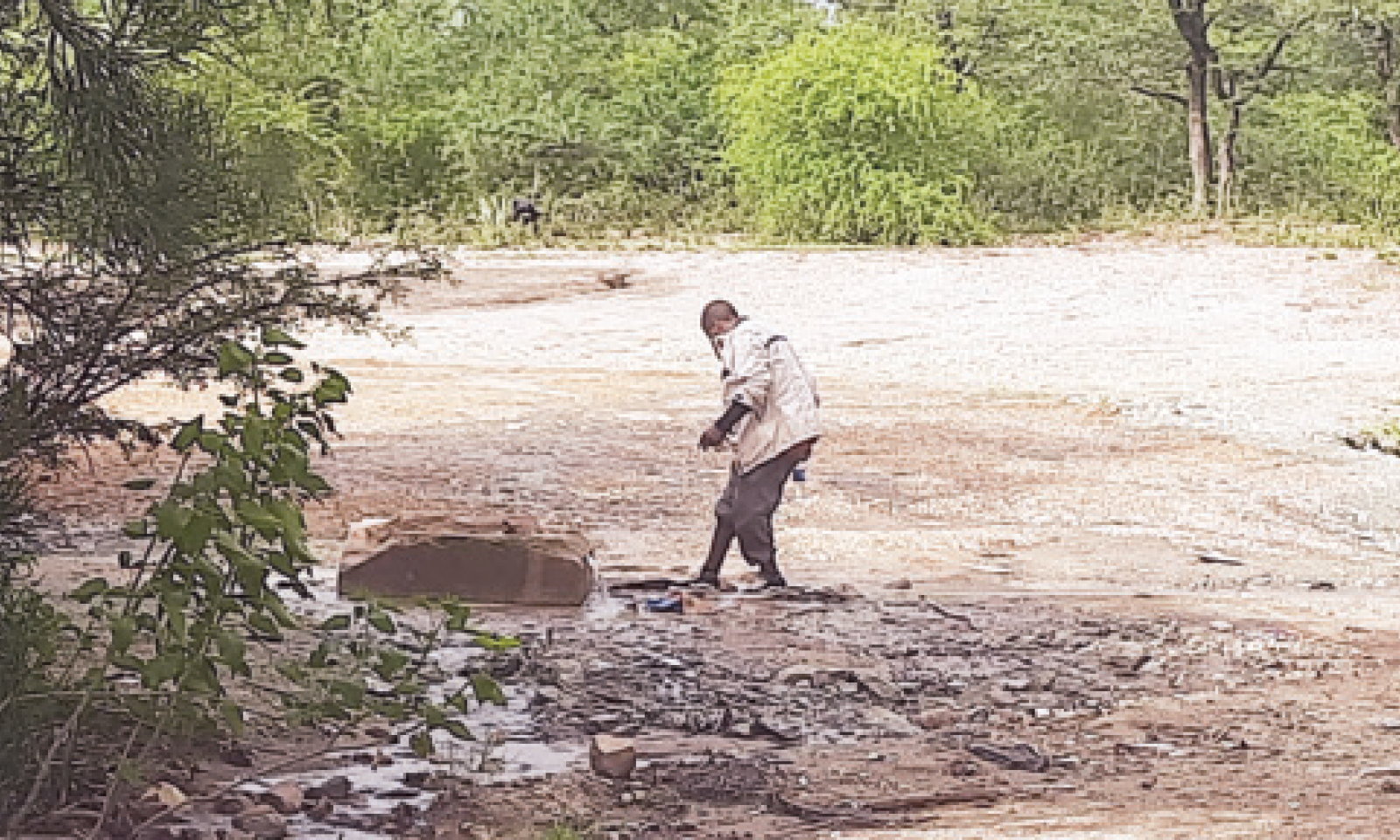
Walter Nyamukondiwa
Mashonaland West Bureau Chief
The Rupise Hot Springs in the Chibuwe area of Chipinge produce a free-flowing stream that has a distinctive purity to the eye, a lingering odour like boiled eggs that wafts through the air, and sizzling steam.
To the undiscerning, it’s a stream of water like any other, only much warmer, but as you follow it, you get to its source, where still, clear water captures the eye.
It’s a small pool of water surrounded by stones, pebbles, earth and a patch of grass on one side. In the periphery are mopane and thorn trees, distinctly found in dry and arid regions rather than on the banks of a perennial pool, although the pool water is probably too hot and contains too many minerals for most trees.
The steam that fills the air quickly reminds everyone who fancies and quick wash or a drink to proceed with caution. It’s a hot spring, with water temperatures above 60 degrees Celsius.
This is the Rupise Hot Springs in Chikondekonde Village in the Chibuwe area of Chipinge under Chief Mutema. And there is now debate within the community as to whether it is possible to commercially exploit the springs.
Behind the calmness, the local population have built up a set of stories of changes in the water and the problems of putting up permanent buildings.
Recently, a group of people camped at the site and the water reported turned red.
It took the intervention of traditional leaders and spirit mediums from the Chibuwe area to restore its purity and serenity, the community says.
The Herald caught up with Chief Mutema who confirmed the mysterious occurrences saying that the Rupise Hot Springs are sacred and any attempts to put up modern structures resulted in strange things happening.
Rupise, itself is Ndau or Shona for hot.
“There are things that cannot be done or undertaken at Rupise Hot Springs. Recently, some soldiers camped at the site but had to go away in a huff after the water turned red like blood,” said Chief Mutema.
“We had to summon the spirit mediums of the area to conduct a cleansing ceremony so that the water returned to normal.”
The spring is a lifeline for people and animals as it provide water for drinking and other household activities like building and cooking.
Some come on foot, others with carts and cars. They all get their fill but the water is never exhausted.
Along the hundred metre stretch, men bath on the upper part of the stream, while women bath a few metres away.
“We bath here because the water gets warm enough as we get a bit further from the source, especially in winter when everyone has to boil water; we just walk to the stream and bath.
“The ancestors boiled the water for us ,” said a villager.
Mr Jairos Simbini (46) sees the pool and stream as the result of a mermaid, which releases the water from underneath.
“There is a mermaid on the spot, which releases the hot water. We use the water for drinking, washing, bathing and any other uses in the area,” said Mr Simbini.
“The mermaid gets angry if people try to put up modern things and destroy them in violation of our traditional beliefs.
“There is an incident where some lodges, which a white man put years back were destroyed.”
A stone’s throw from the source of the hot springs are remnants of structures, supposedly a hotel that was destroyed upon completion.
These include bathing pools for adults and children, which still stand to this day but now carry rain water instead of the intended hot spring water. Some people tried to lay pipes to carry the hot water to the nearby hotel site but they remain visible in the clear water.
“There is a white man who constructed a hotel just a few metres away from the source with an elaborate plan that included accommodation and bathing pools but they woke up on the day of launch to find it destroyed.
“We do not know by who or how,” said a villager from the area.
It is a spring that is as old as mankind and generation after generation of the predominantly Ndau community have visited the springs for deep spiritual reasons such as healing. People come from far and wide for cleansing of bad luck or other misfortunes.
“People come for healing from various conditions including skin diseases and cleansing from evil spirits. People believe that if they bath with the water they are cleansed,” said Mr Simbini, a relative of a traditional healer known in the area as Simbini.
Others believe they can be healed of back pain, sore legs, and other ailments by simply coming into contact with the water.
This belief is common around the world, and it has allowed many spas near geothermal springs to become tourist attractions.
One could pass through the Mutare to Birchenough Bridge Road in Manicaland province’s Chipinge area without realising that there is a hot spring of significant spiritual and tourism influence.
It is hidden in plain sight! There is no signpost or marking to show that there is a site of major historical and geological significance. Chipinge Rural District Council chief executive Mr Blessing Mamvosha said the springs which fall under his council were unique and there were still consultations with the community on how to manage them for their benefit.
“There is some thinking of promoting local community tourism but it is a process that needs all stakeholders to be onboard,” said Mr Mamvosha. The springs, one of at least 30 hot springs countrywide, form headwaters and cools into the Rupise River.
The highest recorded temperature of the hot water was more than 60 degrees Celcius with the springs in Binga, along the shores of Lake Kariba and those along the Gatche Gatche Road being the hottest at 90 degrees Celcius, nearly boiling point.
To geologists, hot springs occur when water enters into an area of volcanic activity underground, which heats the water and force it back to the surface.