Chronicle Editor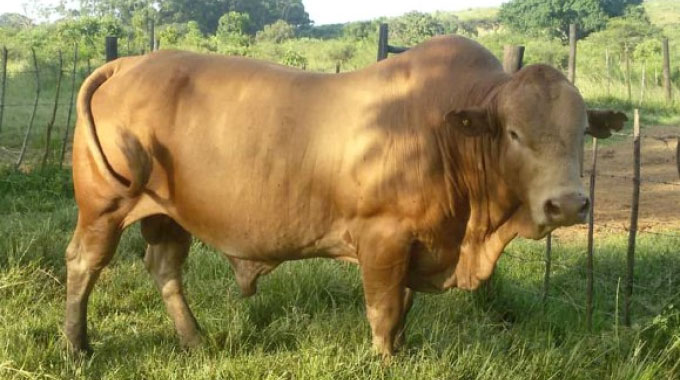
Farming Issues with Mhlupheki Dube
THE past week has been abuzz with the talk of the most expensive bull across all breeds, bought for R8 million by a Zimbabwean Boran stud breeder Mr Collen Tafireyi of Sinyo Boran in Hwedza.
The bull named Cyclone sired by a Boran breed legend, Picasso is a marvel to watch. Very masculine, impressive topline and excellent general conformation. It ticks all the boxes of a good bull from a visual appraisal point of view.
However, because of the steep record-breaking price, most of the conversation on various social media platforms tended to shine the light on the price, with some people even lashing out at the farmer for what they regarded as an obtuse extravagance.
My submission is not to discuss the merits or demerits of spending that much on a bull but rather to zoom in on the importance of good genetics for livestock farmers.
While we have had this conversation on this platform before, I feel it is appropriate to have it again following the impressive purchase by Sinyo Borans.
Good genetics is important for livestock farmers and more so for stud breeders. When breeders sell their animals on the market, they are not selling meat but a particular bloodline or genetics. It goes without saying that one needs top-notch genetics with traceable lineage of impeccable parentage.
Now for Sinyo Borans, their marketing angle will be that they are selling descendants of Picasso, the Boran breed legend and offspring of Cyclone, the most expensive bull across all breeds in Southern Africa!
But what are the benefits for a farmer with a commercial herd who buys good genetics from stud breeders? Good genetics can improve fertility in your herd. There are some breeds that are known for excellent fertility and such reproductive traits as conception rates and calving ease.
Therefore, as a livestock farmer, if you happen to get a bull that will produce offspring with improved fertility, it means you will witness herd growth as your cows now drop calves every year as they should. Another benefit of using good genetics is an improvement in growth rates.
Some breeds have a faster growth rate, which means they quickly attain weaning weights as well as mature weights. Such breeds with good growth rates mean your heifers will go into breeding much faster than their contemporaries from those of poor genetics.
If they are steers, they will attain marketing weights faster and hence a faster turnaround in production. This is related to improved feed efficiency which allows your animal to convert whatever it is feeding on to muscle. Good genetics can improve some production traits such as milk production.
For example, when a Simmental bull is used on local breeds such as hard Mashona, the resultant offspring may produce more milk because of the milk-producing traits of the Simmental. Another important aspect that can either be compromised or improved by good genetics, is the general disease resistance and hardiness of the animals produced.
While some breeds may tick some boxes in terms of performance indicators, it is important to note that it is rare to find one that does well for all. However, some good genetics depending on the breed, can improve hardiness and general disease resistance in your herd. Indigenous breeds tend to have good hardiness and general adaptability to the environment.
However, if you can get a bull even if it is not indigenous that can give you hardiness and adaptability, that is a great contribution to your herd. An adapted breed will survive at very minimal cost because it is not subject to expensive health management regimes.
Breed improvement, which basically means infusing new and better genetics into your herd, should be on the production outcomes of every smallholder livestock farmer as they are the ones currently suffering the consequence of poor inbreeding depression.
The frame sizes for some animals in our communal herds have deteriorated to pathetic levels and the only way to reverse that is to have access to genetics coming out of bulls like Cyclone at Sinyo Borans.
While we may debate price, we will not debate the importance of improved genetics for livestock farmers who are serious about making money from their livestock farming enterprise. Uyabonga umntaka MaKhumalo. Mhlupheki Dube is a livestock specialist and farmer. He writes in his own capacity. Feedback [email protected] Cell 0772851275



 Online Reporter