Andrew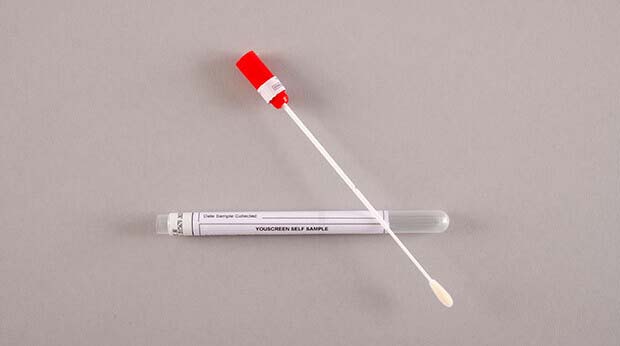
Fatima Bulla-Musakwa
Gender and Community Editor
WHEN a flyer popped up in my WhatsApp inbox inviting women to come for free cervical cancer testing, I naturally developed a keen interest to be a participant.
I reckoned I needed the experience to better inform the public.
Being a woman above 30 years old, I was within the targeted demographic considered the most at risk of developing cervical cancer, a disease that is claiming many lives in Zimbabwe, even though it is preventable.
According to the World Cancer Research Fund, Zimbabwe has the fifth-highest burden of cervical cancer in the world, with over 1 000 women dying from the disease every year.
So, I set off for the venue in the capital where screening was being conducted at the behest of the Zimbabwe Ladies Golf Association, National Aids Council (NAC) and other health service providers.
Upon arrival, the first stop was the Diagnostic Laboratory Services, who were going to provide free testing of samples collected from women.
There, Ms Lisa Mahlupeka gave a brief on the objectives of proving free screening.
She explained advantages of the self-sampling kit that was developed in line with World Health Organisation’s recommendation as a Human Papilloma Virus (HPV)-DNA-based test.
HPV-DNA testing detects high-risk strains of HPV, which cause almost all cervical cancers.
This is now the preferred method, compared to Visual Inspection with Acetic Acid and Cervicography(VIAC) and the Pap Smear, which are currently the most commonly used methods to detect pre-cancer lesions globally.
Unlike tests that rely on visual inspection, HPV-DNA testing is an objective diagnostic, leaving no space for interpretation of results.
Women who tested positive would receive free treatment from Population Solutions for Health Zimbabwe.
“We are saying let us test for the causative agent, which is the HPV, because you might not have cancerous cells yet, but could be positive for HPV. This test kit allows you to collect the sample yourself,” Ms Mahlupeka said.
“If you are treated for HPV now, it means you are safe, other than waiting for the pre-cancerous cells. It could be too late.”
From there the process involved joining a queue to register one’s personal details before jumping to another line to be interviewed by a nurse and finally receive the self-sampling kit.
Upon seeing the meandering queue, I took the opportunity to engage Qiagen director of global emerging markets, Ms Simona Grandits, who highlighted that the self-sampling kit enabled at least 90 women to be tested within three hours.
“Every late detection may cause death, so what we are promoting here with the organised screening is:
“If you are negative, you can be assured that most probably, for the next five years, you will be safe. Screening will make us aware of our HPV status and reassure us that we are safe for the coming months and years,” she said.
The global strategy involves testing 70 percent of the affected female population by 2030. After several exchanges, it was my turn to fill the form before I went to the next tent, where I had to deal with somewhat uncomfortable, but relevant questions.
“When was your first sexual encounter?”, was one of the questions.
After the questioning session, I joined the queue for the sampling kit.
The kit had a brush which is used to collect the sample that is then placed into the medium.
With keen interest, I went into one of the booths.
One has to be in a proper squatting position and carefully push the brush through to the cervix, which connects the entrance of the female private organ to the uterus.
The bristles of the brush, I must say, caused a bit of discomfort.
But the joy of having privacy and ultimate control of the process is indescribable.
However, I realised I needed assistance in placing the brush in the medium as it involved breaking part of the plastic handle.
With the help of a standby nurse, I managed to do so, highlighting the importance of medical personnel where challenges may arise.
I noted that although the process for a healthcare provider to collect the sample is similar with both PAP Smear or HPV-DNA testing, the latter is simpler, quicker and can be used in any set-up, be it urban or rural.
In addition, it is cost-effective.
With this simple brush and without electricity or water, great strides in reducing the mortality rate from cervical cancer, which affects women mostly from poor backgrounds, are realistic.
As I left the booth after submitting my sample, I felt empowered with the experience and having actively participated in the process.
The event, which was held alongside an annual Zimbabwe Open Ladies Amateur Golf tournament, was meant to drive the message that women’s health is important.
President of the Zimbabwe Ladies Golf Union, Ms Margaret Vera, said:
“It’s important to understand that as women we carry various roles in society. We are mothers, we are workers, we are members of clubs and churches. And, therefore, we carry very influential positions.
“We want women to be in charge of their health and make sure they take care of themselves.
“Our partnership with NAC and Diagnostic Laboratory Services is just to encourage women to be more proactive and take health issues seriously.”
Our conversation concluded my experience, and it was a day well spent.
A few days later, I received a phone call that my cervical cancer sample had tested negative, and this was expected to remain so for the next five years.



 Online Reporter