Online Reporter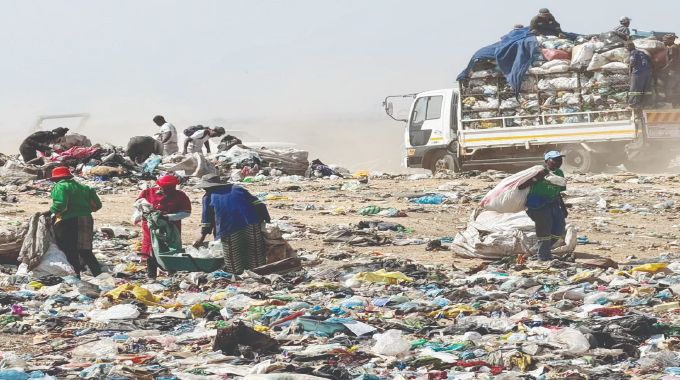
Bruce Ndlovu, Sunday Life Reporter
WHEN Phindile Moyo left Ngozi Mine for South Africa in 2008, she knew that life across the Limpopo would not be a bed of roses.
She had heard all the horror stories, the tales of crime stalking the mean streets of Johannesburg from dusk until dawn where a moment of carelessness could cost one their hard-earned money or in the worst cases, their life.
Yet, when the Toyota Quantum that had carried her from Zimbabwe finally opened its doors, spilling her and other weary passengers onto the bustling streets of Hillbrow, Moyo realised that the stories she had heard back home were not mere fables. They were vivid, if sometimes understated, descriptions of the unforgiving environment into which she had just stepped.
From then on, every day outside her home demanded vigilance. She walked with her eyes open and her senses sharpened, constantly on the lookout for thugs who might want to unceremoniously relieve her of the few rand she sweated for in Johannesburg’s kitchens and gardens.
Like thousands of other Zimbabweans who had crossed the Limpopo in search of greener pastures, Moyo learnt to survive. With time, fear became routine. She learnt which streets to avoid, when to quicken her step and when not to make eye contact. Johannesburg, the fabled City of Gold, offered opportunity, but it demanded toughness in return.
Over the years, she grew accustomed to that reality. Crime, as frightening as it was, seemed indiscriminate and the unsavoury characters who stalked the streets appeared to view everyone as a potential payday. They did not care about colour, creed or nationality.
This year, however, something changed. As xenophobic sentiment began to rear its ugly head, Moyo felt the ground beneath her feet shift. For the first time, she believed she was no longer merely a potential victim because she happened to be walking down the wrong street at the wrong time. Her identity as a foreigner had itself become a source of danger.
The fear was different now. Eighteen years after she had packed her bags and left Ngozi Mine in search of a better life, Moyo found herself contemplating the journey she had once thought she would never make.
With only a few belongings to show for nearly two decades of toil in South Africa, she decided it was time to retrace her steps across the Limpopo.
It was time to go back home.
For Moyo, however, home was not the leafy suburbs of Bulawayo or one of the city’s sprawling high-density neighbourhoods. Home was Ngozi Mine, the community that has grown around the city’s Richmond Landfill.
It was the place she had once left in search of something better. Now, after almost two decades, it was the same place to which she returned in search of sanctuary.
“I went to South Africa in 2008, in hopes of finding a better life. Things have never been easy there, especially with the violence and crime. However, despite this we still managed to make a living. The most worrying thing was the threat of xenophobic violence, which we have always had to live with.
Despite this, things have never been as bad as they got last year. We were chased off like dogs and the way back home was very hard for us,” she said.
For all the hardship associated with Ngozi Mine, Moyo said there was comfort in returning to familiar soil. Here, amid the smoke, dust and mountains of discarded material, she at least knew the rhythms of survival.
“Ngozi Mine is what we have always known and that is why we returned here. Everyone is a bit on edge now because we don’t know what will happen but if we find good jobs here, it would change our lives.”
Moyo is not alone. For some of the women now finding their way back to Ngozi Mine, the journey to South Africa was supposed to be a one-way ticket away from the poverty and uncertainty they had known in Bulawayo. Instead, years later, circumstances have brought them full circle.
One of these women is Soneni Khumalo, whose relationship with Ngozi Mine stretches back more than a quarter of a century. She first arrived there with her family in 2000, growing up and going to school while living in the community.
When she eventually left for South Africa in 2017, she carried with her the memories of a place that, despite its hardships, had helped mould her.
“I am not someone that is new to Ngozi Mine. Before I went to South Africa, I lived here. I came to this place in 2000 with my family. I went to school while I was living here and I only left when I went to SA in 2017. This is a place that I know very well and shaped who I am as a person. 17 years is a long time and even after I went to SA I didn’t forget where I come from,” she said.
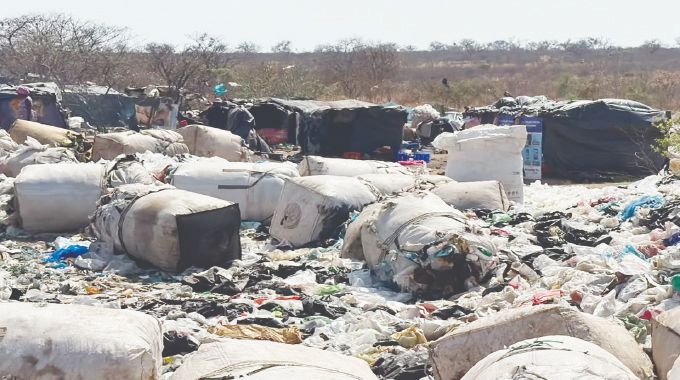
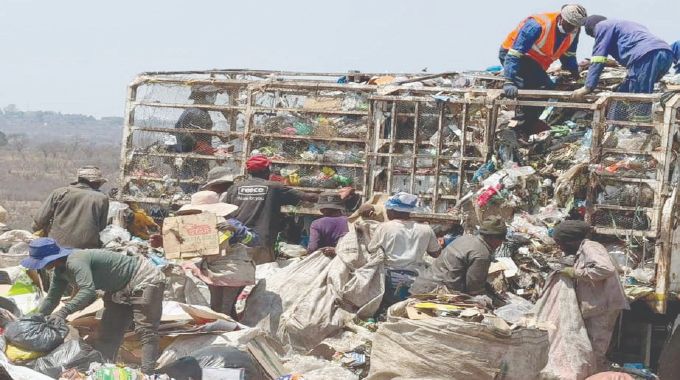
“I only returned here in June of this year after we were chased away by South Africans who said they no longer wanted us in their country. So since then, I returned to a place I knew I would be welcomed back with open arms and I would also get a chance to do some work and earn money for myself. Waste picking is what is putting food on the table and something that I have always known I can rely on to survive.”
For Khumalo, the landfill is therefore not merely a symbol of poverty. Every discarded bottle, piece of scrap metal or recyclable item pulled from the refuse represents the possibility of another meal on the table.
Yet, she knows that scavenging cannot be the final destination.
Like Moyo, she hopes the changes envisaged for Ngozi Mine and the surrounding community can eventually open the door to formal employment.
“For me, getting a job is an urgent need. It is one thing that I believe can improve our situation and change the outlook of our lives. It can also help us forget some of the bed experiences that we went through in South Africa. Things got really bad there and we were chased off like dogs. If we can find jobs here, the decision to return us back home might turn out to be a blessing in disguise.”
Beyond employment, there is another concern that weighs heavily on Khumalo. Having lost her husband, she now carries the responsibility of raising their four children alone.
“Of course, employment is one of our greatest desire but so is accommodation. We live with our mothers and grandmothers and we would like them to be accommodate somewhere at the end of the process. I lost my husband, who also lived here, and we had four children that I now take care on my own.”
The return of women such as Moyo and Khumalo has not gone unnoticed by Ngozi Mine’s long-serving traditional leader, Sabhuku Gideon Tshuma.
For Tshuma, their arrival is bittersweet. There is joy in welcoming home daughters of the community, but pain in the knowledge of what drove them back.
“We are in pain because we have had to welcome some children from South Africa who are victims of this so-called Operation Dudula that has seen a lot of Zimbabweans leaving that country. We have welcomed them with open arms because a lot of them are our children and they happen to be women. We accepted them and told them to make a living in the way that we have always done in this area – through waste picking.”
In a community where survival has for years depended on what others throw away, there is an uncomfortable irony in the returnees’ predicament.
They went to South Africa because Ngozi Mine appeared to offer too little. Years later, they have returned to the same place because, in their hour of need, it still offers familiarity, community and a means, however precarious, of putting food on the table.
As plans to transform the landfill and improve conditions around it gather momentum, those who have survived from its waste are left wondering what their place will be in whatever emerges from the mountains of rubbish.
Tshuma believes that the very changes unsettling the community could ultimately give the women a secure livelihood at home, something South Africa failed to provide.
“There is now a bit of uncertainty due to our present situation and maybe some might think of going back to South Africa. However, we are encouraged that if everything goes well, they might find themselves in a better situation than they would have if they had ever decided to stay in South Africa with all its violence.”