Online Reporter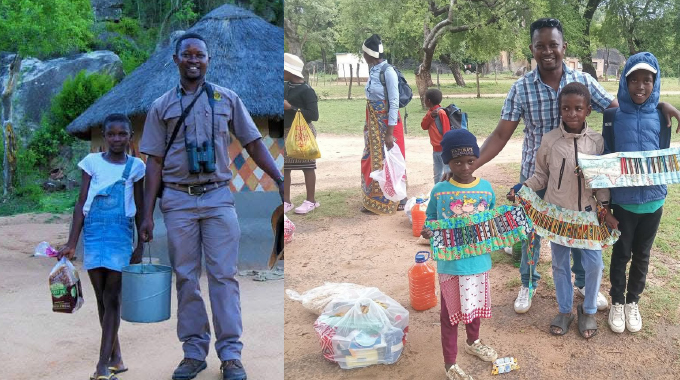
Nothando Zondo, [email protected]
MATOBO is the kind of place that slows you down whether you want it to or not. The granite hills stretch out endlessly, shaped by time and weather, while the communities living around them carry on with the realities of rural life. It is here that a different kind of thinking is taking hold — quietly, without fuss — showing that conservation does not have to come at the expense of people, and that tourism can connect the two in a way that actually works.
The Bushmen Travel Foundation, co-founded by Mr Blessing Masenga and his partners, is built on that idea. It operates within Matobo, not above it, and its work reflects the needs of the people who live there. There is no separation between the foundation and the community — it is part of it.
The foundation itself came into being in 2018, after Mr Masenga stepped away from the Zimbabwe National Parks and Wildlife Management Authority (Zimparks), where he had spent 15 years. Those years gave him a clear understanding of conservation, but also a sense that something was missing. Protecting wildlife without bringing communities along was never going to last. This new path was about closing that gap.
Since then, the organisation has grown into a tourism and conservation business, offering game drives, guided trips around Matobo, city tours, visits to Great Zimbabwe and longer travel packages across the country. On the surface, it looks like any other tour company, but there is a clear difference — everything is tied back to conservation and community benefit.
In an interview, Mr Masenga said the foundation prides itself on being one of the black-owned companies operating tours in Matobo while placing strong emphasis on giving back to the community as part of its conservation mission.
“Giving back to the community is our Corporate Social Responsibility (CRS) in the name of conservation,” he said.
That idea runs through every part of the foundation’s work. One of its biggest focuses is education, particularly for children living near national parks, where daily life can be difficult and opportunities are not always available.
He added that since 2023, the organisation has facilitated sponsorship for about 10 orphaned learners, with support from international partners, particularly from Austria.
The sponsorship package covers their education from primary to secondary level and potentially beyond. For these children, it is more than just school fees — it is stability, a sense of direction, and the chance to think about a different future.
Mr Masenga said that this effort is closely linked to stopping poaching at its roots.
“If these children do not get educated and yet they stay close to the national parks, what they will think of is hunting. But if they are educated, there will be less poaching in the park,” he said.
It is a simple way of putting it, but it rings true. When choices are limited, people fall back on what is available to them. Education opens up those choices and changes how people see the world around them.
He said while hunting has always existed as part of local life, there now needs to be a shift, especially as conservation becomes more important.
“For conservation to succeed, we have to take care of the community and when people benefit, they are more likely to protect the animals,” said Mr Masenga.
The foundation has also made sure that tourism does not leave the community out. He said beyond education, the organisation promotes community participation in tourism by encouraging visitors to support local markets within the park, where residents sell traditional crafts and souvenirs.
This, Mr Masenga added, provides a direct economic incentive for communities to preserve wildlife. When income is linked to conservation, the value of protecting it becomes clear in everyday terms.
There are also smaller but very real challenges that the foundation has taken on. One of them is the long distance children travel to school each day.
“Some children walk for about 14 kilometres to school and the same distance back. We realised that for a child to perform well at school, they need proper transport, so we sourced bicycles to assist them,” he said.
A bicycle may seem like a small thing, but it changes everything for a child making that journey daily. Less time walking means more energy for school, and a better chance of keeping up.
“Looking ahead, we are planning to drill a borehole in Silozwe community in Matobo to address water shortages. The project, which will be implemented in collaboration with Zimparks, traditional leaders and local authorities, is expected to improve livelihoods and support the establishment of a community vegetable garden. Water is life, and this project will help improve living conditions while supporting sustainable livelihoods”.
Water shortages have always been a problem in rural areas, and this project is expected to ease that pressure while giving families a chance to grow food and earn an income.
On the conservation side, Mr Masenga pointed to the importance of protecting rhinos in Matobo, which is home to both black and white species.
He also commended Zimparks for maintaining the area as an intensive protection zone, noting that there have been no reported cases of rhino poaching in the past five years.
“Matobo is one of the few places in southern Africa where people can see rhinos roaming freely in their natural habitat. This attracts tourists and generates income for the country,” he said.
Mr Masenga added that rhino conservation plays a significant role in boosting tourism, bringing in foreign currency, supporting local businesses and benefiting surrounding communities.
What is happening through the Bushmen Travel Foundation is straightforward, but it matters. It is about linking conservation to real life — not as an abstract idea, but as something people can see, feel and benefit from. In Matobo, that approach is slowly making a difference, showing that when communities are included, conservation becomes something people stand behind, not something they are asked to sacrifice for.