admin
adminguarantees of due process of law for the founder of WikiLeaks, had the effect of generating an over-reaction by the government of Great Britain, which bypassed diplomatic law and threatened to storm the embassy of Ecuador in London to arrest Assange.
This outburst by Britain against Latin America, made in the long shadow of the Falklands invasion, was immediately labelled as colonialism. It has been a catalyst to unite all countries of the region around Ecuador.
The government of President Rafael Correa has received the backing of the two most powerful Latin American organisations, ALBA and UNASUR. In at least one of these institutions are Brazil, Argentina, Colombia, Venezuela, Paraguay, Uruguay, Chile, Peru, as well as other countries in the region. In advance of scheduled meetings of both organisations this weekend in Guayaquil to generate a statement of solidarity with Ecuador, several foreign ministers in Latin America expressed their opposition to Britain’s threat to enter the embassy of Ecuador by force.
The US State Department said that the United States “does not recognise the concept of asylum as part of international law” because the US is not a signatory to the Convention on Diplomatic Asylum of 1954. They added that this is not a matter that should involve the OAS, although almost all of the other OAS member countries think otherwise and voted to convene an emergency session.
The US stated yet again that it would not intervene in the case of Julian Assange. Yet, the US government’s repetition of “we are not involved” fails to convince. Too many statements by US lawmakers and officials denouncing WikiLeaks and threatening Assange with imprisonment for life and even the death penalty have been widely disseminated in the world Press. The fundamental reasons that attorneys for Julian Assange believe their client cannot accept extradition to Sweden is because from there Assange will be almost certainly delivered to the US.
According to Assange’s lawyer, Michael Ratner, President Emeritus of the internationally recognised Centre for Constitutional Rights, a secret grand jury in Alexandria, Virginia, was convened to investigate violations of the Espionage Act, where the grand jury received testimony including Twitter messages related to Assange and WikiLeaks. An FBI agent who was a witness in the case of detained soldier Bradley Manning has stated that the “founders, owners and managers” of WikiLeaks were under investigation. Ratner also noted that the FBI has compiled a dossier of 42 135 pages.
In this context, Assange’s fears of being extradited, imprisoned and deprived of any right to a fair defence in the US should be considered well-founded and reasonable. And in the same way, the decision to grant asylum by Ecuador should be considered a humanitarian decision viewed within the legal framework of international law governed by the Vienna Convention.
From this context, there arises a unique situation in which a Latin American country now stands as a defender of the human rights of an individual against the will of two European countries, Britain and Sweden, who refuse to give assurances that Assange will not be extradited to the United States. What irony that a small nation which until recently was considered a mere “banana republic” today openly protects a major world icon of freedom of expression from persecution by United States and its allies. Ecuador’s president Rafael Correa’s grant of political asylum to Assange has opened an international front opposing the ethical/moral paradigm of Britain and the United States.
l Silvia Arana is a former Argentine political prisoner, activist and writer now living in Ecuador. This article is reproduced from www.trinicenter.com


Online Reporter
- Herald
- July 31, 2026
- 24 views
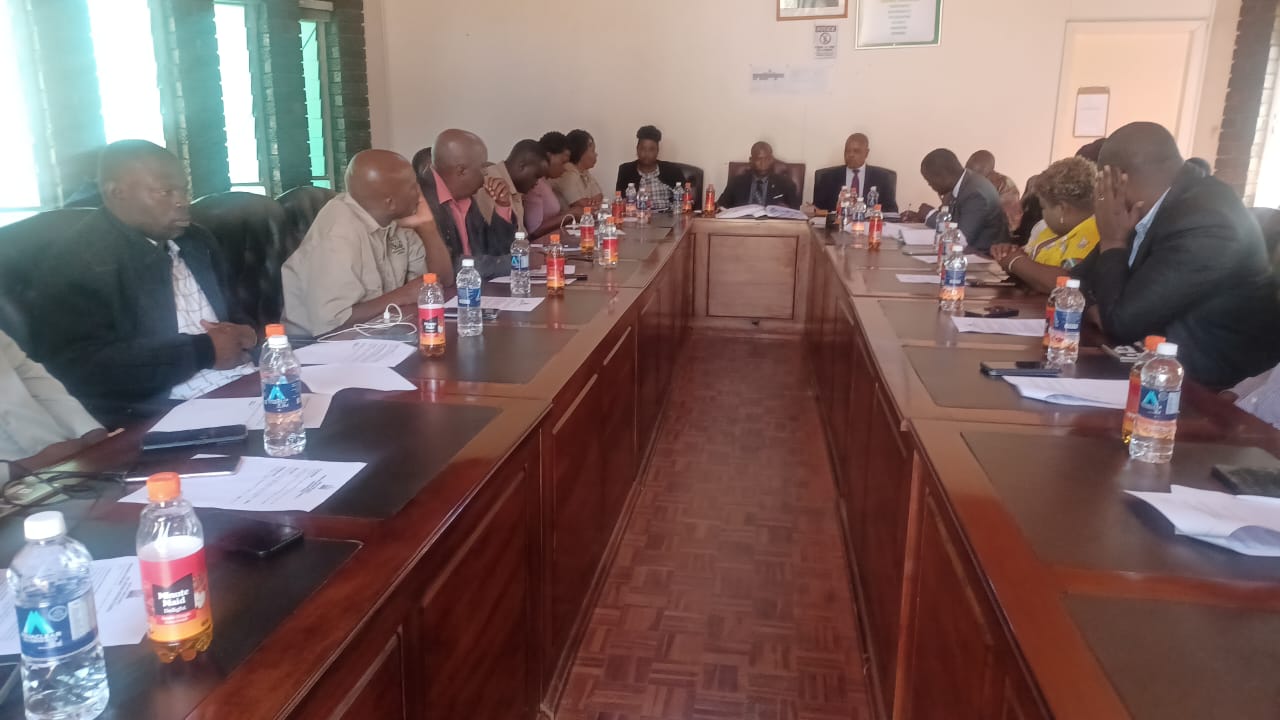
Norton Town Council renews integrity pledges
Diana Nherera Norton Town Council councillors and management on Thursday renewed their integrity pledges as part of the local authority’s commitment to promoting ethical conduct and combating corruption. Speaking…