admin
admin
Collen Takaza
University of Zimbabwe
Albeit the term unity has been popularised within the political discourse it, remains highly applicable in the various facets of life. Unity is a prerequisite in families, in educational institutions, in business and civic organisations, religious groupings, and in relationships.
Lack of unity has caused people of the same nation to get into conflict and lives have been lost and maimed as a result of disunity. Examples include the Nagorno-Karabakh ethnic and territorial conflict between Armenia and Azerbaijan over the disputed region of Nagorno-Karabakh.
Here in Africa, there is the Tigray conflict — an armed conflict that commenced in November this year in the Tigray region of Ethiopia. The conflict is between Tigray Region Special Forces and the Ethiopian National Defence Force, in alliance with Afar and Amhara regions Special Forces.
Unity refers to oneness, sameness, agreement — it implies oneness when there is a certain usual division. It can further be defined as the state of being whole or unbroken completeness with nothing wanting.
Unity of purpose is critical in any endeavour. It is critical for people within a grouping to have oneness or to agree on how things should be done.
In business organisations, the management and the subordinates need to work in unity as it allows them to fulfil the organisational goals and to satisfy the demands of the organisational vision.
In religious circles disunity and the quest for recognition has resulted in the proliferation of multiple Pentecostal movements. The rhetoric cannot be overemphasised; “United we stand, divided we fall”.
Lack of unity among members of the same family or clan can cause degeneration. The media is always awash with news of people from the same family fighting over resources be they scarce or abundant and over issues of witchcraft accusations and counter-accusations.
Disunity is a threat to progress in life.
It is thus not justifiable to talk about unity and not emphasise the importance of unity in diversity. This is basically an expression of harmony and oneness between dissimilar individuals or groups.
Unity in diversity is about unity in the absence of uniformity and diversity without disintegration. It is the celebration of differences, be they political, ideological, religious or cultural.
Unity should be understood as a powerful force that leads to peaceful living in any geopolitical setting. Being united when confronted with difficult moments is pivotal for the sustenance of human life.
In Zimbabwe, in recent times a government of national unity was formed from the major parties Zanu PF, MDC M, and MDC T as a result of the economic and political challenges.
The logic behind this unity was the need for even-handed participation by all parties involved thereby enhancing solidarity in the nation, oneness and development. This move from 2009 to 2013 was plausible as it helped to entrench unity amongst the peoples of Zimbabwe.
On December 22, Zimbabwe celebrates National Unity Day in honour of the Unity Accord which was signed between Zanu PF and PF Zapu on December 22, 1987.
National Unity Day has been a public holiday since 1997 as a day to reflect on efforts towards peace and reconciliation in Zimbabwe.
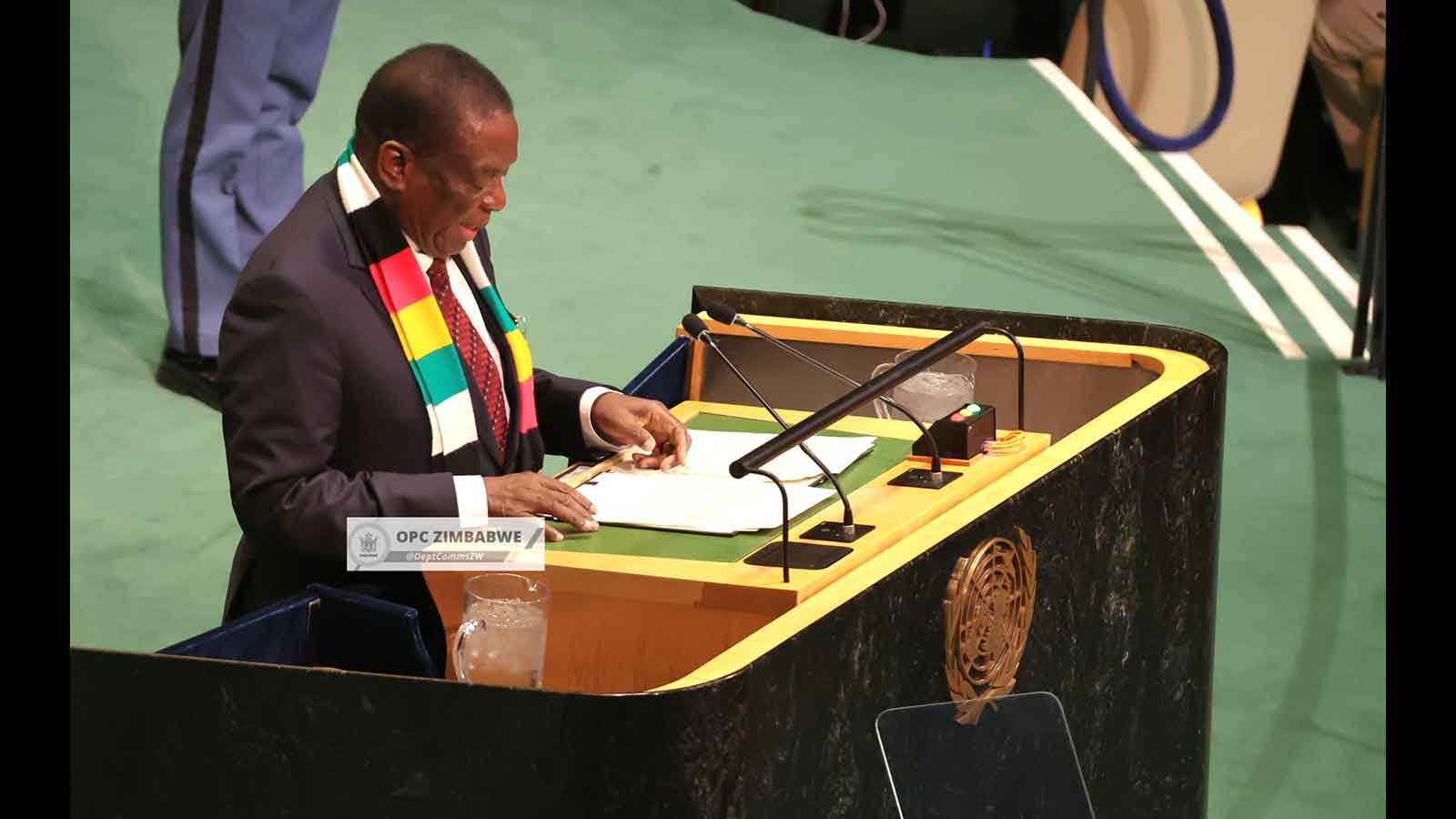
Speaking on Unity Day in 2019, President Mnangagwa noted that Zimbabweans must remain grateful to the late former president Robert Mugabe and former vice-president Joshua Nkomo, for the epochal peace agreement.
The President emphasised that Unity allowed Zimbabwe to defend its self-determination, to grow its economy, uphold peace, enhance democracy and work smoothly with other countries in the region and at the continental level.
Former Ghanaian leader, Kwame Nkrumah once said on African unity: “We all want a united Africa, united not only in our concept of what unity connotes, but united in our common desire to move forward together in dealing with all the problems that can best be solved only on a continental basis”.
It is difficult for nations to register socio-political and socio-economic progress whenever there are divisions. It is impractical to have peace and joy in families when divisions are the order of the day.
In a discussion with local university students on how best Africa and any other developing nations can deal with cultural imperialism from the West, the need for unity was raised.
The discussion pinpointed the centrality of the Americanisation of the world through various forms of information from American films and movies. A question was asked: Are Africans united — are they ready to fight capitalistic tendencies?
Reference was made to a man credited as an exceptionally cultured humanist — Ousmane Sembene of Senegal, who warned: “If Africans do not tell their own stories, Africa will soon disappear.”
Disunity on certain issues thus remains the undoing of Africans. This has saddened Ngugi wa Thiong’o who has argued that there is a need for decolonisation of the mind.
Unity, oneness, sameness will thus continue to be a critical ingredient in life.


 Online Reporter