admin
admin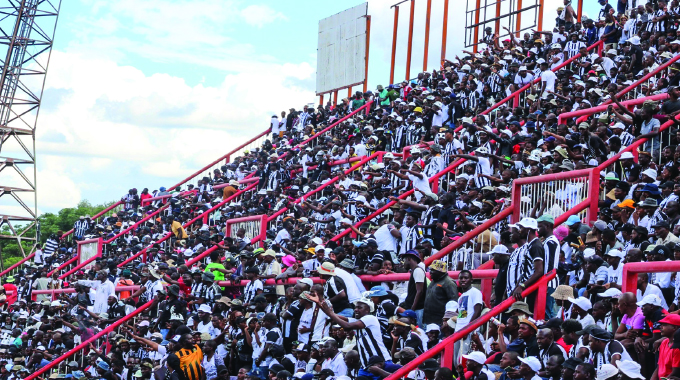
Sharuko On Saturday
ON November 17 this year, the clock will mark exactly 170 years since the day David Livingstone first set his sights on the majestic Victoria Falls.
He was paddled along the Zambezi by Chief Sekeletu of the Makololo tribe for his date with destiny.
What Livingstone said, as he consumed the beauty of the sights and sounds of the smoke that thunders, has remained a big part of the legend of his adventure.
“No one can imagine the beauty of the view from anything witnessed in England.
“It had never been seen before by European eyes but scenes so lovely must have been gazed upon by angels in their flight.”
A part of what Livingstone said that day would have been an appropriate description of the sights and sounds at Barbourfields on Sunday.
Yes, David, scenes so lovely must have been gazed upon by angels in their flight.
The other David, the living David, whose surname is Coltart, will also probably agree with me on this one.
He is the Mayor of Bulawayo and like his namesake David Livingstone, who was a Scottish missionary, he has strong family connections with Scotland.
Like King Lobengula’s grandsons – Albert and Rhodes – who are credited with the establishment of Highlanders, David the Mayor also went to Cape Town for his tertiary education.
His grandfather, too, was a man of both honour and authority and was the Deputy Lord Provost of Edinburgh in Scotland in 1938.
The Lord Provost is like the first class ranking of a mayor in Scotland.
While other Scottish cities elect a provost, who is essentially a mayor, the Lord Provost is only found in the four main urban settlements – Edinburgh, Glasgow, Aberdeen and Dundee.
In March 2011, David the Mayor revealed that he was a Highlanders fan, which was as expected as telling us that he was a lawyer who is based in the City of Kings.
He is not the only Scottish connection to Bosso.
Historians actually say the Bosso story begins in the 19th century when another Scottish missionary and explorer, Reverend Robert Moffat, met some King Mzilikazi warriors.
Their appearance, his diary reveals, blew him away and he noted:
“The appearance of these men was much like the dress of a regiment of Scottish Highlanders; a great number of strings and strips of skin with the fur twisted, hung like a kilt round the middle, reaching to the knees.”
Bobby Clark, a Scottish coach, took charge of Bosso between ’83 and ’84.
He is now 79 and lives in retirement in Scotland.
His fellow Scot, Stephen Walsh, who spent some years teaching in Zimbabwe in the early ’80s, is a super fan of Bosso
Walsh is also a writer.
“In 1982, I went to Zimbabwe as an expatriate teacher at Msiteli school,” Walsh said.
“As soon as I had been at the school for a while and I understood how important Highlanders are to the people of Bulawayo, I had to support them.”
Walsh feels Madinda Ndlovu was a footballer who was ahead of his time in terms of his talent, explosive pace and the destruction he could inflict on the opposition.
Madinda was part of the crowd at Barbourfields on Sunday as Bosso hosted a club with a name which Walsh, Clark, Reverend Moffat, David the Missionary and David the Mayor could all relate to.
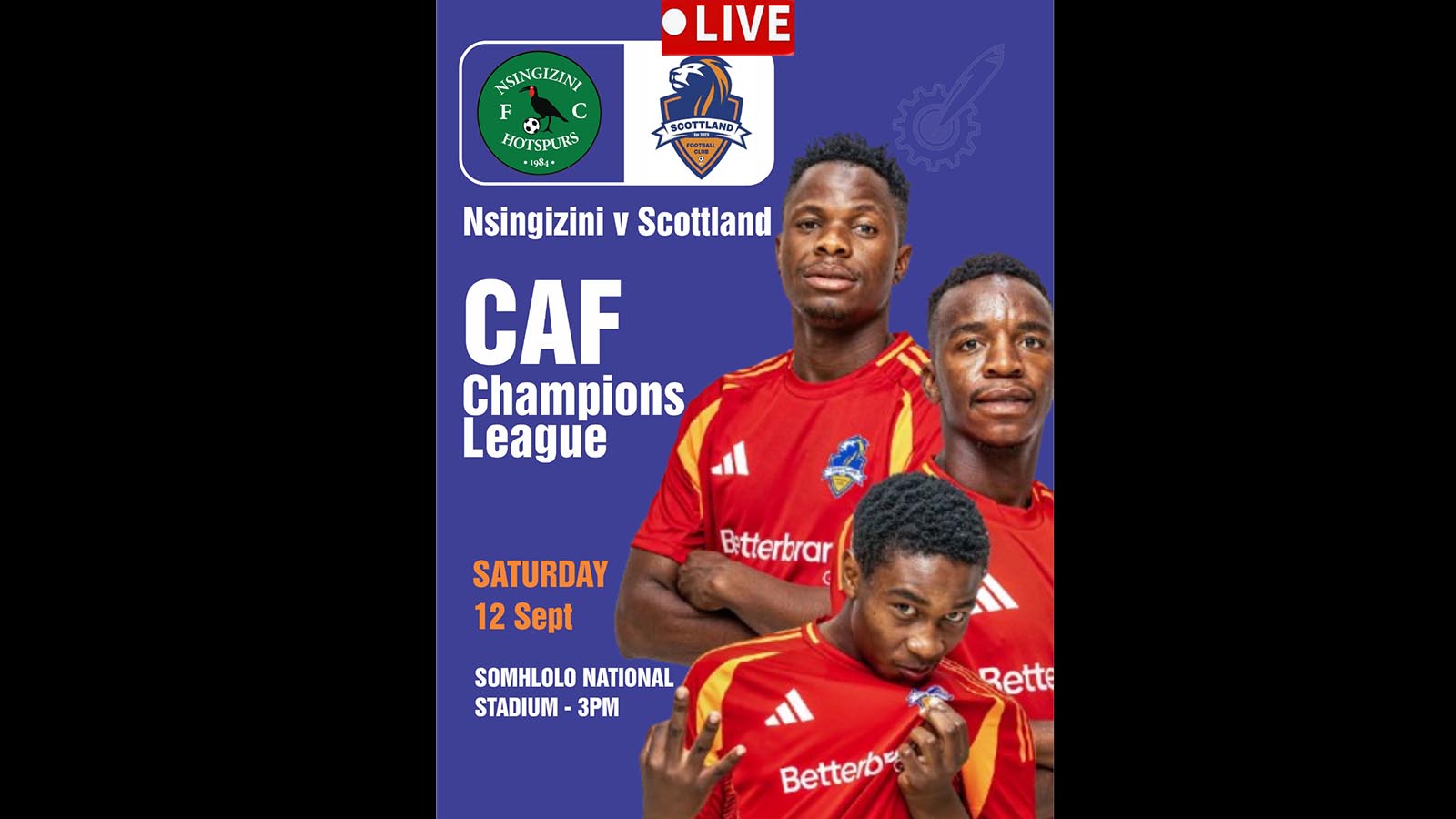
It’s called Scottland and the only difference to the country which all these men have ties to is that its name is spelt with a double T.
Scottland Highlanders, it’s almost like a throwback to the Scottish Highlands – all the single malt whiskeys and everything that is found in those areas.
SCOTTS ARE CHANGING THE GAME
The black-and-white Bosso colours beamed brightly in the sunshine, providing a fitting background to their fortress, their home sweet home, their beautiful base.
There were also sprinkles of blue-and-white, as is always the case when the Bosso family host a huge party at home, the only difference this time being that this wasn’t the old enemy.
This wasn’t Dynamos, this was Scottland and this was a showdown between the domestic Premiership’s oldest club and its newest baby.
This was about Peter Mudhuwa and Lynoth Chikuwa returning home, in the colours of an opponent which moves with a swag and in the colours which have always represented the ultimate rival.
This was the domestic Premiership sending a clear and powerful message that it wasn’t a dead league.
And, after years of stagnancy, it was breathing again and slowly gaining both its strength and powers to woo fans back to its matches.
For years now, Bosso have had to wait for one big pay day – when DeMbare rolls into town.
But, these Scotts have torn apart the script of the domestic Premiership and, overnight, transformed themselves into such a box-office attraction there was a big crowd at Barbourfields on Sunday.
They have even changed the culture of local football and the sight of some Dynamos fans celebrating the Bosso goal in Vietnam on Sunday provided a graphic illustration of how much the game is being changed by these Scotts.
It’s something I never thought I would see in my lifetime but then I also feel that I never imagined that a club like these Scotts would come along and significantly alter our game’s landscape.
Even if they don’t win anything significant this season, the fact will remain that they have really shaken the domestic Premiership because, in the 63 years that this championship has been held, this is the first time we are seeing a Trinity of Convenience by our Big Three clubs.
The final count showed that about 13,000 fans paid to watch the match, even though rough estimates show that there were, at least, 18,000 fans inside the stadium.
Leakages at the gates remain a problem in the domestic Premiership.
But, what isn’t in dispute is that the Scotts have come along with a golden touch which is evoking interest in their matches and it’s not a coincidence that two of their games – against CAPS United and Bosso – have attracted the biggest crowds.
When one considers that those two matches have been the most expensive, with the cheapest tickets going for US$5 each, it puts into context why the Scotts have been the box-office attraction in the league.
The CAPS game attracted 10,995 paying fans, even though a casual glimpse showed that there were, at least, 17 000 fans, and the gross gate takings were US$60 000.
The Bosso game grossed US$70 000 and Highlanders were left with US$45 000 as their share of the money.
And, more than the money, what stood out was the carnival of joy inside the stadium, the colour and beautiful sounds in what was a grand celebration of the PSL.
THE MOST PASSIONATE FANS IN AFRICA
Highlanders have the best support base in this country – their fans are the most passionate and they are the most loyal who will stick with their team in rain and sunshine.
It’s such a powerful connection it even tempts one to believe that it has some form of spiritual link – a bond made in heaven and being celebrated here on earth.
It’s such a unique connection and at Barbourfields on Sunday, everything that makes it such a beautiful and unshakeable bond, was on full display.
It’s on such occasions that I tell myself that Bosso have the best support base in Africa and one of the best 20 support bases in the world.
In the world, I would put them behind Newcastle, who have the best support base on the globe and, who, ironically, have an identity rooted in black-and-white colours.
The irony is that the biggest daily newspaper in both cities is called the Chronicle.
I will put them behind the fans of Boca Juniors, Borussia Dortmund, Liverpool, River Plate, Celtic, Galatasaray, Colo Colo, Palmeiras, Penarol, Millonarios, Fenerbahce, Club Mexica, Atletico Nacional, Besiktas, Olympiacos, Napoli, Corinthians, Flamengo and Barcelona.
This is heavyweight company but I believe that when it comes to mere passion, not judging on numbers, Bosso fans are up there with these giants when it comes to passion.
And, when one considers that, unlike many others, this isn’t a relationship built on a foundation of success but just a special relationship between the club and its fans, the special nature of the Bosso story is put into context.
Highlanders have won just seven league titles in about 100 years which translates to an average one championship every 14 years.
They have not won a league championship in almost 20 years but that has not altered the degree of passion among their fans and every year they flock back to their matches, break records of attendance on the local scene and match in hope.
There was a time when Dynamos averaged 20 000 plus fans at their matches and when 55 000 fans supported them in their Champions League adventure in ’98.
But, with the Glamour Boys struggling, their fan base has decreased that on average 3 000 fans now care to come and watch them play.
DeMbare have won five league titles since Bosso were crowned champions and reached the Champions League semi-final but, once they started to struggle, their fan base vanished.
In sharp contrast, the more Bosso have struggled the bigger their support base has become, something which only happens when the bond between the club and the fans is very special.
And, here they are, just a few months away from turning 100 not out, and still having the most passionate support base in Africa.
You only needed to have been at Barbourfields on Sunday to see all this on full display.
Scenes so lovely must have been gazed upon by angles in their flight.
To God be the Glory!
Peace to the GEPA Chief, the Big Fish, George Norton, Daily Service, Sitting Bull, Crazy Horse and all the Chakariboys still in the struggle. Come on Warriors!!!!!!!!!!!!!!!!!!!!! Khamaldhinoooooooooooooooooo!
Text Feedback: 0772545199, WhatsApp: 0772545199, Email: [email protected]



 Online Reporter