


 malvernmugadzikwa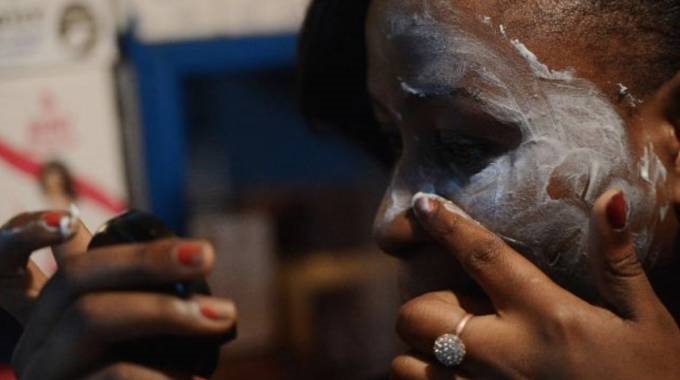
Veronica Gwaze
IT seems the quest for a “fine look”, mainly driven by pop culture, is prompting many Zimbabweans, particularly women, to opt for cosmetic procedures that sometimes turn out to be life-threatening.
For years, women have been spending a fortune on beauty-enhancing cosmetic treatments, most of which are illegal.
The bulk of the procedures, however, entail bleaching the skin to achieve a lighter complexion.
In most cases, American A-listers such as Kim Kardashian, Jennifer Lopez, Kelly Rowland, Nicki Minaj, Ariel Winter, Courtney Cox — among others who have had to go under the knife for liposuction, body contouring, tummy tucks or nose jobs just to look good — are considered a source of inspiration.

American reality television personality, model, singer and actress Heidi Montag, for example, at some point, reportedly underwent 10 procedures in a day to achieve a “hot look”.
Another American musician K Michelle had to get 13 operations to remove botched silicone injections following health scares in 2017. This was five years after she got her butt injections from an unlicensed provider. Her harrowing experience included having migraines, fatigue and leg pain, before being told that the silicone was spreading to her legs.
Movement
While plastic surgery and other beauty-enhancing cosmetic treatments are mainly popular in Western countries, most developing nations rely on affordable methods like skin-lightening creams and body-enhancement pills.

But the trend has of late taken a new but dangerous twist, as many now prefer skin-lightening injections, which are considered cost-effective, while producing quick results.
Demand for injectable glutathione-laced products like Snow White, Cinderella and vitamin drips in the local beauty industry has been increasing sharply as a result.
“My skin started to change about two weeks after taking the injection. Although it is expensive, the dose works faster and more effectively compared to pills and creams. Also, results from pills are not as long-lasting as the injection,” Lorriet Moyo told The Sunday Mail Society.
“Others actually take pills as a booster after the injection. I was sceptical of taking the injection at first, wondering if the results would be easily reversible in the event that I reacted. However, I summoned all my guts and decided to take a chance, and the results are good so far. My skin is now light.”
Thelma (surname withheld) recently got her first skin-lightening injection and a vitamin drip from a renowned local spa.
For the injection, she had to part with US$120, while the drip cost her US$90.
She will be due for her second session at the end of this month.
“I used bleaching creams in the past, but my knuckles would not give me the desired results, so I decided to take the risk and go for the injection,” she said.
“The therapist gave me the shot. I also took the vitamin drip for skin glow and they said I should get one every three weeks.”
Angela Chiremba (not her real name) desperately wants a dose.
“I have been taking pills for three months now. Results are slowly coming but my knuckles are still dark. Pills are not different from using creams. Unfortunately, I cannot afford the injection, but I think it is the easy and shortest route to a light complexion,” she said.
Most of the products are smuggled into the country from the Democratic Republic of Congo (DRC), Zambia and Tanzania.
The local retail price for an injection is pegged at more than US$100, while the vitamin drip costs between US$80 and US$150 per session.
The vitamin drip is understood to deliver high-powered elements such as Vitamin C and glucose directly into the bloodstream to boost skin appearance.
Glutathione-laced injections are believed to provide quick results.
However, one has to get booster shots after three or four months for optimum results.
In addition, direct contact with sunlight should be minimised.
Some of the illegal distributors and retailers openly sell their products on social media, while others are registered as beauty spas.
There are some who, however, prefer working under the radar.
“My products are safe and I guarantee you that they do not result in any side effects. I import them from Tanzania,” said a retailer, who trades as Peggy the Skin Doctor.
For a 30-day course, Peggy sells her skin-lightening pills for US$40, while glutathione-laced injections cost US$120.
“I recommend to my clients to take these tablets consistently for at least three months. If they take the injection route, then they should come for a renewal shot after every two months,” she said.
Smuggling
Most of the mules that bring the products into Zimbabwe are said to be truck drivers.
A Houghton Park-based retailer, who sources her consignment from the DRC, said he is charged US$300 for transport and other incidentals related to smuggling.
“The business is lucrative. For this weekender bag, I pay US$300; after adding that to the buying price, I pocket at least US$600 in profit.
“However, the business is risky. Selling these products is an offence and one can be arrested, but I have a lot of clients, especially from the affluent suburbs,” revealed the lady after this writer pretended to be interested in the business.
An insider at the Zimbabwe Revenue Authority (ZIMRA) revealed that the number of cross-border traders and truck drivers arrested for smuggling skin-bleaching products has been on the increase.
“The stuff is seized by the authorities while some of the smugglers are arrested and taken to court.
“Most of the culprits are fuel truck drivers. In most cases, their trucks are empty, so they do not have to go through the baggage and parcel scanners, thus they take advantage of this.”
Risk
The Medicines Control Authority of Zimbabwe (MCAZ), which has since discovered that most of the unorthodox administration of various types of skin-lightening products and treatments take place in beauty establishments and spas, continues to warn against the practice.
“It is alarming that these also offer services such as intravenous drips or infusions using skin-lightening agents, including glutathione tablets or injectables combined with vitamins,” it said.
“There are no supporting guidelines for proper dosages and length of treatment, which makes this whole process risky.”
The products are considered potentially unsafe, as they may contain unknown harmful ingredients or contaminants.
Presently, there are no approved or registered injectable skin-lightening products in the country.
Nigeria, South Africa and Kenya recently banned skin-bleaching products.
Ghana’s Food and Drugs Authority warned pregnant women against taking glutathione pills to bleach their unborn babies, saying there may be “serious toxic side effects” such as asthma, renal failure and chest pains.
Medical expert Ebison Chinherende said improper administration of these products could result in long- or short-term side effects.
Injectable skin-lightening products, he said, pose a threat to organs such as kidneys and the liver.
“The quickest side effects are skin reactions, loss of hair and hair pigment, and weight gain. The fact that these are administered straight into your bloodstream means reversing the effects is complicated,” he said.
Dr Tinashe Murenje, a plastic and reconstructive surgeon at a local hospital, believes most people are taking these products to slow down ageing and boost their confidence.
“Others take the injections for a balanced look, plumper lips and hips. They believe changing or enhancing their looks will make them more confident. Celebrities and influencers do it to boost their careers by attracting more followers,” said Dr Murenje.
Dermatologist Dr Sarah Moyo, however, said nerve damage, infections, blood loss and blocked veins are some of the risks that come with these procedures.
“Apart from the skin-lightening products, most people are also taking up gastric bypass surgery for weight loss and to enhance their looks,” she said.
“This is a type of weight-loss surgery that involves creating a small pouch from the stomach, and connecting it directly to the small intestine.
“It means all swallowed food will go into this small pouch of the stomach and then directly into the small intestines, bypassing most of the stomach and first section of the small intestine.”
Mental effect
Psychologist and University of Johannesburg post-doctoral researcher Dr John Ringson believes skin bleaching and lightening behaviour is a mental disorder.
This, he said, stems from cultural and societal biases that view lighter skin as more desirable.
“Skin bleaching is associated with a mental disorder and low self-esteem, but, unfortunately, most people do not view it that way,” he said.
“Low self-esteem leads to feelings of embarrassment and discrimination based on skin colour and texture, hence one then decides to bleach for them to fit in.”
The use of skin-lightening products, he said, can also lead to anxiety, depression and shame. In worst cases, he added, it can push one to commit suicide.
“It also stems from a negative self-perception and the belief that their natural skin tone is not good enough, resulting in feelings of inadequacy and worthlessness.”



 Online Reporter
 Bongani Ndlovu