admin
admin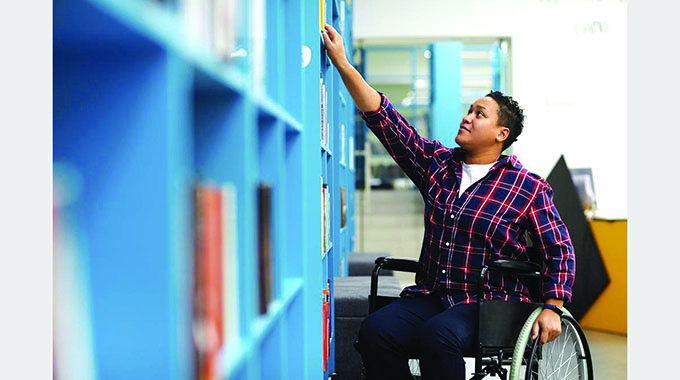
Latwell Nyangu
Youth Interactive Writer
Being at a learning environment for students with disabilities has become something of major concern and is a challenge which continues to rise almost every day.
Acceptance in life is one of the major challenges which people fail to take.
The status quo has impelled fallacies in most communities with disabled students, now thinking that there is no point of going to school.
Many at times, we have failed to be sensitive when it comes to learning with students with disabilities.
It is common that students with disabilities, especially those from humble beginnings, are always confronted with discrimination at the very start of their lives at college.
This is worsened by the myth by some people that disability is a misfortune, which results from a curse or witchcraft.
The most difficult part of the experience by students with disabilities is that they are sometimes considered a burden and an expense to people around them.
But as students, we ought to love and respect one another and the value we all bring to the table in our diversity.
The disabled students, just like able-bodied, should benefit from all the programmes at their disposal.
For many years, students living with disabilities have not been given due consideration, but instead faced discrimination.
With my experience, some fathers have altogether abandoned their families so as not to be associated with a child who has a disability.
In that regard, at times such parents discourage the children with disability from going to school.
The predicament of such students, is bigger than most us may realise, as they battle to deal with fees or transport costs.
It’s double trouble for disabled students at college since they may fail to access materials.
Let’s embrace and give them a hug.
As the world converges towards the global village, it’s becoming progressively important to embrace our fellow students with disabilities and live harmoniously with them.
There is a negative perception of students with disabilities that is steeped deep in African cultures. The attitudes are sometimes unbearable as stereotypes and all sorts of labels are used.
Disabled students are lowly ranked in access to educational opportunities, worse still the female ones. They resultantly drop out of school and college due to the unconducive social environment, inaccessible infrastructure and facilities.
As students, we should reflect on where our fellow students with disability are coming from and put ourselves in their shoes before criticising them.
In other words, let’s love and hug a student with disability when we meet them.
It doesn’t require a rocket scientist to decipher that students with disabilities face subjugation at our colleges, apart from the societies they come from.
This, as a result, marginalises and devalues those who are perceived to be different from what society has come to define as normal.
There is evidence that families of students with disabilities also face social and economic exclusion. The position is exacerbated by stigmatisation, leading to social exclusion of both students and their families from community, activities.
Students with disabilities face different forms of exclusion depending on the type of disability they have, where they live and class to which they belong.
Not known to many, causes of disability vary, from road accidents, war, polio, muscular dystrophy, cerebral palsy, paralysis due to stroke, restricted growth, epilepsy, albinism, mental disabilities, visual, hearing and speech impairments.
Other disabilities can be due to underlying conditions such as to cancer, diabetes, HIV and Aids, among others.
The number of youths and children with disabilities in Zimbabwe like many other countries in Africa is unknown, since many of them are kept hidden at home.
It is unknown how many have been abandoned, often by their parents, or deprived of their basic rights.
More critical, though, is just how they can benefit from today’s world.
Sadly, the answers are not clear for Africans with disabilities, especially the students.
With the advent of economic and cultural globalisation, the spirit of cooperation in inclusive education has to strive to enable all students to receive appropriate education at public schools. Their success depends on concerted efforts.
There are also students with emotional and behavioural disorders at college. The explicit behavioural disorders include disobedience, verbal and physical aggression while invasive behavioural disorders include depression, anxiety, somatic complaints and eating disorders.
In the academic field, students with emotional and behavioural disabilities have a higher rate of academic failure than students with other barrier categories, often with lower grades.
The behavioural disorders are just one of the things that usually concern lecturers and which affect their teaching and other students in the classroom, such as bullying or teasing, disturbances, continual talking and calling out, aggressive, taking or interfering with the teacher’s instructions.
However, in recognising and empowering students with disability in Africa, The African Union (AU), launched the Mwalimu Julius Nyerere African Union Scholarship for students with disabilities in Africa.
The scholarship is awarded to students who wish to pursue master’s degree in the field of social sciences, natural sciences, engineering, mathematics, education sciences and sport sciences.
It was launched in 2007 with the aim of contributing to the production and rendition of high calibre African human capital for sustainable development of the continent in critical development areas.
Fellow students, we ought to embrace each other despite our backgrounds, disability or any ailments. Hold one another’s hands and forward we go.


 Online Reporter