daniel chigunwe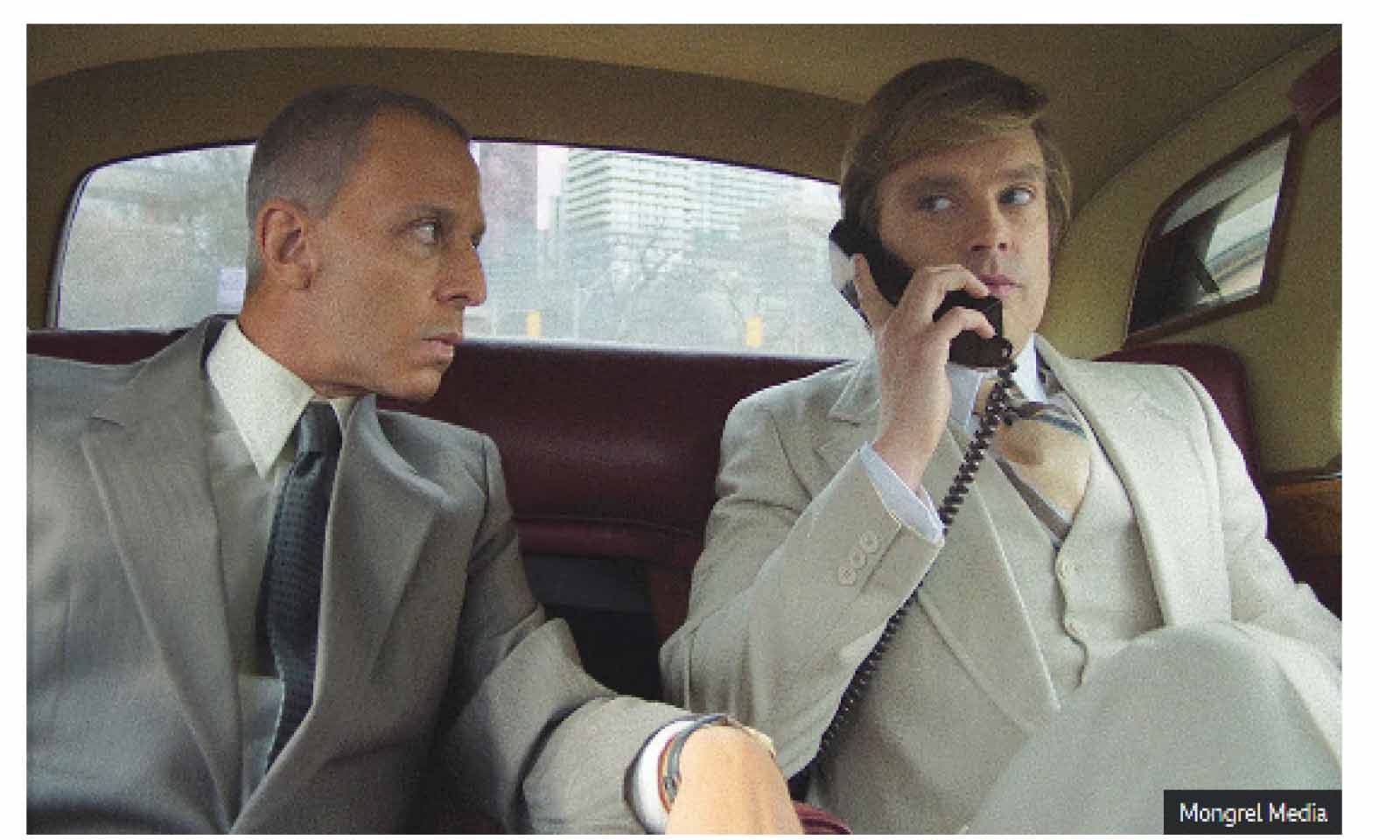
LOS ANGELES. − The contenders for the film industry’s biggest prizes this year represent a range of genres and styles. But many are united by a common thread: they take on contentious topics with ferocious energy.
A fabulous range of films has been nominated for Academy Awards this year, from a shiny Broadway musical to a fact-based South American drama, from a rollicking farce about a stripper to an impressionistic period piece set in a Florida reform school.
From a distance, it might appear as if the Academy’s voters had covered just about every genre and mood that cinema has to offer.
But when you look closer, it’s remarkable how many of the nominees have something in common.
In their own distinctive ways, these films take on contemporary issues with enough ferocious energy to make this one of the most political selections in the history of the Oscars.
In the case of The Apprentice, the political aspect is inescapable.
Ali Abbasi’s film is a controversial biopic of newly inaugurated president Donald Trump, concentrating on his years as an aspiring real-estate mogul in New York.
In October, Trump denounced the film as a “cheap, defamatory, and politically disgusting hatchet job”.
The Academy seems to have liked the film.
The Apprentice received two acting nominations, one for Sebastian Stan, who plays Trump himself, and one for Jeremy Strong, who co-stars as his mentor, Roy Cohn.
The film with the most Oscar nominations this year is Emilia Pérez, a French musical directed by Jacques Audiard.
Its star, Karla Sofía Gascón, is the first trans woman to be nominated for the best actress Oscar, which is quite a statement after Trump signed an order declaring that there are only two sexes recognised in the United States and that they cannot be changed. I’m Still Here has done startlingly well, too.
Walter Salles’ Brazilian drama has been nominated not just in the best international picture category, which most commentators expected, but in the main best picture category. And its star, Fernanda Torres, has been nominated for best actress.
These accolades will give a huge publicity boost to a film which is a thoughtful treatise on the importance of being strong-willed and tireless in the face of a totalitarian regime.
In its own more brightly coloured and crowd-pleasing fashion, Wicked has similar themes.
Like the film it’s a prequel to, The Wizard of Oz, it has provocative things to say about the nature of power in its depiction of the Wizard as a self-serving ruler who uses fear and deceit to control the population.
Brady Corbet’s The Brutalist is about a Hungarian-Jewish architect struggling to establish himself in the US after World War Two, and Sean Baker’s Anora, which has six nominations, including best picture, best director and best actress, is about a sex worker in today’s New York.
But both of them shine a piercing spotlight on the immigrant experience and the entitlement of the super-rich.
RaMell Ross’s Nickel Boys, adapted from Colson Whitehead’s novel, doesn’t feel like a standard period drama, thanks to its bold use of first-person perspective, but its subject is the US’s racist past – and how that past reverberates into the present day.
The question now is whether these political nominations will translate into a political awards ceremony. Traditionally, Oscar acceptance speeches shy away from anything more contentious than asking for more diversity on film sets.
But this year feels as if it could be different. − BBC



 Online Reporter