Online Reporter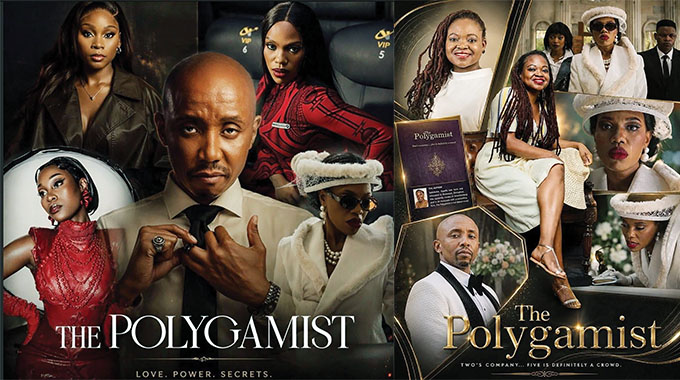
FOLLOWING the Netflix premiere of The Polygamist, adapted from the bestselling novel by Zimbabwean author Sue Nyathi, acclaimed playwright Raisedon Baya has described the production as “a masterclass in manipulation, betrayal and collective dysfunction”. He said the series left him emotionally drained and in need of “therapy” to process its intensity, while also praising Nyathi for delivering a brilliantly crafted story.
The 22-episode drama centres on Jonasi Gomora (Sdumo Mtshali), a self-made banker and chief executive whose carefully curated world begins to crumble under the weight of his secrets. To the outside world, Jonasi appears to have it all – wealth, influence and a seemingly perfect marriage to his devoted wife, Joyce (Gugu Gumede). But beneath the polished façade lies a tangled web of affairs, mistresses and a secret second wife. As his double life unravels, long-buried truths ignite jealousy, deception and power struggles that threaten to destroy everyone in his orbit.

At the heart of the story is the complex network of women connected to Jonasi, each navigating love, survival and ambition while vying for their place in his life and access to his wealth. Joyce Gomora, the social-media-savvy first wife, is forced to confront her husband’s betrayal and gradually learns to play the long game. Jonasi is a charismatic but deeply flawed businessman whose choices set the drama in motion. The household tensions are further amplified by Matipa (Kwanele Mthethwa), Essie (Celeste Ntuli) and Lindani (Luyanda Zwane), women who refuse to remain in the shadows and demand far more than secondary status.
Below is the review by Baya.
Now that I have finished watching, here is my confession. Watching this series was a heavy, exhausting burden. I am told well-written stories feel like that most of the time. You plunge into them, and before you know it, your value system is being assaulted left, right and centre.
This series is nothing but a masterclass in manipulation, betrayal and collective dysfunction, where almost every character abandons their moral compass. Jonasi, Joyce, Matipa, Essie, Lindani, Gesh, Menzi and Mpume – they all lose it at some point.
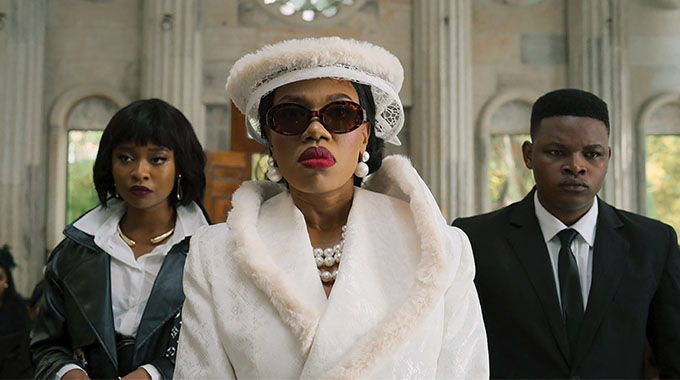
This series only taught me to hate and be angry. It taught me to hate marriage. It taught me to hate love. It taught me to hate success. It taught me to hate secrets. In simple terms, it taught me to hate life – especially the illusion of success. By the end of the 22 episodes, I hated Jonasi to the core – for all that he did to Joyce, to his children, to his brother. Jonasi is the ultimate emotional black hole.
Then comes Joyce. Instead of feeling sorry for her, I hated her too. Why did she stay in that toxic marriage for that long? How could she behave like there was no option, like Jonasi was the only option? She was an influencer, for goodness’ sake.
The hatred I felt towards Joyce was not the malicious kind, but rather a deep, agonising frustration – the kind that burns within but does not consume. I wanted her to recognise her worth, to walk away, and to realise that there were other options. But watching her willingly diminish herself for a man like Jonasi was deeply triggering.
I hated Matipa, mostly for arriving and disrupting what appeared to be a happy marriage. I hated her for believing she was better, for assuming she could walk in and take someone else’s man like that. But more importantly, I hated her for fleeing and leaving the twins behind – and leaving them with a woman she had caused so much pain. Hers was a betrayal of basic human decency.
I hated Essie for being comfortable with being the hidden woman. For her deception, for playing along with Jonasi’s games, even at the expense of her own daughter, Sarah.
What kind of mother relishes her own child’s pain simply to protect a secret with a selfish man? I hated her for stealing a dead body. Very un-African!
I hated Gesh. Oh Gesh! I hated him for not being man enough. For allowing himself to be used by Jonasi. He was simply an enabler – not a bystander, not a witness, but an enabler.
I hated Lindani for overlooking Menzi and pursuing his father, and even more for convincing herself that what she shared with Jonasi was anything more than a sexual relationship. I despised her even further for sleeping with Menzi while Jonasi lay cold, awaiting burial. By that point, my frustration had spilled over to almost every character. Oh, how I hated them all.
After 22 episodes, I need therapy. I need to breathe. To exhale. To let go of all the hate and instead clap hands for Sue Nyathi for such a brilliant story.
They say stories like The Polygamist hit so hard because they mirror the darkest corners of our reality. They show us that bad behaviour is not always swiftly punished, and that when left unchecked, secrets can rot families from the inside out. They remind us that love, too, can be weaponised as a tool of control.
Honestly, it leaves one with an unsettling feeling – as though the world is, at times, deeply fragile, unpredictable and unfair.