Moffat Mungazi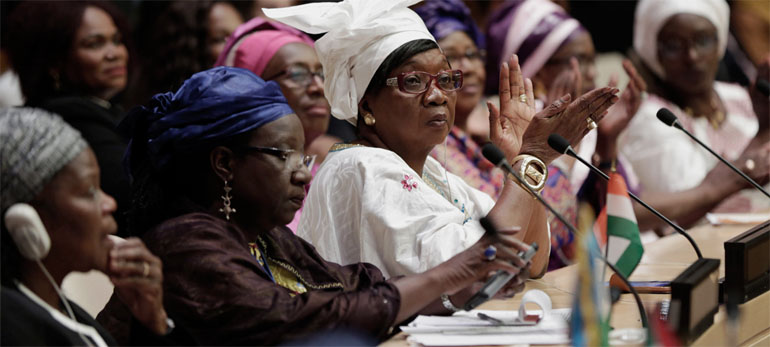
Batanai Senderayi
THE images are familiar by now.
Powerful men in tailored suits gathered around polished tables, shaking hands after signing agreements that will determine the fate of millions.
From Sudan to the Sahel, from the Great Lakes to the Horn, Africa’s peace processes produce a steady stream of such photographs. And in nearly all of them, one demographic is conspicuously absent: women.
This is not merely a matter of representation or symbolic inclusion. It is a structural weakness that fundamentally undermines the durability of peace agreements. When half the population is excluded from negotiating the terms of peace, the resulting agreements address only half the conflict and often, not even that.
The evidence is overwhelming
The data could not be clearer. A landmark study of 182 peace agreements signed between 1989 and 2011 found that accords with women signatories were 35 percent more likely to last at least 15 years. Another analysis of 156 peace processes revealed that agreements achieved through inclusive negotiations incorporating women’s groups, civil society, and marginalised communities were 64 percent less likely to fail.
These statistics reflect a simple reality: women experience conflict differently and therefore understand pathways to peace differently. When women participate in negotiations, they broaden the agenda beyond military power-sharing and territorial control to include issues like transitional justice, humanitarian access, education, and healthcare the very foundations upon which sustainable peace is built.
Yet despite this evidence, women remain systematically excluded from the tables where their futures are decided.
The Sudanese catastrophe
Sudan offers the most devastating current example. Since April 2023, the country has descended into a civil war that has killed tens of thousands, displaced over eight million, and created the world’s worst humanitarian crisis. The conflict between the Sudanese Armed Forces and the Rapid Support Forces has devastated communities, with women and girls bearing the brunt of the violence through systematic sexual assault, abduction, and displacement.
Where are women in the peace efforts? Multiple mediation tracks have operated — Jeddah, IGAD, the African Union, bilateral initiatives — but women’s participation has been marginal at best. The few women included have faced harassment, marginalisation, and dismissal. A 2024 report documented how female participants in the Jeddah talks were routinely interrupted, their contributions ignored, and their proposals sidelined.
The result is a peace process that addresses military dynamics while ignoring the social fabric being destroyed. Ceasefire negotiations focus on troop positions, not on the protection of civilians. Humanitarian access discussions prioritise aid delivery, not the specific needs of women and girls. Accountability mechanisms remain vague, offering no concrete protection against the sexual violence being used as a weapon of war.
The structural exclusion
This pattern repeats across the continent. In the eastern Democratic Republic of Congo, where conflict has persisted for three decades, women’s participation in formal peace processes remains tokenistic. The Nairobi and Luanda processes, the expanded joint Oversight Mechanism, the East African Community regional force initiatives—all are dominated by military and political elites, overwhelmingly male.
In the Sahel, where insurgencies have displaced millions and destabilized entire nations, women’s voices are conspicuously absent from regional counterterrorism and peace initiatives. The G5 Sahel, the Accra Initiative, international counter-insurgency partnerships these are presented as security matters, not social ones, justifying the exclusion of those who understand the social dimensions of conflict.
Even in relatively stable contexts like Kenya’s electoral mediation, women remain on the margins. The famous “Kofi Annan moment” that resolved the 2007-2008 post-election violence included women in supporting roles, not at the decision-making table. Subsequent electoral negotiations have replicated this pattern.
The root causes
Why does this exclusion persist despite overwhelming evidence of its costs? Several factors converge.
First, armed groups and political elites prefer to negotiate with each other. Military commanders understand military commanders. Political leaders speak the language of political leaders. Including women particularly women from civil society, displaced communities, or grassroots organisations—introduces voices that complicate tidy elite bargains.
Second, mediation processes are designed by institutions that reflect patriarchal structures. The African Union, IGAD, the Arab League, the United Nations all have gender policies and women’s participation commitments. But these commitments are implemented by bureaucracies where men hold most leadership positions and where gender inclusion remains an add-on, not a core design principle.
Third, funding flows reinforce exclusion. International donors finance mediation initiatives that engage with armed actors and political elites because these produce visible, measurable outcomes. Funding for grassroots women’s organisations, for community-level dialogue, for the slow work of building social consensus this remains scarce and unpredictable.
The transformative potential
When women do participate, the results transform peace processes. In Liberia, women’s mass mobilisation and direct engagement in the Accra peace talks were instrumental in ending the civil war. In Northern Ireland, women’s cross-community organising created political space for compromise. In Colombia, women’s delegations to the Havana negotiations ensured that gender provisions were woven throughout the final agreement.
These examples reveal what inclusive mediation makes possible. Women negotiators consistently push beyond ceasefire agreements toward transformative peace. They demand attention to wartime sexual violence, to land rights for displaced populations, to educational access for girls, to economic opportunities for war-affected households. They insist that peace must be lived, not just signed.
What must change
Addressing this failure requires action at multiple levels.
First, mediation mandates must include enforceable gender provisions. It is not enough for the African Union or United Nations to encourage women’s participation. Mediation teams should be required to demonstrate meaningful inclusion as a condition of legitimacy. Peace processes that exclude women should lose international support.
Second, funding must reach women’s organizations directly. The billions spent on peace and security include tiny fractions directed to grassroots women’s groups. This must change. Women’s organizations need resources to participate in peace processes, to build coalitions, to develop policy proposals, and to hold implementers accountable.
Third, mediator selection must prioritise gender expertise. Mediation teams should include women with deep knowledge of conflict dynamics and proven commitment to inclusive processes. Male mediators must be trained and held accountable for implementing inclusive practices, not merely professing support in principle.
Fourth, traditional and religious leaders must be engaged as allies. In many African contexts, these leaders wield enormous influence over community attitudes toward women’s participation. Engaging them in dialogue about the benefits of inclusion can transform resistance into support.
Conclusion: Peace for half is peace for none
The exclusion of women from Africa’s peace processes is not a peripheral concern. It is a central driver of the continent’s conflict trap. When agreements are negotiated by armed men and political elites, they address armed men’s and political elites’ priorities. The deeper grievances, the social fractures, the community-level dynamics that sustain violence these remain unaddressed, ready to reignite conflict when elite bargains inevitably fray.
The evidence is clear: inclusive peace is durable peace. Women’s participation does not guarantee success, but exclusion guarantees fragility. Every peace table that seats only half the population produces agreements that half the population has no stake in upholding.
African leaders and international partners face a choice. They can continue convening familiar faces in familiar formats, producing agreements that collapse under familiar pressures. Or they can insist on transformation—on peace processes that reflect the full humanity of the societies they claim to serve.
The photographs of men in suits shaking hands will continue either way. The question is whether those handshakes produce peace that lasts.
Batanayi Scott Senderayi is a student at Africa University pursuing a Master’s Degree in Mediation and Negotiation


 Online Reporter