Online Reporter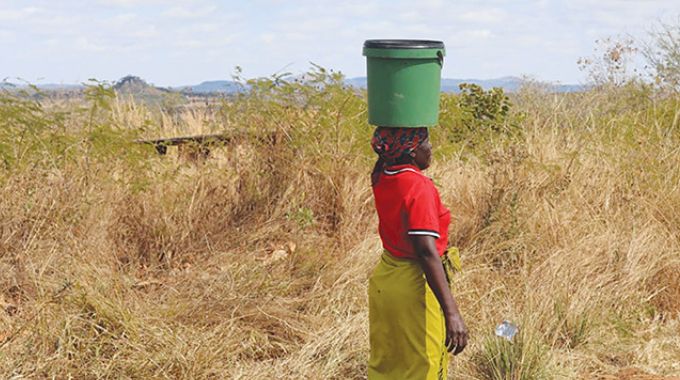
Theseus Mauruki Shambare, [email protected]
THE road from Zvishavane town towards Mafala gradually loses its urban character. About 10 kilometres along the Zvishavane-Bulawayo highway, a dusty track branches off into an area where artisanal mining has dramatically reshaped the landscape.
Sections of woodland have been cleared and burnt, grazing land opened up, and the earth overturned as miners search for gold.
Zvishavane Original Residents and Ratepayers Association chairman Mr Simango Kamino acknowledges the opportunities that mining has created.
“Our children used to be unemployed, but now they are getting employment,” he said.
“Some are employed as artisanal miners or are involved in various mining ventures. So, we can see that livelihoods have changed.”
Yet further into Mafala, another side of the story becomes apparent.
“We are concerned about land degradation,” Mr Kamino said. “They leave behind open pits which are a danger to human life. They leave these huge pits, which also deprive livestock of grazing areas.
Animals can fall into these pits and die.”
At one homestead stands former teacher Mr Jabulani Ncube, tending to a lush vegetable garden sustained by a borehole.
“I realised that water is life, especially as our rainfall patterns continue to change. I decided to drill a borehole so that my family would always have water for domestic use and for our garden,” said Mr Ncube.
“I also encouraged the community to come together and drill a borehole because we cannot talk about resilience when people do not have access to safe water.”
Beyond his thriving garden, however, mining is leaving a visible mark on the landscape.
“It pains me to see trees being cut down and burnt as people search for gold. These trees are part of the environment we have always depended on. When they are destroyed, we are also destroying the land and the water systems that sustain us.”
Mr Ncube is equally concerned about the loss of grazing land.
“We have livestock that depend on this land. When miners clear the grazing areas and leave the land disturbed, they are taking away something that our families depend on,” he said.
Even so, Mr Ncube is not calling for mining activities to cease.
“I am not saying people should stop mining because some are surviving through it. But they must mine responsibly and protect the environment. We cannot look for gold today while destroying the lives of tomorrow.”
His experience reflects Zimbabwe’s broader dilemma: how to extract the minerals needed for economic development without undermining the land and water systems that communities rely on to withstand climate shocks.
Mr Kamino believes the new wealth has also brought a range of social challenges, including substance abuse, robbery, murder and sexually transmitted infections.
“Our children have access to money and are now exposed to dangerous drugs and substance abuse,” he said.
Zimbabwe needs gold, chrome and lithium to generate jobs, boost exports and drive economic growth.
At the same time, the country requires healthy rivers, productive soils, grazing land and functioning ecosystems to withstand droughts, erratic rainfall and other climate-related shocks.
Environmental Management Agency (EMA) environmental education and publicity manager and spokesperson Mrs Amkela Sidange said surveys and inspections in chrome-mining areas of
Midlands Province had revealed extensive land degradation, with rehabilitation efforts struggling to keep pace.
“Mining-induced land degradation is perpetrated by both small-scale artisanal illegal/legal miners and large-scale mining operations,” she said.
Small-scale illegal miners frequently target alluvial gold deposits in waterways, including the
Dohwe, Mtshingwe, Mundi, Ngezi and Mwenezi rivers.
Meanwhile, large-scale open-cast mining operations continue to affect vast tracts of grazing land.
EMA’s enforcement figures underscore the scale of the challenge.
Mrs Sidange said the agency conducted 1 413 inspections and issued 181 tickets to mining operations.
A total of 151 tickets related to mining without valid Environmental and Social Impact Assessment certificates or violations of certificate conditions, while 93 concerned effluent and solid-waste disposal licences or pollution offences.
Another 15 tickets were issued for failure to implement dust-abatement measures.
EMA also issued 107 environmental protection orders directing the rehabilitation of mining-degraded areas.
“The rehabilitation of the mined pits was lagging behind, hence issuance of environmental protection orders for progressive rehabilitation as mining continues,” Mrs Sidange said.
She stressed that environmental management should be integrated throughout the entire mining cycle.
“Unsustainable extraction of minerals carries significant environmental costs, making it essential that all mining projects integrate environmental management into all stages of the project cycle,” she said.
The environmental consequences are particularly concerning because mining is taking place at a time when Zimbabwe is facing increasing pressure on its water resources.
In June, the Government declared a state of disaster over degraded riverine ecosystems, triggering an emergency rehabilitation programme targeting waterways damaged by mining activities.
Affected systems include the Mazowe, Save, Sanyati, Umzingwane, Mtshingwe and Mutare rivers.
Siltation threatens river storage capacity and natural flows, pollution endangers domestic water sources, and degraded waterways undermine irrigation systems that many communities depend upon.
The challenge confronting Mr Ncube is part of a much larger global conversation about land degradation and climate uncertainty.
Thousands of kilometres from Mafala, Zimbabwe is advancing these same concerns at the 17th Session of the Conference of the Parties to the United Nations Convention to Combat
Desertification in Ulaanbaatar, Mongolia.
Running from August 17 to August 28 under the theme, “Restoring Land. Restoring Hope”, COP17
has brought together delegates from 197 Parties to deliberate on land degradation, desertification and drought.
Government says Zimbabwe is advocating for a legally binding global drought protocol, increased financing for climate action and land degradation neutrality, as well as sustainable rangeland management.
Permanent Secretary in the Ministry of Environment, Climate and Wildlife Mr Simon Masanga said Zimbabwe remained committed to ensuring that global environmental frameworks deliver meaningful resources to vulnerable communities.
Who pays for the harm?
For ActionAid Zimbabwe country director Dr Selina Pasirayi, mineral development should not transfer environmental costs to local communities.
“The campaign challenges the notion that green minerals are automatically ‘clean’ simply because they support electric vehicles, renewable energy and low-carbon technologies,” she said.
“A transition cannot be considered clean or just if the environmental and social costs are merely relocated to mining communities.”
The #PayTheHarm campaign advocates responsible mining practices, meaningful community participation and adequate remedies for affected communities.
Dr Pasirayi noted that the polluter-pays principle must extend beyond the payment of fines.
“The central advocacy position will be that polluter pays must mean ‘polluter restores and repairs’,” she said.
The recently gazetted SI 92 of 2026, the Environmental Management (Environmental Liability:
Polluter Pays) Regulations, provides a legal framework for environmental liability.
If Zimbabwe is advocating internationally for land restoration and drought resilience, mining operations must also play a role in restoring the landscapes they disturb.
Back in Mafala, Mr Ncube’s vegetable garden stands as a symbol of resilience. Yet beyond the garden, mining continues to alter a landscape whose health underpins those same livelihoods.
Mining cannot simply be measured by how much gold, chrome or lithium is extracted from the ground. Zimbabwe does not have to choose between mining and development. Rather, it must decide what kind of development mining should deliver.
If mineral wealth creates jobs, infrastructure and national revenue while protecting land and water resources, mining can become part of Zimbabwe’s resilience story. However, if the price of today’s mineral wealth is tomorrow’s polluted river, abandoned pit and depleted grazing land, the country will merely have traded one form of vulnerability for another.
Along the dusty road into Mafala, that future is already taking shape. There are the open pits, the cleared woodland and the grazing land under pressure. And there is Mr Ncube’s garden, flourishing and protected by a borehole.
Zimbabwe’s challenge is to ensure that the first does not destroy the second, because the true measure of mineral wealth will not be what the country takes from the ground today. It will be whether the land remains capable of sustaining its people tomorrow.