
Trust Freddy
Society Reporter
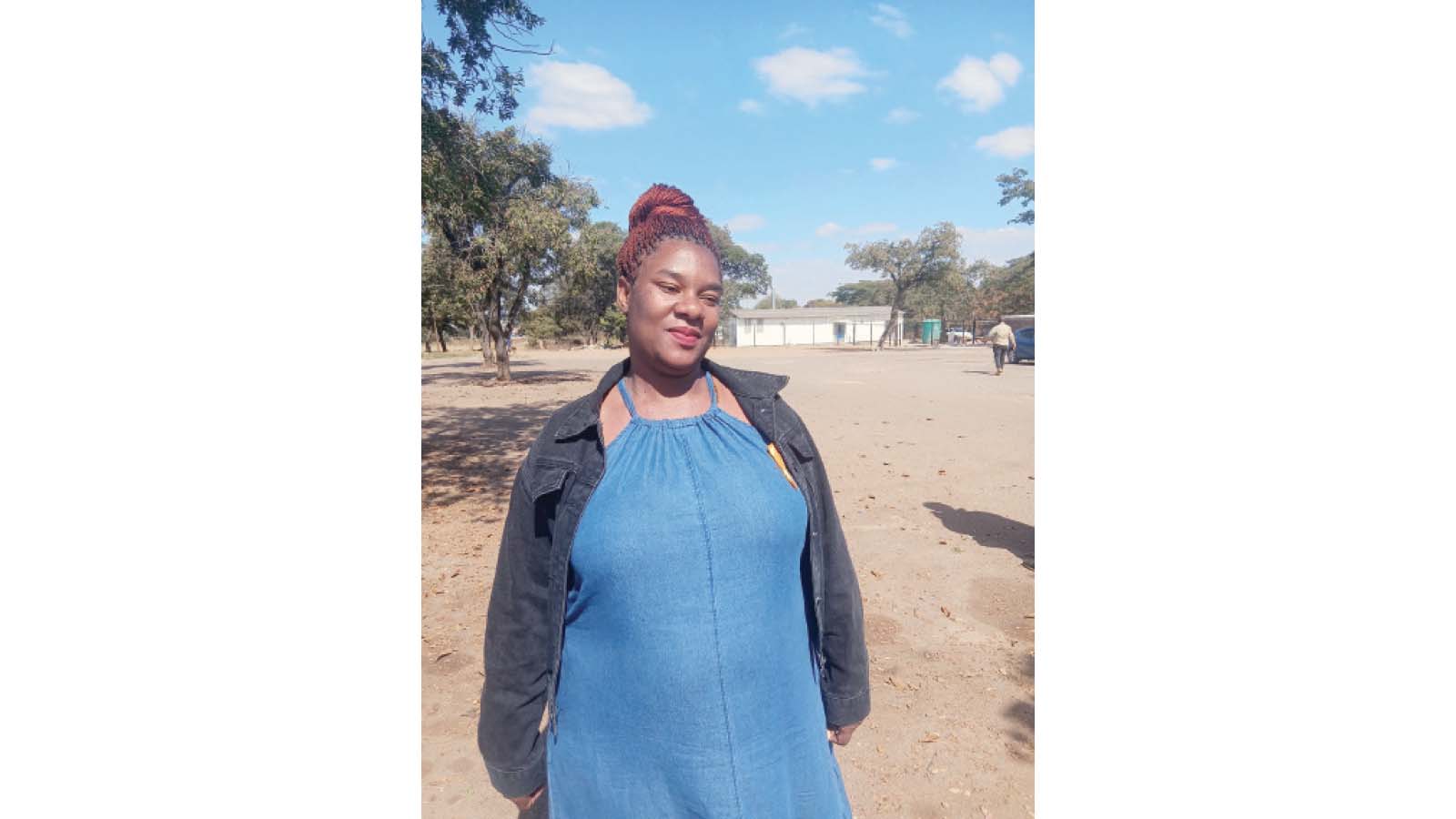
FOR more than a decade, Fadzai Kamuti’s life was measured not in years, but in tears, monthly heartbreaks and the bitter taste of desperation.
A resident of Stoneridge, she had become a wanderer in her own country, driven by a singular, consuming ache: the desire to hold her own child.
In Zimbabwe’s deeply patriarchal society, where a woman’s worth is often cruelly tethered to her fertility, Kamuti was willing to endure anything for a breakthrough.
“I no longer want to see or eat eggs because it evokes bad memories,” she said, her voice carrying the heavy residue of trauma.
“I was made, by a prophet in Glen View, to drink seven raw eggs, hoping that I would finally get pregnant. It really hurts me when I recall some of the things I went through.”
Those eggs were just the beginning of a harrowing 13-year journey through Zimbabwe’s religious underworld.
In Marondera, she was forced to swallow raw beef.
In Chiweshe, she was led into hidden caves to watch prophets burn mysterious items to appease spirits.
“It hurts to recall what I went through, but it was not my choice . . . I do not wish to discredit what prophets do — perhaps it works for others — but, for me, it never worked and I faced the worst,” she explained.
“The money I lost in the name of finding a baby exceeds US$2 000. Sometimes I was told my problem required charara or choto — dedicated overnight prayer and healing sessions. That alone would cost about US$250 to cover the transport of the entire church entourage.”
When the rituals failed, the narrative shifted from spiritual healing to psychological warfare.
Some prophets allegedly made unsolicited romantic advances, while others weaponised her deepest fears, confidently predicting that her husband was already seeking another wife because of her “failure”.
“Some of the prophets I met ended up proposing love to me, while others claimed my husband was looking for another wife instead of actually helping. I do not know why they were so fixated on telling me about my husband’s alleged infidelity,” she said.
Worn out, broke and emotionally shattered, the 35-year-old Kamuti finally gave up.
“I told myself that whenever I went to church, I no longer wanted to hear anything to do with my infertility.”
The turning point came through a neighbour who had successfully delivered a child after 15 years of trying.
The neighbour directed her away from the shrines towards the Sally Mugabe Central Hospital Fertility Clinic, a public facility offering specialist evaluations.
Kamuti arrived at the clinic in September 2024.
For the first time, her condition was addressed using science rather than superstition.
Doctors performed a visual inspection with acetic acid and cervicography (VIAC) — a quick, low-cost test to detect precancerous cervical cells — and a transvaginal sonography (TVS), an internal pelvic ultrasound that uses a lubricated probe to capture detailed images of the uterus, ovaries, fallopian tubes and cervix.
“I was told to undergo different tests, many of which were free,” revealed Kamuti.
The diagnosis was not a generational curse or a displeased ancestral spirit; it was polycystic ovary syndrome (PCOS), a highly treatable hormonal imbalance that prevents the ovaries from regularly releasing eggs.
By September of the following year, under expert medical management, Kamuti’s long-absent menstrual cycle returned.
Doctors placed her on ovulation medication and in January of this year, the miracle occurred: the pregnancy test lines turned positive.
“I am happy that I am now pregnant and doctors have confirmed it. I am having regular scans and hope to give birth soon,” she said.
Kamuti’s story took centre stage during the recent Global Infertility Month celebrations at the Sally Mugabe Central Hospital, an event aimed at destigmatising infertility and educating the public.
Her nightmare is echoed by 38-year-old Julia Nyimbo from Mufakose.
For Nyimbo, the clinic was her last resort after four years of fruitless, harrowing journeys through apostolic sects and traditional healers, which included being forced to eat raw fish.
At the fertility clinic, a scan revealed that Nyimbo had fibroids.
Instead of invasive, costly procedures, doctors used precise ovulation tracking, advising her and her husband on optimal conception windows.
Within two months, Nyimbo missed her period.
“I came here and all the tests were done. We were taught about ovulation tracking and told to be intimate during my fertile window and we followed that closely,” Nyimbo said.
“I was shocked when I missed my period the following month and again the next. I bought pregnancy test strips and discovered I was pregnant. For me, it worked within two months, and this baby boy is a testimony to how this clinic has helped me.”
She added: “My assumption was that only traditional healers or prophets had a solution. My advice to anyone in a similar situation is please visit the fertility clinic. The challenge does not always lie with the woman — it could be the man — so couples should come and get help.”
Medical experts at the event emphasised that infertility is a shared biological puzzle, countering the patriarchal narrative that automatically blames women.
The World Health Organisation (WHO) defines infertility as the inability to achieve a pregnancy after 12 months or more of regular, unprotected sexual intercourse.
According to Dr Munyaradzi Nyakanda, head of obstetrics and gynaecology at the Sally Mugabe Central Hospital, men are statistically just as likely to have fertility challenges.
“The public needs to understand that infertility is not just a woman’s issue. In three out of 10 couples, the man is the cause. In two out of 10, both partners have fertility problems. Overall, it is about a 50:50 split. Both partners must be tested,” Dr Nyakanda explained.
He reiterated that infertility is a medical condition, not a curse, and it can be diagnosed and treated.
“In the majority of cases, some form of treatment is possible. While the public health sector does not yet have the full spectrum of care, the private sector does. In almost all cases, there are management options available.”
Yet for many Zimbabwean women, the dream of advanced medical intervention crashes against the wall of cost.
A basic in vitro fertilisation (IVF) cycle in Zimbabwe costs between US$3 500 and US$4 000.
With specialised add-ons, medication requirements or donor programmes, total expenses can scale from US$1 000 up to a staggering US$7 500.
This explains why Kamuti drained over US$2 000 on prophets rather than seeking clinical help sooner.
At the fertility clinic, patients are presently not paying.
However, it is believed that hospitality management might start making them pay as they are using Government resources during consultation.
Dr Ruvimbo Panganai of the Sally Mugabe Fertility Clinic advises couples who have been trying to get pregnant for a year to seek help together.
“We take medical histories from both partners because infertility can affect the man, the woman, or both,” Dr Panganai said.
“We then investigate both. Each couple is assessed step by step; women usually start with a TVS, while men start with a semen analysis. If we find problems, we provide treatment and follow up after 12 months. Early medical attention makes a difference. Do not blame — get evaluated, get answers and get hope.”
While there are reports that some traditional healers and prophets fail to refer patients to hospitals, Givemore Kanda, acting registrar of the Traditional Medical Practitioners Council of Zimbabwe, notes that registered healers are trained to refer cases.
“Non-referral is rare — occurring in about one in 100 cases. We train registered practitioners on ethics, which includes referring cases beyond their scope to hospitals for diagnosis,” said Kanda.
“Communities often consult us first due to proximity and financial constraints, but we advise them to seek scientific diagnosis. I must stress that this applies to registered practitioners regulated by the council.”
Diaspora engagement
and skills transfer
The Sally Mugabe Central Hospital Fertility Clinic, which was initiated by the hospital’s former nurse-midwife, Tinotenda Manyere, is strong evidence of diaspora engagement and skills transfer.
“It is not a fully equipped fertility clinic, and they are managing infertility cases using ovulation tracking and ovulation induction,” said Manyere.
“Transvaginal scans are also done and other diagnostic tests which are locally available . . . The bigger vision is to have the first big and fully equipped fertility clinic, which will be offering all services including IVF. In addition to that, it will be also good to fully train those who have passion for fertility nursing and support them through exchange programmes.”
The World Health Organisation (WHO) reports that approximately one in every six people of reproductive age worldwide experiences infertility in their lifetime.
In men, it is often caused by issues to do with sperm production, ejection or abnormal sperm shape and movement.
In women, it may be caused by conditions affecting the ovaries, uterus, fallopian tubes or the endocrine system.
Infertility can be primary, when no pregnancy has occurred, or secondary, when at least one pregnancy has occurred in the past.
WHO notes that, while fertility care covers prevention, diagnosis and treatment, access remains limited, especially in low- and middle-income countries and is rarely included in universal health coverage packages.
Historically, in some Zimbabwean communities, infertility was addressed through customary arrangements that are now rare.
If a man could not father children, his family and wife might agree for his younger brother to conceive a child with her; the act was often concealed to protect the husband’s dignity, as childlessness was viewed as a “weakness”.
Similarly, if a woman could not conceive, a couple might bring another woman — often a relative — into the marriage to bear children.
However, these practices have largely faded due to modernisation and shifting social norms.