admin
admin
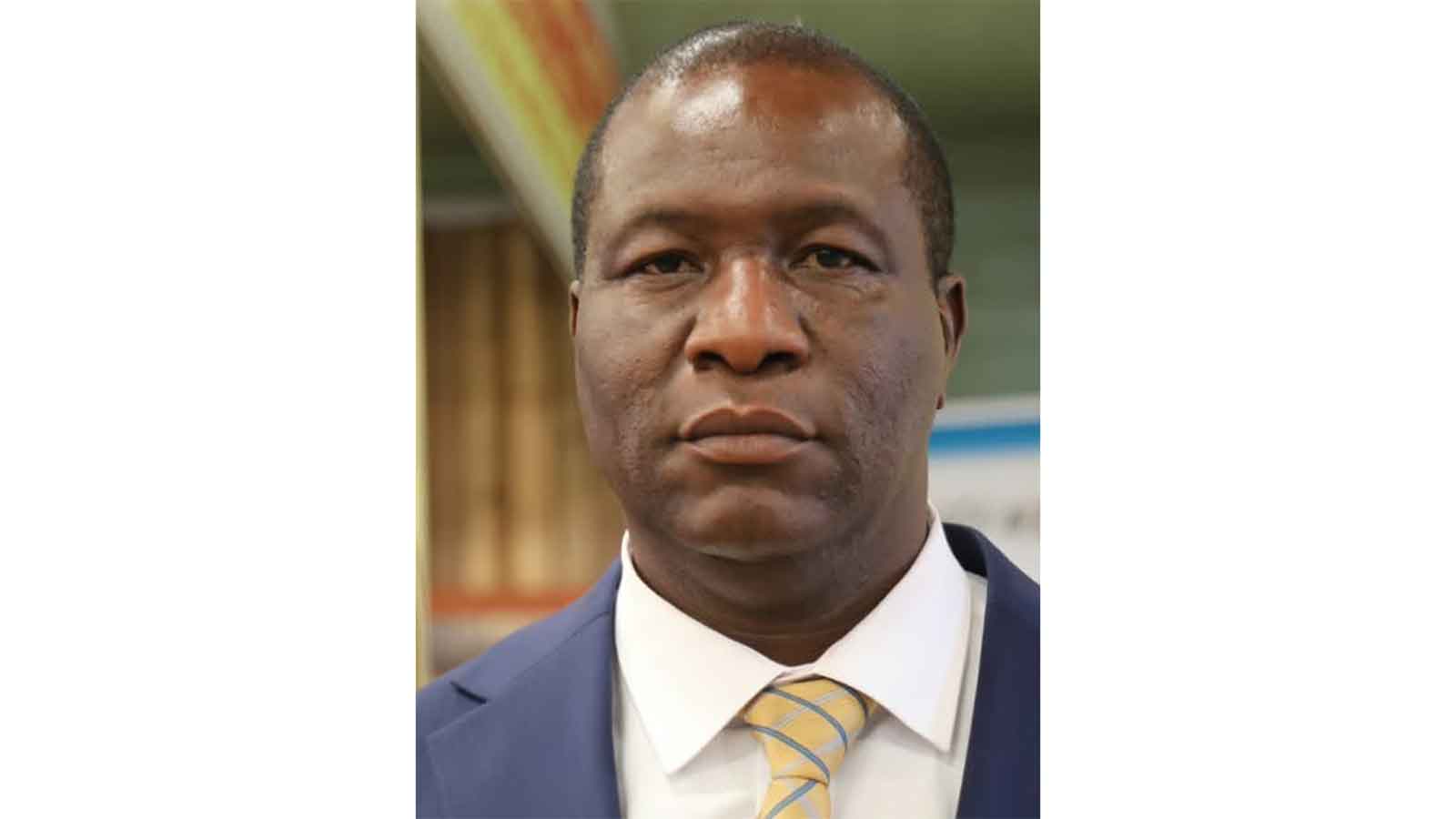
Last December Government appointed Arthur Manase as the new acting general manager for the National Social Security Authority (NSSA). Our senior business Reporter Tawanda Musarurwa (TM) recently sat down with Mr Manase (AM) to discuss issues around the authority’s investment strategy, pension compensation, value loss and other topical issues.
TM: You were only appointed as NSSA acting managing director last December. Who is Arthur Manase?
AM: A reputable lawyer with training from the University of Zimbabwe and Cambridge University with a career spanning over 30 years post qualification. I have practiced law in private firms and the corporate world and have represented Zimbabwe on the Permanent Court of Arbitration at the Hague.
TM: Who or what has shaped you?
AM: My legal training has shaped my passion for justice, passion for labour rights, as well as passion for pensioners’ rights.
TM: What have you learned in the few months in your new role that will inform NSSA in the next year?
AM: The need for NSSA to cultivate a new trajectory centred on honesty, transparency and accountability.
TM: What problems — organisational or macroeconomic — keep you up at night?
AM: The need to ensure that pensioners are paid adequately and efficiently and to identify prudent, clean, high yielding investments.
TM: What would you say are the main challenges facing NSSA?
AM: The need to pay adequate pensions and yet maintain NSSA in a sustainable mode. This entails raising realistic contributions in a hyper-inflationary environment.
TM: Considering the current tough market conditions what plans, if any, are being made to pivot NSSA for future success?
AM: We have set in motion a number of strategic initiatives anchored on three tenets — transparency, honesty and accountability. The Authority’s operations will be guided by the Public Entities Corporate Governance Act [10:31] and other corporate governance guideline. A new culture of honest hard work is being engendered at NSSA. This is a new NSSA.
TM: For years now, pensioners have complained that their pay-outs are far from corresponding to their lifetime contributions. What do you have to say to these people?
AM: The authority is statutorily required to review the general level of earnings and cost of living at the end of each financial year for the purpose of determining whether the contribution rates and levels of benefits have retained their value in relation to the general level of earnings and the cost of living in Zimbabwe.
The actuaries submit recommendations on what the fund can afford for that period. Therefore, the ability of the fund to pay what is considered commensurate with contributions is subject to independent actuarial valuation. In terms of the NSSA Act, the authority is mandated to carry out independent actuarial valuation after every three years for the long-term pay-outs (pensions) where consideration is given to review them. However, ad hoc reviews are carried out when necessary.
Since 2009 benefits have been reviewed upwards five times, while contributions rates have been reviewed upwards twice. The most recent mid-term actuarial valuation was conducted in 2019 and it recommended increases in benefits payment, which were implemented with effect from 1 October 2019.
However, it should be noted that the NSSA contribution rate and insurable earnings are set at lower levels as compared to occupational pension funds, since NSSA was created as a safety net, meant to core exist with other pension funds. In principle; NSSA benefits are meant to complement occupational pension benefits, as well as other savings.
Benefits levels are dependant mainly on period of contribution and insurable earnings at the time of retirement. Currently the insurable earning ceiling is ZWL$700. The insurable earning ceiling, together with the contribution rate, which is currently pegged at 3,5 percent for both employee and employer, has a bearing on NSSA’s ability to increase benefit pay-outs. To put it into perspective, as things stand, the most that an individual contributes to NSSA on a monthly basis is ZWL$24,50, which is 3,5 percent of ZWL$700. However, the authority is looking at reviewing both upon gazetting of the necessary statutory instrument. It is hoped that this will happen soon so that NSSA can increase benefit levels to the relief of its suffering pensioners. We need to improve the welfare of pensioners in these hyperinflationary times.
TM: Zimbabwe’s pensions have been hit by at least two rounds of value loss cycles (currency-wise) over the past two decades. To what extent do you think this has eroded citizens’ faith in pensions and how has this affected the operations of NSSA?
AM: The value loss owing to inflation and currency changes has put pressure on NSSA to continuously review pension levels to keep them meaningful. NSSA undertakes frequent ad hoc actuarial valuations in order to continuously review benefits levels in line with inflationary pressures. Being a defined benefit scheme, the pensioners are guaranteed of their promised benefit in terms of the statute (rules of the fund), regardless of how the economy has performed. This gives pensioners security and the assurance of receiving the benefits in terms of the fund rules.
Of course, the value of the benefits is affected by inflation and currency changes in the same way salaries are affected. The effects of inflation and currency changes are not a preserve of NSSA pensioners. They are felt by all citizens, be they pensioners, workers, business people, the unemployed or any other group.
NSSA is currently engaged in a review of its benefits structure with a view to improving the plight of pensioners very soon.
TM: In the past, NSSA has been accused of making bad decisions with regards to investing its pension funds; a case in point is the Beitbridge Hotel, which is currently non-operational. What guides NSSA’s investments?
AM: The new Board has set in motion several strategic initiatives in the investments sector underpinned by sound corporate governance principles. These governance practices are centred on prudent management of investments, which are critical to preserving NSSA’s balance sheet. NSSA’s investment processes are guided by the NSSA Act [17:04], Public Finance Management Act [22:23], Public Entities Corporate Governance Act [10:31], Investment Policy and Investment Strategy approved by the Board from time to time. The authority has strengthened due diligence requirements in its investments.
NSSA’s investment policy provides for the investment of surplus funds in a diversified portfolio providing a balance among the key investment themes or pillars of income, growth and impact, in line with the income objective. Our investments are designed to generate sustainable income streams to cover benefit obligations and fund operating costs in the ordinary course of business.
To ensure that the overall authority’s assets achieve positive real growth that surpasses the growth in benefit obligations over time, the investment policy provides for investment in assets that respond positively to inflation.
The third pillar provides for the authority to invest in impact investments, which we define as projects of national interest, anticipated to provide measurable social, economic and environmental impact subject to an acceptable financial return.
In this regard, the authority considers economic infrastructure, social infrastructure, job creation, and other projects that contribute to Gross Domestic Product (“GDP”) as key focus investment areas in this pillar.
In recent past, the authority has made significant contribution to the economy through its investments in housing, agriculture and tourism, which are considered key enablers of economic growth and development.
TM: Specifically, who was responsible for these investments and how are they held accountable for the performance of these investments?
AM: The authority’s investment division is headed by a director, who is accountable to the general manager. NSSA also has an Investments and Procurement Committee that provides oversight to the Investments Division. NSSA has suffered from dubious investments decisions in the past and the nation would be happy to hear that NSSA has now cleaned up its act. New expert investment team players have been recruited to replace the old lot. Very soon the nation will see the changes taking place. The ways of corrupt investments are now dead and buried.
TM: How often is NSSA’s investment asset mix reviewed? And would you say that at present it accurately reflects the current economic and financial risks?
AM: NSSA implements a liability-driven asset mix which is guided by actuarial recommendations conducted from time-to-time. While statutorily these actuarial valuations are carried out once every three years, the authority is permitted to conduct such valuation more frequently when the environment is unstable. Due to the unstable environment, the authority has been conducting these actuarial valuations annually. The last such actuarial valuation and asset modelling process was in late 2019. This valuation informed a revision of the asset mix, which was subsequently approved by the Board in December 2019. In summary the current asset mix requires the investments to be skewed towards real assets that help to preserve value in an inflationary environment.
TM: How do you see NSSA changing in two years, and how do you see yourself creating that change?
AM: We will definitely have a new NSSA in two years. This will be a NSSA operating diligently to serve its core objectives. I will insist on it operating openly and fairly. Those who are corrupt will not survive.
TM: And finally, what does a successful NSSA look like to you?
AM: A successful NSSA is one that fulfills its mandate of providing social protection for the generality of Zimbabwe. It is an entity that pays benefits that enable recipients to afford a decent living, as determined by the poverty datum line. A successful NSSA should also be able to make investments that have significant economic and social impact to Zimbabwe. It is a NSSA that every Zimbabwean should readily and proudly identify with as a bulwark against the scourge of poverty.
In two years, we will deliver the new NSSA. A NSSA which gives you a life-long promise of immaculate service. A NSSA which will help Zimbabwe in realising Vision 2030 goals as ably articulated by His Excellency the President Emmerson Mnangagwa.


 Online Reporter