Online Reporter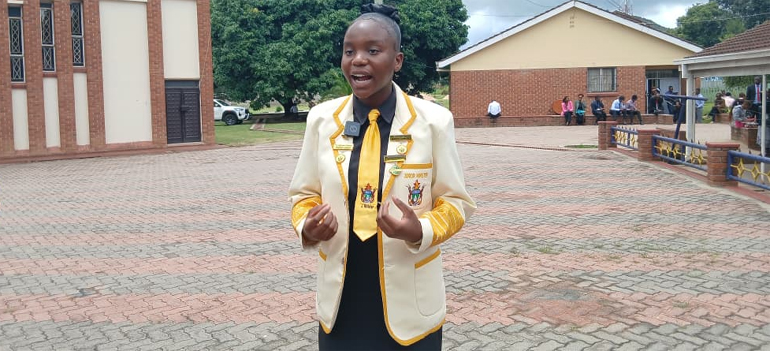
Tendai Gukutikwa
Post Reporter
FOR many girls growing up in Manicaland’s remote rural communities, the world once seemed distant, limited by geography, scarce resources and lack of access to information.
However, today, a new generation of young female leaders is rewriting history, embracing opportunities that their grannies and mothers could only dream of.
Across the province and beyond, female junior parliamentarians are emerging as powerful voices of change, determined to use education, technology and leadership to transform, not only their own futures, but those of countless other girls in their communities.
As Zimbabwe continues to celebrate women this month, The Manica Post caught up with four female junior parliamentarians, who argued that the girl child is no longer on the margins of development, but stepping up boldly into spaces where she can lead, innovate and inspire.
The teenage leaders had a renewed sense of hope.
They gathered recently to receive internet connectivity equipment that will allow them to access information and strengthen their work, both in schools and communities.
For many of the girls, particularly those from rural areas, the moment symbolised far more than a technological upgrade – represented recognition, inclusion and powerful affirmation that rural girls matter.

Junior parliamentarian for Headlands Constituency, Honourable Mutsawashe Charambira, of Mount Carmel High School, described the moment as deeply emotional.
“Many of us were left out for a long time because we live in remote areas and attend remote schools. Most of us had never experienced reliable internet access, and we never imagined that one day information will literally be at our fingertips,” she said.
For Honourable Charambira, the new digital connectivity represents an opening of doors for thousands of rural learners, particularly girls who often face greater barriers to education.
“Now we will be able to research anytime and learn about the world beyond our villages. When I go back home, I am not just taking this opportunity for myself. I will be empowering every rural child, especially the girl child who often feels forgotten,” she said.
Her words reflect the experiences of many girls in rural Zimbabwe, where distance from urban centres has historically meant limited access to libraries, laboratories and digital resources.
Honourable Charambira believes this new generation of girls is now equipped with the tools to compete on an equal footing with their urban counterparts.
“Our mothers and grandmothers did not get the same opportunities that we have today. Many of them could not reach the professional levels they dreamt of because access to information was limited. But we are children of a different era, an era where knowledge is available and where girls can rise as leaders,” she said, adding that the journey of empowering girls must begin with confidence and belief in their abilities.

“The girl child should never doubt her potential. When we are given opportunities and resources, we prove that we are capable of achieving great things,” she said.
For another young legislator, Honourable Confidance Ncube of Mutema-Musikavanhu Constituency (Chibuwe Technical High School) in Chipinge, the development speaks directly to the struggles rural girls have endured for years.
“Girls in rural communities have faced many challenges when it comes to education. I am one of them. Sometimes we had to work harder than everyone else just to access the same information that learners in towns could easily find online,” she said, adding that improved connectivity will dramatically change how rural learners learn and grow.
“With this kind of technology, rural girls will finally have the chance to explore knowledge without limits. It means we can research, learn new skills and dream bigger. It gives us the confidence to know that we can also become doctors, engineers, scientists and leaders,” she said.
Her optimism is shared by Junior Minister of State for Manicaland Provincial Affairs and Devolution, Honourable Alderman Makoni, who sees technology as a powerful tool for unlocking the potential of Zimbabwe’s young people.
Honourable Makoni explained that access to digital resources will allow learners to broaden their educational horizons, while gaining practical skills that contribute to national development.
“Though I am enrolled at Mutare Girls’ High School, I know the challenges that are being faced by my fellow girls in rural areas, and we are doing all we can to make sure that these challenges are addressed. The tools that have availed to our schools will help learners during their lessons and also inspire them to think about how they can develop their country. In areas such as Engineering, Mathematics, Science and Technology, young people will now have the exposure they need to build skills that are critical for Zimbabwe’s future,” she said, adding that improved digital access aligns with the country’s broader vision of transforming education into a system that produces innovators, entrepreneurs and problem-solvers.

“Education today is not just about passing examinations. It is about gaining the skills that allow young people to create solutions for the society and contribute to national progress,” said Honourable Makoni.
Junior Hospitality and Tourism Industry Minister, Honourable Senator Rutendo Dhlakama, who is a learner at St Patrick’s High School in Nyanyadzi, also expressed gratitude for the growing support being directed towards learners in remote areas.
“In some of our schools, especially those located far from towns, accessing information was very difficult. Learning was challenging because we did not have the tools that other schools had,” she said.
She believes the recent developments mark an important step towards equalising educational opportunities across the country.
“We are grateful for this gesture because it shows that education is being prioritised in every corner of Zimbabwe. It gives hope to learners who previously felt isolated from the rest of the world,” she said.
Beyond improving academic performance, the young leaders said they believe access to knowledge will empower girls to challenge stereotypes and redefine what is possible.
In many communities, girls still face social pressures that discourage them from pursuing careers in Science, Technology or leadership. Yet the voices of the junior parliamentarians reveal a generation determined to break these barriers.
During the handover ceremony, Minister of State for Manicaland Provincial Affairs and Devolution, Advocate Misheck Mugadza, underscored the importance of equipping young Zimbabweans with digital skills.
He noted that empowering youths with reliable internet connectivity ensures that they are not left behind in the global technological revolution.
“Government is investing in a generation that is innovative, informed and capable of contributing meaningfully to national development,” he said.
Minister Mugadza also encouraged the junior parliamentarians to use their positions as youth leaders to influence positive change in their communities, including addressing social challenges affecting young people.
Many of them see their roles, not only as representatives of their peers, but also as ambassadors for girls who are still struggling to access opportunities.
Across classrooms in villages and towns alike, a quiet transformation is taking place.
Girls who once studied by candlelight are now connecting to a global network of knowledge. Young leaders who once felt invisible are now standing confidently before their communities, advocating for change.
Their voices carry a powerful message, a message that the empowerment of girls is, not just a social goal, but a national necessity.