Online Reporter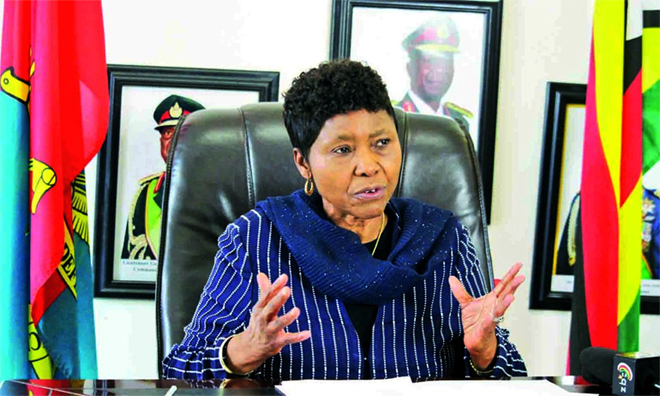
Lloyd Makonya
Correspondent
AS the clock ticks towards Zimbabwe’s 46th annual commemorations of independence, it is important to remember that the country’s liberation struggle was not fought by men alone.
Women stood shoulder to shoulder with their male counterparts in the trenches, in refugee camps and in the villages that sustained the liberation war.
They were, not merely passive supporters of the struggle, but determined actors whose courage and resilience helped shape the course of Zimbabwe’s journey to independence.
During the protracted armed struggle that culminated in independence in 1980, thousands of women answered the call of the nationalist movements.
They crossed borders into neighbouring countries for military training, carried weapons and supplies, gathered intelligence and endured the hardships of guerrilla warfare under extremely difficult conditions.
Others played critical support roles of nursing the wounded, mobilising communities, organising logistics and ensuring that the fighters remained supplied and connected to the rural population that formed the backbone of the war effort.
In the narrative of Zimbabwe’s liberation, several women emerged as prominent figures.
Among them current Defence Minister, Cde Oppah Muchinguri-Kashiri, who joined the liberation struggle at a young age and underwent military training, becoming part of the ranks that fought under the nationalist banner.
Another formidable figure was Zimbabwe’s first female Vice President, Joice Mujuru, widely known by her wartime name Teurai Ropa, a name that captured the fierce determination with which many young women embraced the struggle. Liberation war heroine, Cde Thenjiwe Lesabe is also fondly remembered in Matabeleland as a pillar of the ZAPU women’s movement.
Beyond the battlefield, women such as Cde Fay Chung played crucial roles in organising education and welfare structures for young refugees and freedom fighters in exile, helping to ensure that the struggle remained anchored in the broader vision of building a liberated and educated nation.
Equally significant was the contribution of the late national heroine, Cde Sally Mugabe, whose humanitarian work among refugees and displaced communities in Mozambique earned her enduring respect among those who experienced the harsh realities of war.
Yet the history of the liberation struggle is not defined solely by the well-known names recorded in official archives.
Countless women, including figures such as Sheba Tavarwisa and many others whose stories remain largely undocumented, risked their lives in acts of extraordinary courage. They served as guerrilla fighters, collaborators, couriers and community organisers. In many cases, they endured grave personal sacrifices, forced displacement, physical hardship and the constant threat of capture by colonial security forces.
For many female combatants, the war also carried an emotional and personal toll that is often overlooked in historical accounts. Some faced the violation of their dignity in the brutal environment of war, yet they persevered, driven by an unshakeable belief in the cause of freedom and self-determination.
Their experiences remind us that liberation struggles are, not only fought with weapons, but also through the endurance of human spirit in the face of immense adversity.
As Zimbabwe observes Women’s Month, the stories of these women deserve renewed attention.
They challenge simplistic narratives that confine women to the margins of history.
Instead, they reveal women as strategists, fighters, caregivers and nation-builders who helped carry the liberation struggle to its ultimate victory.
Independence in 1980 marked the triumph of collective sacrifice.
Every village that sheltered fighters, every refugee camp that sustained the struggle and every battlefield that witnessed courage bore the imprint of women’s contributions.
The freedom Zimbabwe enjoys today rests partly on the shoulders of those women who marched into uncertainty, determined to see their country free.
Remembering them is not merely an act of historical recognition but a moral obligation.
Their stories call on the present generation to appreciate the depth of the sacrifices made for independence and to ensure that the legacy of the liberation struggle remains alive in the national consciousness.
In honouring Zimbabwe’s independence, we must therefore honour the women who fought for it, those whose names are known and those whose bravery lives quietly in the memories of the communities they served.