admin
admin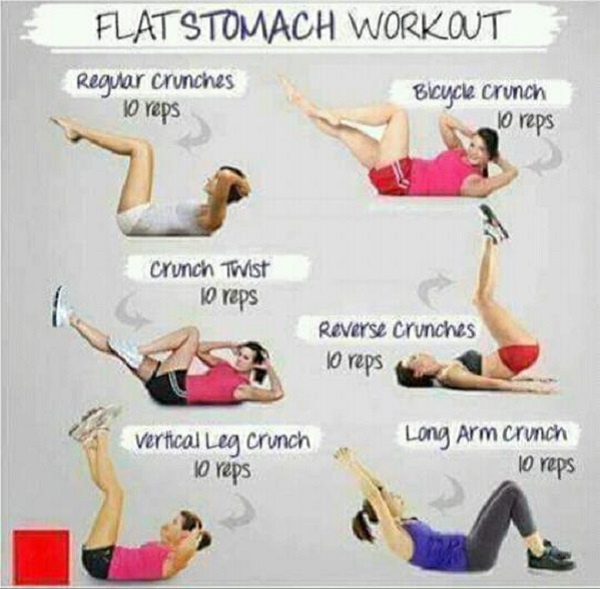

Simon Gama
I WOULD really like to get a six pack. What can I do to accelerate my progress in my abdominal (Ab) training regime?
A chain is only as strong as its weakest link, and the same principle applies to your body. If you want strong and muscular abs the rest of your body parts must also be strong and muscular.
No muscle in your body functions properly all by itself. Think about what your abdominals do: they connect your upper body to your lower body. Without your abs you would be walking around with your torso slumped over between your legs and your head dragging on the ground.
Your abs also work in conjunction with your back, leg shoulder and hip muscles. If you had only abdominals but not those other muscles your body would flop over backwards, your spine would collapse and rupture all of its discs and you wouldn’t be able to stand upright, let alone walk or lift anything.
As bodybuilders we train body parts separately but the lifting is never truly done by that body part alone.
The abs are almost always involved or at least they should be with pressing exercises for your chest, your abs tighten to stabilise your upper and lower body.
Heavy bicep curls rely on strong abs to keep your body upright so you can concentrate on the force within your biceps and achieve a full range of motion. For deadlifts and squats, abdominal strength is just as important for stabilising your body as back and leg strength is for the lift itself.
Conversely you can’t properly train your abs without bringing your hip flexors, spinal erectors and gluts come into play. All of these muscle grounds need to tighten in what is called a “compound” manner. If they don’t, your pelvis will rotate forward against the base of your spine which not only prevents you from getting a full contraction of your abs but also compresses your vertebrae.
All the more reason then to work your abs for strength than for appearance. Aim for the goal and get both aim for the latter and you will end up with neither the compound exercises you do for other body parts. The better abs you will have, because they will be required to do more work. Keep in mind however, that your abs become involved only if you use basic free weight exercise that require your abdominals to provide a tight connection between your upper and lower body.
For a chest that moans flat use the incline barbell or dumbbell presses although cable crossovers also require a lot of abdominal tension.
For biceps any heavy standing barbell or dumbbell curl requires intense abdominal contractions for stability and do standing French presses or overhead extensions for triceps. Nearly any free weight shoulder exercises particularly military presses and standing or seated dumbbell raises, benefits your abs.
For back you can’t do deadlifts or barbell rows without first contracting your abs as hard as you can. Any pro will tell you the procedure for squatting is to tighten your abs to relieve pressure from your spine, flex your traps to get the bar up and off your deltoids, squeeze your hips so they provide a foundation for your torso then maintain all of that as you squat. Of course you should also work your abs specifically.
I often use crunches, decline crushes and hanging leg raises myself, but whatever ab exercise you do always make sure the exercises shortens the distance between your sternums and your pelvis. If it doesn’t your abs aren’t flexing and extending through their intended range of motion. Never arch backwards or keep your torso straight. Incorporate these tips, but never lose sight of the basic principles for achieving the best abdominals possible after years of hard consistent training and a balanced heavy free weight workout utilising basic exercises that combine different body parts held together by your abdominals.
TWISTING SIT UPS
A. Emphasis: This movement stresses the entire rectus abdominis muscle wall particularly the upper half of the muscle complex.
B. Starting Position: Lie back on an abdominal board with your head at the lower end and hook your toes beneath the roller pads or strap provided at the upper end of the bench. Bend your legs approximately 30 degrees and keep them bent during your set to relieve potentially harmful stress on your lower back. Place your hands behind your head and neck and keep them there throughout.
C. The Movement: Do a normal sit-up movement but as you reach the halfway point begin to twist your torso so you can touch your left elbow to your right knee at the top. Reserve the procedure to lower back to the starting point. On the next rep twist in the opposite direction so you can touch your right elbow to your left knee. Continue alternately from one side to the next until you have completed the desired number of sets.
KNEE UPS
A. Emphasis: This exercise stresses the entire rectus abdominis muscle wall, particularly the lower half of the muscle complex.
B. Starting Position: Sit at the end of a flat exercise bench and incline your torso backwards until it is at 45 degree angle with the bench. Grasp the sides of the bench with your hands to brace your torso in this position. Extend your legs downward until they are at approximately a 45 degree angle with the floor making them apart of one long line with the torso.
C. The Movement: Use abdominal strength to pull your knees up to your chest as you simultaneously bend your legs fully. Lower slowly back to the starting point and repeat the movement.
D. Training Tip: A similar movement called frog kicks can be performed while hanging from your hands on a clinging bar, pulling your legs up to your chest.
CRUNCHES
A. Emphasis: This exercise works your upper abdominals.
B. Starting position: Lie supine with your legs up on a bench your arms can be folded across your chest on your hands clasped behind your legs.
C. The Movement: Slowly curl your shoulders toward your knees until your shoulder blades get 1-2 inches off the floor. Hold for a second go back to the starting position and repeat.
D. Training Tip: To get an even better contraction while you are doing your crunch try to push your lower back into the floor. — Additional information from books and Online.
– The writer Simon Gama is a fitness coach at Bodyworks gym in Bulawayo.


 Online Reporter