Online Reporter
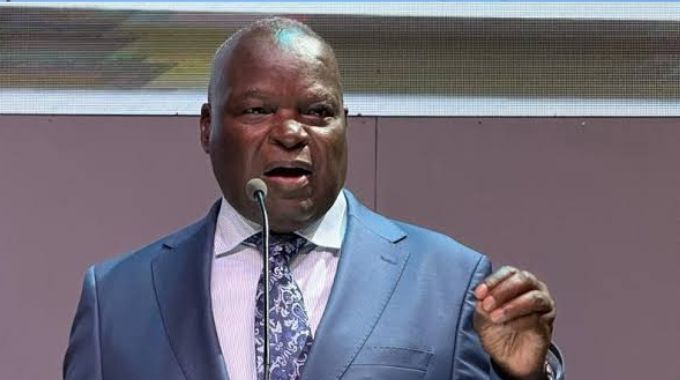
Dr Newton Demba
INSTITUTIONAL failure rarely announces itself.
It does not arrive with a single catastrophic decision or an obvious governance breach.
Instead, it unfolds quietly — incrementally — through a series of small, tolerated compromises.
Over time, these compromises accumulate, eroding governance capacity and weakening the foundations of the organisation.
At the centre of this slow decline is not a lack of expertise or experience at board level, but a more subtle failure: the absence of independence in practice.
When boards choose comfort over courage, oversight becomes performative, accountability is deferred and mediocrity is normalised.
Silence
The early stages of institutional decay are often marked by silence rather than scandal.
Difficult questions are softened or postponed. Management explanations are accepted without sufficient challenge. Risks are acknowledged but not pursued to resolution.
Fear-based boards tend to avoid confrontation, particularly where challenging management may disrupt harmony or expose deeper structural weaknesses.
Over time, silence becomes habitual. What begins as restraint evolves into disengagement and oversight slowly gives way to endorsement.
Normalising the “almost acceptable”
One of the most damaging governance failures is the normalisation of the “almost acceptable”.
Control weaknesses are repeatedly noted but rarely closed.
Strategic underperformance is explained away by external factors.
Ethical concerns are treated as isolated incidents rather than indicators of cultural drift.
Each individual compromise may appear manageable, even reasonable, when viewed in isolation.
However, collectively they weaken the organisation’s ability to correct course.
The board’s tolerance threshold gradually shifts, and standards that once defined good governance are quietly lowered.
The illusion of stability
Ironically, institutions in decline often appear stable on the surface.
Board meetings proceed as scheduled. Reports are tabled. Resolutions are passed. This creates an illusion of order and continuity, masking the gradual erosion taking place beneath.
In such environments, boards may mistake activity for effectiveness. The absence of open conflict is misinterpreted as alignment. In reality, meaningful challenge has disappeared, replaced by consensus that is rarely tested.
When oversight loses its edge
As governance capacity weakens, oversight functions lose their influence.
Risk, compliance and internal audit reports are received but not interrogated. Findings are acknowledged, action plans are approved, but follow-through is inconsistent.
Over time, assurance functions become procedural rather than protective. Management learns which issues can be deferred, reframed or diluted. The board, having surrendered its edge, becomes reactive — responding to crises instead of preventing them.
Consequences that arrive too late
The consequences of this slow decay are well-documented. Financial performance deteriorates as weak strategies persist. Stakeholder confidence erodes as credibilitydeclines. Reputational damage accumulates quietly before becoming visible. Regulatory sanctions, when they come, are often retrospective, addressing failures that were evident long before intervention occurred.
In the most severe cases, organisations collapse not because they lacked resources or opportunity, but because governance failed to act when it mattered most.
Independence in form vs independence in practice
What is often overlooked in post-failure analysis is that many of these institutions were overseen by boards with impressive credentials. The issue was not competence, but independence in practice.
True board independence is not defined by appointment processes, committee structures or compliance checklists. It is defined by behaviour: the willingness to challenge, to insist on accountability and to act in the best interests of the institution even when doing so is uncomfortable.
Rebuilding governance capacity
Preventing institutional decay requires boards to reassert their role as active stewards rather than passive observers. This means restoring a culture of constructive challenge, demanding clarity and evidence, and treating unresolved issues as governance failures rather than administrative delays.
Strong boards understand that discomfort is often a signal of effective oversight. They recognise that timely challenge is a form of protection, not disruption.
Final reflection
Institutions rarely fail overnight.
They decay slowly, enabled by boards that choose ease over effectiveness and harmony over accountability.
By the time failure becomes visible, governance has often been absent for years.
The lesson is clear: institutional resilience is built through independence in practice, not independence in name. Boards that understand this do more than prevent failure — they preserve trust, credibility and long-term value.
- Newton Demba is a corporate governance and management consultant, non-executive director and adjunct lecturer at the University of Zimbabwe in the Faculty of Business Management Sciences and Economics. He writes in his personal capacity. For feedback, please contact: [email protected] or +263784166296.