Online Reporter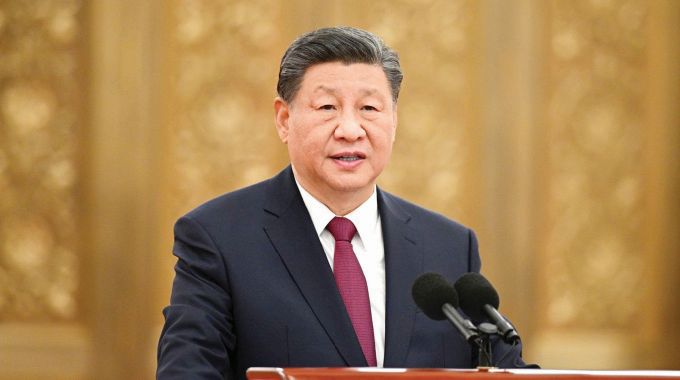
Valentine Shiri
THIS weekend, the African Union (AU) is holding its 39th annual summit at the continental body’s headquarters in Addis Ababa, Ethiopia, with President Mnangagwa among the participants.
This year’s summit is running under the theme “Assuring Sustainable Water Availability and Safe Sanitation Systems to Achieve the Goals of Agenda 2063”.
The Agenda 2063 is Africa’s blueprint and master plan for transforming Africa into the global powerhouse of the future, which came about following the realisation by African leaders that there was a need to refocus and reprioritise Africa’s agenda towards inclusive social and economic development, continental and regional integration, democratic governance and peace and security, amongst other issues.
Like so many such summits in the past, the meeting is being held amid rapid developments in the international arena in major realms such as peace and security, climate change, dysfunctional multilateral systems, the breakdown to the international rules-based order, opportunities and challenges of technological advances brought by artificial intelligence.
Apart from the narrowed focus of this year’s theme, Africa must grapple with the challenge of repositioning itself as a global player to contribute meaningfully towards mankind.
To the extent that the African Union indaba is not happening in isolation, I would like to argue in this article that perhaps the greatest challenge for Africa now is to take the opportunity to collectively evaluate and reflect on what is happening on the global arena, and to take decisive steps that will safeguard and advance the interests of African people.
In this regard, the biggest prospect is building a strong alliance with China to help the continent not just achieve the objectives of this year’s theme vis-à-vis sustainable water availability and safe sanitation systems; but also the broader cooperation framework of building an all-weather community with a shared future.
From global peace to zero tariffs
For its part, China has been keen on engaging Africa to deepen relations and solve global challenges and achieve common prosperity.
The President of China, Xi Jinping, wrote a letter to the African Union chair Joao Lourenco, who is also the President of Angola; and Mahmoud Ali Youssouf, chairperson of the AU Commission, extending warm congratulations to African countries and people over the 39th AU Summit.
In his letter, President Xi emphasised that in a world fraught with changes and turbulence, China is firmly committed to maintaining global peace, advancing common development and promoting the building of a community with a shared future for humanity.
Xi said that China will fully implement zero-tariff treatment to 53 African countries having diplomatic relations with China starting from May 1, 2026. At the same time, China will continue to push forward the negotiation and signing of the agreements on economic partnership for shared development, and further expand access for African exports to China by upgrading the “green channel” and other measures, he added.
The Chinese president said that these new measures by China to expand high-level opening up will surely provide new opportunities for Africa’s development, and for China and Africa’s joint pursuit of the dream of modernisation.
Xi said since the start of diplomatic relations between China and Africa 70 years ago, the two sides have always stood together through thick and thin, and moved forward side by side.
He said China stands ready to work with Africa to carry forward their historical friendship, deepen mutually beneficial cooperation, enhance mutual understanding and affection, and jointly write a new chapter of an all-weather China-Africa community with a shared future for the new era.
Learning and cooperating with China
In light of this year’s theme, Africa should take a leaf from China and cooperate in finding solutions in the areas of water availability and sanitation, itself a goal of the United Nations.
The Sustainable Development Goal 6 (SDG 6) aims to ensure availability and sustainable management of water, sanitation and hygiene (WASH) for all by 2030.
It addresses universal access to safe drinking water, proper sanitation, ending open defecation, improving water quality and increasing water-use efficiency.
Africa faces a massive water, sanitation and hygiene crisis, with 418 million people lacking basic drinking water, 779 million lacking sanitation and 839 million lacking hygiene services.
The crisis is due to a number of factors, among them climate-related disasters, rapid population growth, insufficient infrastructure and financing gaps.
Experts have advised that accelerating progress requires massive efforts to enable Africa to attain targets.
This is where cooperating with China will be key.
First, Africa needs to look at the Chinese example and how its modernisation was underpinned by progress in the water and sanitation field.
Statistics available suggest that access to safe water in China has increased from 45,7 percent to 91,3 percent between 2000 and 2020.
In urban areas, over 95 percent of households now have access to clean water, while rural areas reach 82,4 percent.
The use of modern toilets has increased from 18,7 percent to 78,5 percent during the same period.
Last year, in October, China’s Ministry of Water Resources announced that it now had the world’s most advanced and wide-ranging system of water management with over 94 000 reservoirs, and dozens of varied resource diversification initiatives.
At the same time, China has been able to export its success in wastewater treatment globally.
China has emerged as a global leader in developing cost-effective, decentralised water and sanitation solutions that address the twin challenges of infrastructure limitations and resource scarcity, according to watertechsh.com.
These innovations are particularly valuable for rural communities, peri-urban settlements and disaster-response scenarios where traditional centralised systems are impractical or prohibitively expensive.
Chinese providers are combining modular designs, renewable energy integration and smart monitoring to create scalable systems that meet diverse needs across the Global South.
In Zimbabwe, the capital Harare’s municipality has entered into a trilateral partnership with a local private company and a Chinese entity for the water and sewer reticulation overhaul project that will see the city’s water and sewer infrastructure modernised.
This is critical because Harare has for years been at the epicentre of the spread of waterborne diseases such as cholera, which at some point killed over 4 000 people during an outbreak.
China, through its development agency, China Aid, has also provided over 1000 boreholes across Zimbabwe to ensure access to clean water in both rural and urban areas.
China is a perfect partner in delivering sustainable water availability and safe sanitation systems solutions, and the continent must use the summit to explore ways to cooperate fully with China.
In fact, at the last Forum on China Africa Cooperation (Focac) Summit held in Beijing in 2024 there was significant focus on developing cooperation in the area of water and sanitation, as well as other uses of water in areas such as energy and agriculture.
According to the Beijing Action Plan (2025-2027), China will support Africa in developing comprehensive plans for water resource and river basins and improving water infrastructure.
China is willing to carry out technical exchanges, talent development and project cooperation with Africa in water resource distribution, flood and drought prevention, rural water supply, water-saving irrigation, water ecology restoration, use of non-conventional water resources and small hydropower development, among other areas.
For context, no other global partner has offered Africa such a comprehensive framework for cooperation in the area of water and sanitation, which is the focus for this year.
This means that African states, individually and collectively, must explore ways to work with China to achieve fruitful results.
Wang’s visit
At the same time, a more general approach to building closer relations with China should be guided by the outcomes of Chinese Foreign Minister Wang Yi’s visit to three African countries this year.
Wang, China’s top bureaucrat, visited Ethiopia, Tanzania and Lesotho at invitation of the respective governments, following the tradition of Chinese FMs making Africa their first destination per year.
In the three legs of the tour, China and African counterparts reaffirmed theircommitment to elevate their relationship to an all-weather strategic partnership, with an explicit focus on leveraging recent Forum on China-Africa Cooperation outcomes not just for bilateral gain but as a model for broader China-Africa cooperation — economic, digital and cultural.
More ssignificantly, Wang undertook a strategic dialogue with African Union leadership in Addis Ababa, where he positioned the African bloc as a central partner in addressing shared development challenges and advancing a modernisation narrative rooted in mutual respect and co-determination.
Further, Wang articulated a vision of cooperation in which African agency and institutional partnership play defining roles, a stance that resonates deeply across the Global South, according to one Kenyan-based scholar.
At the same time, as the African Union summit is taking place in the year that both sides had designated “China-Africa Year of People-to-People Exchanges”, it is appropriate to reflect on the past 70 years of China-Africa friendship and to undertake various activities made in the declaration.
One could argue that failure to recognise this on the main agenda and theme was a discrepancy on the part of the African Union, which should have been better informed to align with the programme outlined two years ago.
*The writer is an independent Zimbabwean researcher and scholar based in Harare.