admin
admin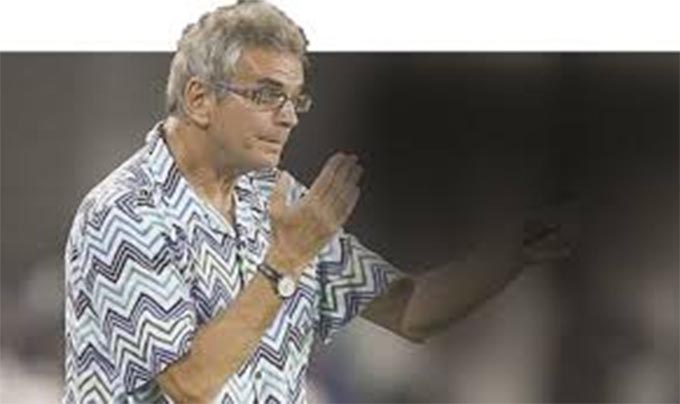
Robson Sharuko Senior Sports Editor
IT’S unlikely he would have followed the path of his successor, Rudi Gutendorf —globetrotting into coaching a world-record 35 sides, including 18 national football teams.
It’s very likely he would have followed the path of his other successor, Sunday Chidzambwa — and remain in the trenches for some time and then find peace in retirement.
Whatever the case, by now, it’s highly likely he would have mellowed.
Barely recognisable from the highly explosive fireball of raw passion, obsessed by a relentless pursuit of both excellence and greatness, which he was when he first arrived here.
And, probably, more concerned with helping his son, Jonah, become a successful football star than worrying about the baggage, and challenge, which come with coaching national teams.
Reinhard Fabisch would have been 70 today.
He would have been two years older than his former assistant, Chidzambwa, the man who finally shattered the barriers and took the Warriors to the AFCON finals for the first time.
But, the reality is that it’s been a dozen years since Fabisch died, on July 12, 2008, after losing his battle with cancer.
He was 57, just a month shy of his 58th birthday.
It has also been a quarter-of-a-century since Fabisch’s romance which, at its peak, saw a Cabinet minister describing him as the darling of the nation, ended under a cloudy of acrimony.
On April 20, 1995, ZIFA announced Fabisch had been dismissed as the national team coach, just days before a AFCON qualifier against Malawi.
Their relationship, which had been strained for some time, finally collapsed.
In between, since his arrival four years earlier as the technical director of the Young Warriors who finished fourth at the 1991 All-Africa Games in Cairo, Egypt, the German coach had gone to the gates of both heaven and hell. The heaven was represented by his creation of the Dream Team, which went on a 11-match unbeaten run, in both the AFCON and World Cup qualifiers, dragging his men within touching distance of the finals of both tournaments.
They came within 11 minutes of booking their place at the Nations Cup finals, for the first time, before Kalusha Bwalya shattered those dreams with a late equaliser for Zambia at the National Sports Stadium
Then, even more impressively, was how they marched to within 90 minutes of a place at the ‘94 World Cup finals only for the Indomitable Lions to end their Cinderella adventure in Yaounde in the final match of the qualifiers.
Ironically, that’s where his real troubles actually started.
A few months after that controversial 1-3 loss, FIFA announced he had been banned for one year, and fined US$23 000, for bringing the game of football into disrepute.
The German coach was accused of having flouted the FIFA disciplinary code by suggesting the match officials, who handled that match in Yaounde, could have been bribed to ensure his Warriors did not win the game.
Ironically, Fabisch’s dismissal came three months after what the coach described as his team’s finest performance, under his tutelage, when they transformed fantasy into reality by thrashing the Indomitable Lions 4-1 in an AFCON qualifier at the giant stadium.
A hat-trick from Vitalis Takawira, and a wonder goal by the late Paul Gundani, sealed a comprehensive victory which gave the coach, and his men, a measure of revenge for the nightmare they suffered in Yaounde two years earlier.
“I love this country,’’ Fabisch said just after he was sacked.
The chemistry between the coach, and his players, was unquestionable and they fought together, won together and also lost together.
“Reinhard always told me that it was the best combination he ever had as a coach,’’ said his widow, Chawada.
“So, his job was that much easier to do because his task was simply to play a strategic system with highly motivated and talented players.’’
And, for some time, they took their country on a dream adventure.
The 4-1 thrashing of Bafana Bafana was the high water mark, the 4-1 humiliation of the Indomitable Lions had purity written all over it and the goalless draw against the Pharaohs in France was an amazing parade of all the virtues of a defence.
Fabisch and his Dream Team might not have qualified for either the AFCON or World Cup finals but, boy oh boy, they took their country on an unforgettable adventure and the green-and-gold jersey became a symbol of national pride.
Others, though, disagree.
“Fabisch wasn’t a good coach but an excellent motivator, a person who sold dreams,’’ argues our leading football pundit, Bothwell Mahlengwe, who played top-flight football for Sporting Lions, argues.
“Like an excellent marketing expert, he created a euphoria of expectation and hope for a nation that had for a long time longed to be counted on the continental front.
Fabisch transformed a well-shaped and well-balanced team — steady defence, mobile and creative midfield and hungry and lethal strike force, the one that walloped South Africa 4 -1, into a one-dimensional side, all defensive, a non-existent midfield and a sporadic strike force.
“Some will argue there was progress but, without losing a match, they still failed to qualify for the Nations Cup because they were a team built not to lose and, if possible, try and win.
“He seduced most of us but he was the weak link in our best team ever.’’
The mob, which gave the coach a hostile reception at Rufaro, in March 1993, forcing him to flee into the refuge of his car, as they demanded the introduction of Moses Chunga in the team, will certainly agree with Mahlengwe.
“Each week I’m told I should have dropped this and that player and, if I listened to that advice, I would remain with only two players,’’ said Fabisch.
“I know Moses is a good player, I respect him and all I’m asking from him is to show me that he has fully recovered from the knee injury.’’
Others, though, and they seem to be the majority, still feel he was the Messiah for Zimbabwe football, the man whose “Midas Touch” transformed the Warriors from a rag-tag team into a very competitive side.
The brutality of football, which is a results-oriented game, means Fabisch’s legacy will always be a subject of intense debate on the domestic scene.
But, even those who feel he failed can, at least on a special day like today, put all that aside and join his family in remembering what would have been a special day for him.
A father, and football coach, who made this country dare to dream.
Noone can accuse him of not trying.


 Online Reporter