Online Reporter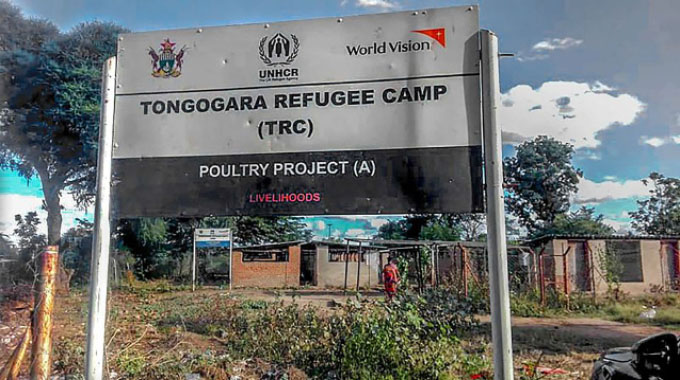
Panashe Chabwera and Nyasha Turuza
A sanitary pad, a contraceptive, a safe delivery room.
For many women and girls, these are basic needs.
At Tongogara Refugee Settlement in Chipinge, they can be hard to find.
Beyond the broader issue of displacement is a quieter crisis that affects the health, dignity, and future of thousands of refugee women and girls: limited access to Sexual and Reproductive Health and Rights (SRHR) services.
In the forests of Chipinge, over 11 500 refugees and asylum seekers wake each day to the realities of displacement.
Among them are more than 5 400 women and girls navigating adolescence, menstruation, pregnancy, motherhood, and the ongoing challenge of accessing essential sexual and reproductive health services.
For a teenage girl without sanitary products, menstruation can lead to missed school days.
For a pregnant woman, limited access to reproductive health care can turn a routine journey to motherhood into a source of anxiety and risk.
For survivors of sexual violence, the lack of support and silence can deepen their trauma.
These experiences are not isolated; they are signs of a growing SRHR crisis at Tongogara Refugee Settlement.
Established in the early 1980s as a sanctuary for people fleeing conflict and persecution, Tongogara has become Zimbabwe’s largest refugee settlement, covering 870 hectares and hosting refugees and asylum seekers from countries such as the Democratic Republic of Congo, Burundi, Rwanda, Mozambique, and Uganda.
Despite the efforts of the government and aid partners, the settlement’s increasing population relies on a single health centre, putting immense pressure on health services, including those for sexual and reproductive health.
Children and adolescents make up the majority, making access to youth-friendly SRHR services both a health necessity and a developmental need.
At the centre of the crisis is a simple truth: displacement does not stop human biology.
Women continue to menstruate. Girls keep entering puberty.
Pregnancies still happen. Survivors of sexual violence require care and support. Yet in places where resources are limited and health systems struggle, access to sexual and reproductive health services often remains insufficient.
The challenges women and girls face at Tongogara are not just humanitarian issues; they are matters of rights.
Zimbabwe’s Constitution recognises the right to health care, including reproductive health care, under Section 76, while Sections 51 and 52 guarantee human dignity and personal security.
Women and girls are further protected under Sections 80 and 81, which promote gender equality and protect children from exploitation, abuse, and harmful practices.
These protections are backed by international agreements such as the Convention on the Elimination of All Forms of Discrimination Against Women (CEDAW), the Convention on the Rights of the Child (CRC), the International Covenant on Economic, Social and Cultural Rights (ICESCR), and the Maputo Protocol.
Together, these agreements affirm that access to sexual and reproductive health services is a fundamental human right.
One clear sign of the SRHR crisis at Tongogara is period poverty.
Menstruation is a normal biological process, yet for many adolescent girls in the settlement, it becomes a monthly obstacle to education and daily life.
Limited access to sanitary products means some girls must improvise, while others stay home during their periods.
A UNFPA assessment found that many refugee households cannot afford sanitary products, leaving girls vulnerable to missed school days and social exclusion.
What begins as a menstrual hygiene issue ultimately becomes a barrier to education, self-esteem, and future opportunities.
The reproductive health needs of women and girls go far beyond menstruation.
Pregnancy, childbirth, family planning and maternal health care require ongoing access to quality services.
However, Tongogara’s growing population depends on a single health centre, putting considerable pressure on health services.
More than 5 400 women and girls live there, with adolescents making up a significant part of the population, highlighting the urgent need for youth-friendly reproductive health programmes and comprehensive maternal health services.
Access to antenatal care, skilled birth attendance, postnatal services, contraception and reproductive health information is critical for women to manage their reproductive choices and achieve good health outcomes.
Adding to these challenges is the ongoing risk of sexual and gender-based violence.
Humanitarian assessments at the settlement have raised concerns about privacy, insufficient sanitation facilities, and environmental conditions that heighten the vulnerability of women and girls.
A rapid assessment by UNHCR and UNFPA found that some girls lacked adequate privacy for bathing, increasing their risk of abuse and exploitation.
Sexual and gender-based violence has serious consequences for reproductive health, often leading to physical injury, psychological trauma, unintended pregnancies, and sexually transmitted infections.
For survivors, timely access to medical care, emotional support and protection services can make the difference between recovery and lasting suffering.
Limited access to SRHR information also increases these vulnerabilities.
Adolescents without accurate information about puberty, reproductive health, consent and contraception often struggle to make informed choices about their bodies and futures.
In many displacement settings, poverty, insecurity, and lack of access to services lead to teenage pregnancies and child marriages.
These outcomes are not just personal tragedies; they reflect systemic failures in protection and health service delivery.
Early pregnancy raises health risks for both mother and child, while child marriage often limits educational opportunities and perpetuates cycles of poverty and dependence.
Addressing the SRHR challenges at Tongogara requires more than temporary humanitarian aid.
It demands ongoing investment in comprehensive reproductive health services, reliable access to menstrual hygiene products, youth-friendly health programmes, improved maternal health care, and solid methods for preventing and responding to sexual and gender-based violence.
It is equally important to ensure that women and girls have accurate information and the power to exercise their rights.
The women and girls of Tongogara are not asking for exceptional privileges; they want access to services that many others take for granted: a sanitary pad, quality maternal health care, family planning services, reproductive health information and protection from violence.
These are not luxuries; they are rights. Until those rights are fully recognised, the ongoing SRHR crisis at Tongogara will remain both a humanitarian issue and a constitutional obligation, as well as a measure of Zimbabwe’s commitment to leaving no one behind.
The true test of protection is not only whether refugees survive but whether they can live with dignity, autonomy, and hope.
For the women and girls of Tongogara, closing the SRHR gap is not just a humanitarian necessity; it is a constitutional and moral duty.
*Panashe Chabwera and Nyasha Turuza are Parliament of Zimbabwe research officers.