admin
adminAfricans unleashed violence on foreigners whom they accused of taking their jobs.
The infamous attacks claimed scores of lives, destroyed property and savings, left psychological scars and ultimately questions as to the South African government’s accommodation of the empowerment needs of its poor people.
Fast forward to 2012 and the recent Marikana massacre in which over 30 miners were killed for rioting against poor working conditions at the foreign-owned Marikana platinum mine, has brought to the radar the conditions of the poor South African vis-a-vis ownership of the means of production.
As the mine protests have been spreading, so have genuine questions on the ownership dynamic of the South African economy. South Africa could yet go the way Zimbabwe went.
In 1999, 19 years after independence, when Zimbabwe had suffered under the effects of the Structural Adjustment Programme, the Svosve villagers undertook their first land occupations.
The first reaction of the Government was to arrest them, but it became clear that the post independence political economy was unsustainable.
Eventually the Zanu-PF Government carried out a comprehensive national land redistribution exercise.
The first such move in the 21st century, it was met with widespread Western resistance and the MDC party was formed with a view to remove the Zanu-PF Government from power and reverse the land redistribution exercise.
With xenophobia and Marikana, is it not yet clear to South Africa’s president Jacob Zuma that this is how it all started in Zimbabwe?
Is it not yet clear that 18 years after independence, the initial public euphoria and the fanfare around former South African president Nelson Mandela’s offer of national reconciliation has died out as people are becoming increasingly disillusioned?
Does South Africa not yet realise that the political transformation and the skin deep “Broad-based Economic Empowerment” is not enough to calm the bitter experiences of the people who, despite living in a country as rich as Europe, still has a huge gap between the rich and the poor?
The South African leadership, particularly the ruling African National Congress should realise that the nation has got to either pro-actively take the side of the majority of the people or sit on a time bomb until an internal revolution breaks out.
They are heading towards where Zimbabwe has already been. And to imagine that most liberation movements have been removed from power due to the emergence of labour parties.
If the MDC came out of a less powerful labour union, the ZCTU, what would happen if the powerful Cosatu were to become another MDC? Does the ANC have what it takes to take the bold move that Zanu-PF took?
Yet even as we jet into the future with confidence, we cannot assume that the problems in neighbouring countries do not affect Zimbabwe.
South Africa, Botswana, Zambia and Mozambique among others felt the heat when there were problems in Zimbabwe.
They faced huge inflows of refugees and illegal immigrants. Zimbabwe also does not want to wait and start feeling the heat when the internal revolutions in its neighbouring countries begin to manifest as they inevitably will.
It is the complacency that Africa gained after winning political independence between the 1950s and 90s. Yet in the three decades, the most interesting development is that the flag independence did not mean much without economic liberation.
Economic empowerment is not enough without a knowledge empowerment that enables people to have a true sense of their identity, a sense of belonging, a sense of entitlement and carry out the actions that are necessary to realise self determination and self actualisation as an African people.
Africa is a great continent with probably more resources at the same place than any other continents, yet it is an epic story of poverty and ridicule. The global economic centre remained fully in control.
The revolution must be sustainable.
By giving affirmative action theoretical and empirical relevance, drivers of empowerment in Zimbabwe, principally the Affirmative Action Group, enabled the Zimbabwean nation to execute a national process that ensures that certain national principles are upheld whatever the case be, using legislation.
These values should become the fundamental pillars of the Zimbabwe constitution.
Dr Guzah is the president of the Affirmative Action Group.


Online Reporter
- Herald
- July 31, 2026
- 18 views
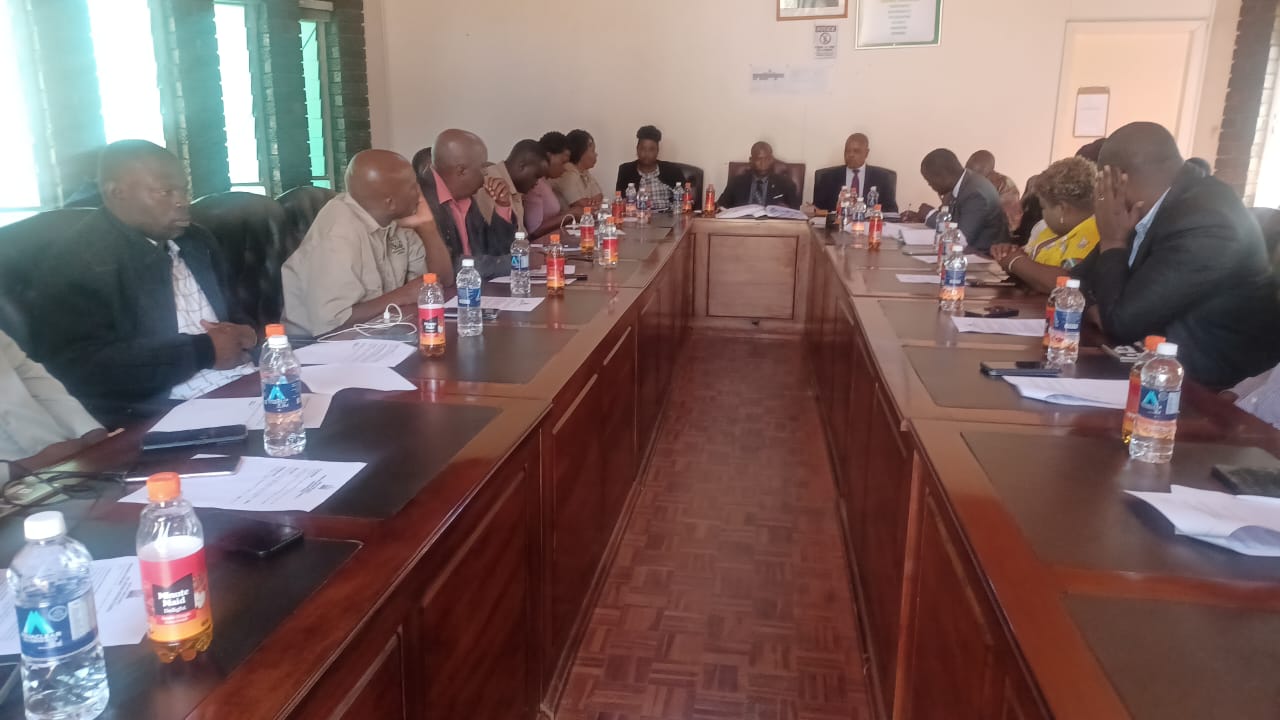
Norton Town Council renews integrity pledges
Diana Nherera Norton Town Council councillors and management on Thursday renewed their integrity pledges as part of the local authority’s commitment to promoting ethical conduct and combating corruption. Speaking…