

 admin
admin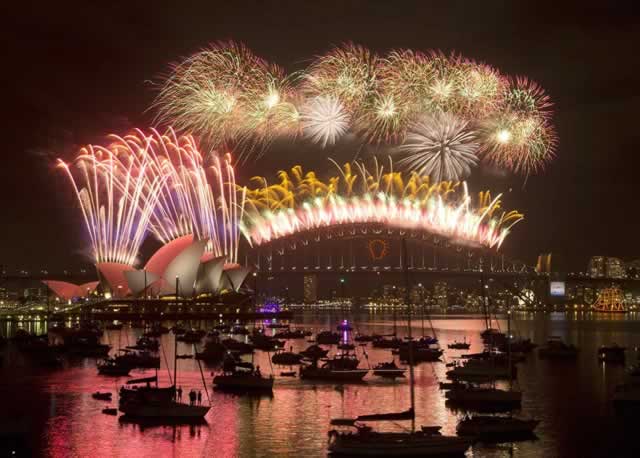
NEW Year’s Day; a time for reflection on the year which has past, a day for resolutions for the coming year.
While researching the Story behind the Christmas holiday season, I decided to research this day as well.
The following is what I found according to Wikipedia, “Festivals of the World” by Korman Mehra, “New Year’s Day: The Julian and Gregorian Calendars”, The Beginning of the Year in the Middle Ages by Reginald L. Poole, “A History of the New Year” by Borgna Brunner and “New Year’s around the World” by Life Magazine.
New Year’s Day is a festival observed in most of the world on January 1st, the first day of the year in the modern Gregorian calendar.
January 1st is also New Year’s Day on the Julian calendar which is not the same as the Gregorian one.
In the present day, with most countries now using the Gregorian calendar as a civil calendar; January 1st according to that calendar, is among the most celebrated public holidays in the world, often observed with fireworks at the stroke of midnight following New Year’s Eve as the New Year starts in each time zone; other global New Year’s Day traditions include making New Year’s resolutions and calling one friends and family.
The ancient Babylonian calendar was lunisolar and around the year 2000 BC began observing a spring festival and the New Year during the month of Nisan, which was around the time of the March equinox.
The early Roman calendar designated March 1st as the first day of the year; the calendar had just ten months, beginning with March .
The January kalend, which was the start of the month of January, came to be celebrated as the new Year at some point after it became today for an inaugurating new consuls in 153 BC.
Once it became the new Year, however, it became a time for family gatherings and celebrations.
At various times and in various places throughout medieval Christian Europe, the New Year was celebrated on December 25th in honor of the birth of Jesus.
As a date in the Christian calendar, New Year’s Day marked the feast of the Naming and Circumcision of Jesus, which is still observed as such in the Angeican Church, the Lutheran Church, the Eastern Orthodox Church, and the traditional Catholic Catholicism by those who retain the usage of hte General roman Calendar of 1960.
The mainstream Roman Catholic Church celebrates on this day the Solemnnity of Mary, Mother of God.
Most nations of Europe and the colonies officially adopted January 1st of New Year’s Day somewhat before they adopted the Gregorian calendar.
France changed to January 1st, from 1554, most of Germany did so from 1544, the Netherlands from 1556.
1573 and according to sect, Italy (not being united) did so on a variety of dates.
Spain and Portugal from 1556, Sweden, Norway and Denmark for 1599, Scotland from 1600, and Russia from 1725.
England, Wales, Ireland and Britain’s American colonies did so from 1752.
In cultures that traditionally or currently use calendars other the Gregorian, New Year’s Day is often also an important celebration; in Africa, Nayrouz and Enkutatash are the New Year’s days of the Coptic Egyptians and the Ethiopians respectfully, in East Asia, the Chinese New Year celebrated in some countries around East Asia include including China and Southeast Asia, which also includes Singapore; it is the first day of the traditional Chinese calendar, which is a lunar calendar that is corrected for the solar changes every three years.
The Japanese New Year is celebrated on January 1st because the Gregorian calendar is now used instead of the Chinese calendar, which was used until 1873.
The Korean New Year is celebrated on the first day of the traditional Korean calendar in South Korea.
North Korea celebrates the New Year’s Day holiday on the first day of the Gregorian calendar, which is January 1st.
The Cambodian New Year is celebrated on April 13th or April 14th; in Taiwan, New Year’s is celebrated on April 13th and 14th and it’s called Songkran in the local language.
The Vietnamese New Year, more commonly known as the Vietnamese Lunar New Year, is the most important and popular holiday and festival in Vietnam.
The holiday normally falls between January 20th of February 20th and is marks the arrival of spring on the Chinese calendar.
The Islamic New Year is the day that marks the beginning of a new year in the lunisolar calendar the first day of the year is observed on the first day of Muharram.
Rosh Hashanah which is a Jewish New Year is celebrated by Jews in Israel and throughout the world.
The date is a new moon of Tishrei which is the seventh month counting from Nisan the first month of spring and always falls during September or October.
The first of January represents fresh start of a new year after a period of remembrance of the passing year.
Publications have year-end articles that review the changes during the previous year, and in some cases, publications may set their entire year’s work on fire in the hopes that the smoke emitted from the flames bring new life to the company.
There are also articles on planned or expected changes in the coming year.
This day is usually a traditional religious feast, but since the 1900s it has also been an occasion to celebrate the night of December 31st or New Year’s Eve with parties.
Public celebrations and other traditions focused on the impending arrival at midnight and the New Year; watch night services are also still observed in many areas.
New Year celebration activities held worldwide on January 1st are part of New Year’s Day, commonly include the following: major parades are held on New Year’s Day, including London’s New Year’s Day Parade, Pasadena’s Tournament of Roses Parade and the Philadelphia Mummers Parade in the Bahamas, it is also associated with Junkanoo.


 Online Reporter