Nothando Zondo, [email protected]
In 2015, a photograph was taken in Mlomoliwoto Village, Umzingwane district, Matabeleland South. It showed a woman believed to be in her nineties, bent with age but firm in purpose, tightening her grip on a wooden hoe as she helped dig a perimeter fence. Around her, villagers carried stones, sand and fencing poles. Men arrived with donkey-drawn carts. Women cooked for volunteers working under the sun.
There were no classrooms. No electricity. No running water. No proper road. Only a stretch of virgin bush and a shared belief that children born in rural Zimbabwe deserved the same chance as any other child.
Seven years later, that same piece of land opened its doors to the first 30 learners and four teachers. Today Mlomotsha School of Excellence stands as a beacon of hope in a province where the need for schools from ECD to secondary remains acute. Its story is not about wealth or big donors. It is about patience, faith, and a community that refused to wait for someone else to act.
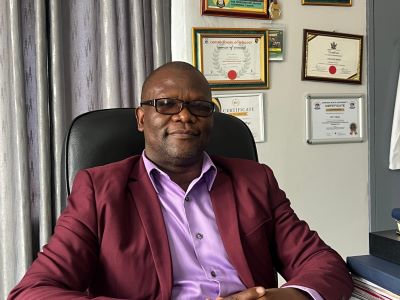
For the secondary school’s founder, Mr Cecil Sibanda, the mission began in nearby Tshalimbe Village, where he grew up. As a boy he sat on the floor for lack of furniture. He walked nearly 10 kilometres each way to secondary school. He watched rural schools struggle to produce good results year after year.
Later, living in the United States, he saw modern classrooms, technology and teaching methods that made him ask a hard question. Why should where a child is born decide the quality of education they get?
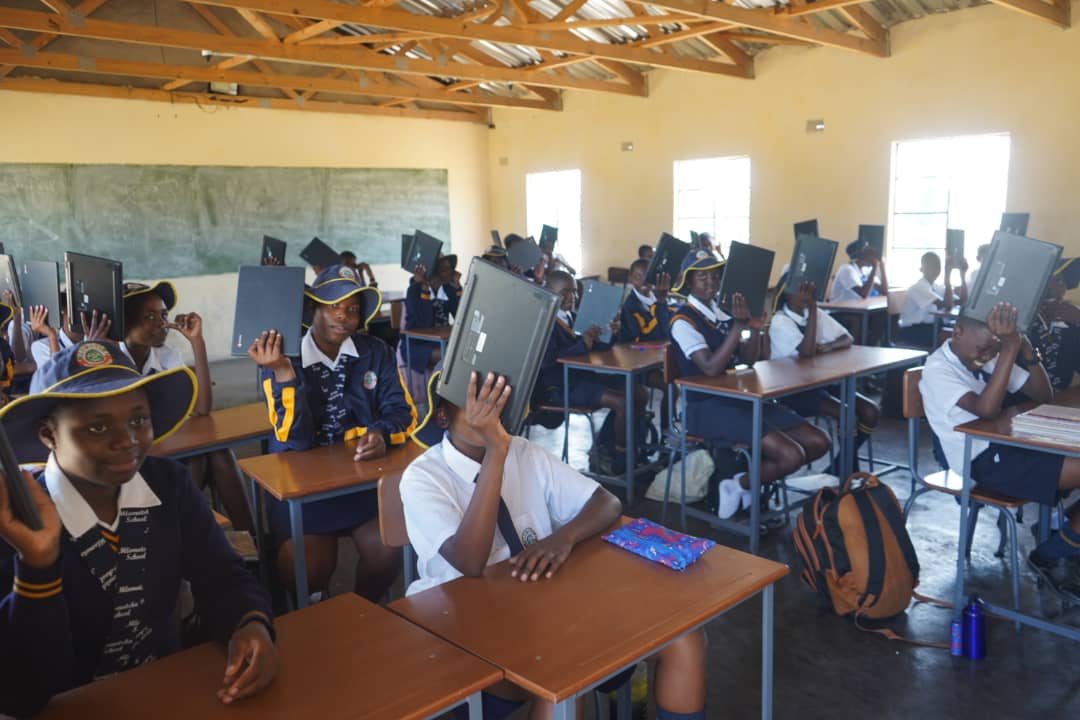
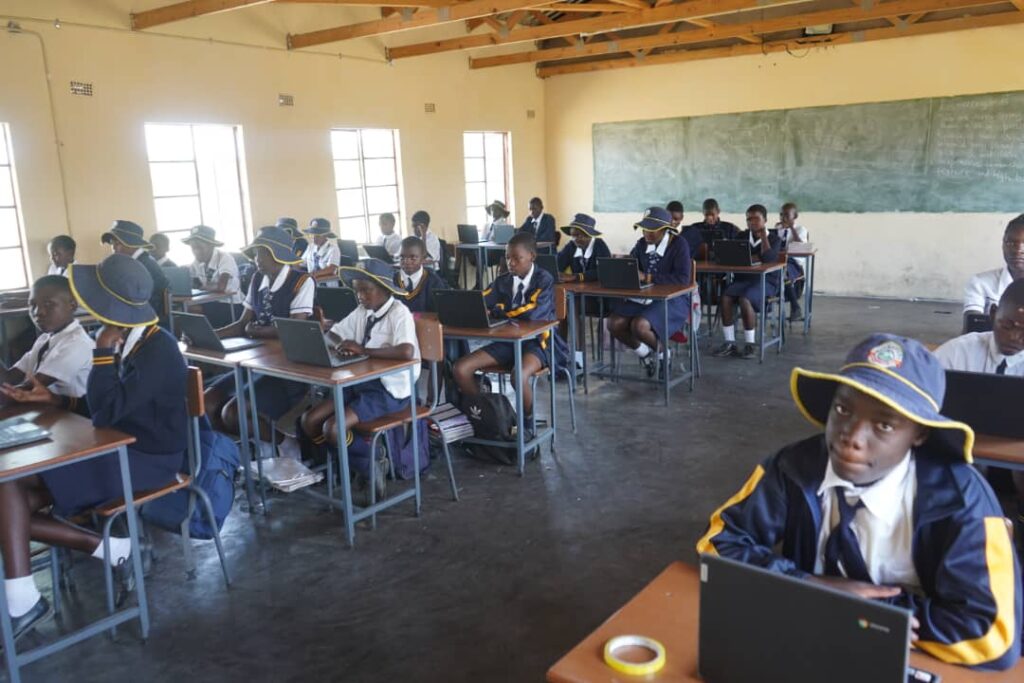
Now the school has enrolled 300 pupils from the local community who are learning from Form 1 to Form 4, easing their burden and providing access for them to lay a better foundation for their future careers.
“Talent is distributed equally by God, but opportunity is not,” said Mr Sibanda. “Rural children are every bit as capable as children anywhere else. What they often lack is access to quality teaching, technology and high expectations.”
The dream to give back stayed with him for years. In 2013 a life-threatening medical incident turned it into a decision.
“Facing my own mortality forced me to think about what I wanted my life to stand for. When I recovered, I knew I wanted to build a school that would transform opportunities for rural children, not just for one generation, but for generations to come.”
Unlike schools that start in church halls or rented rooms, Mlomotsha started on untouched land. There was no infrastructure, only a vision. Word spread through surrounding villages and the dream quickly stopped belonging to one man.
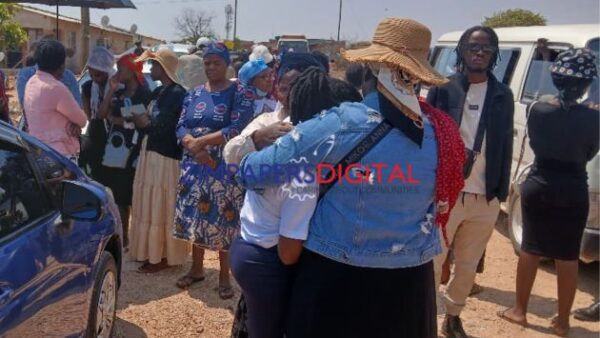
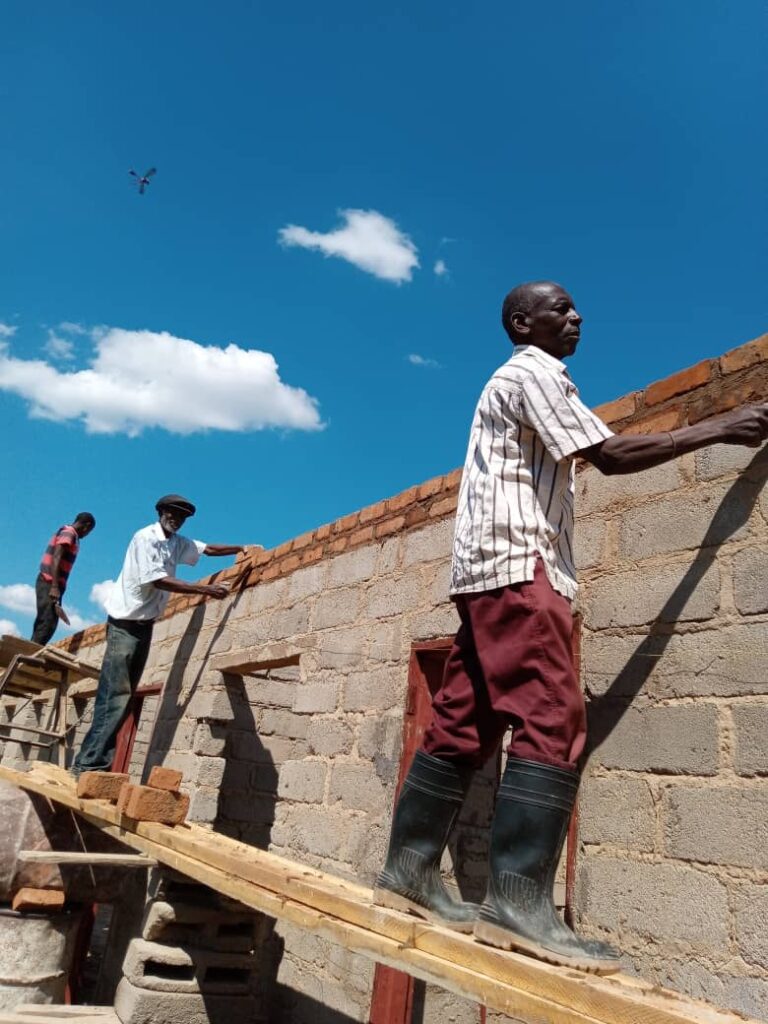
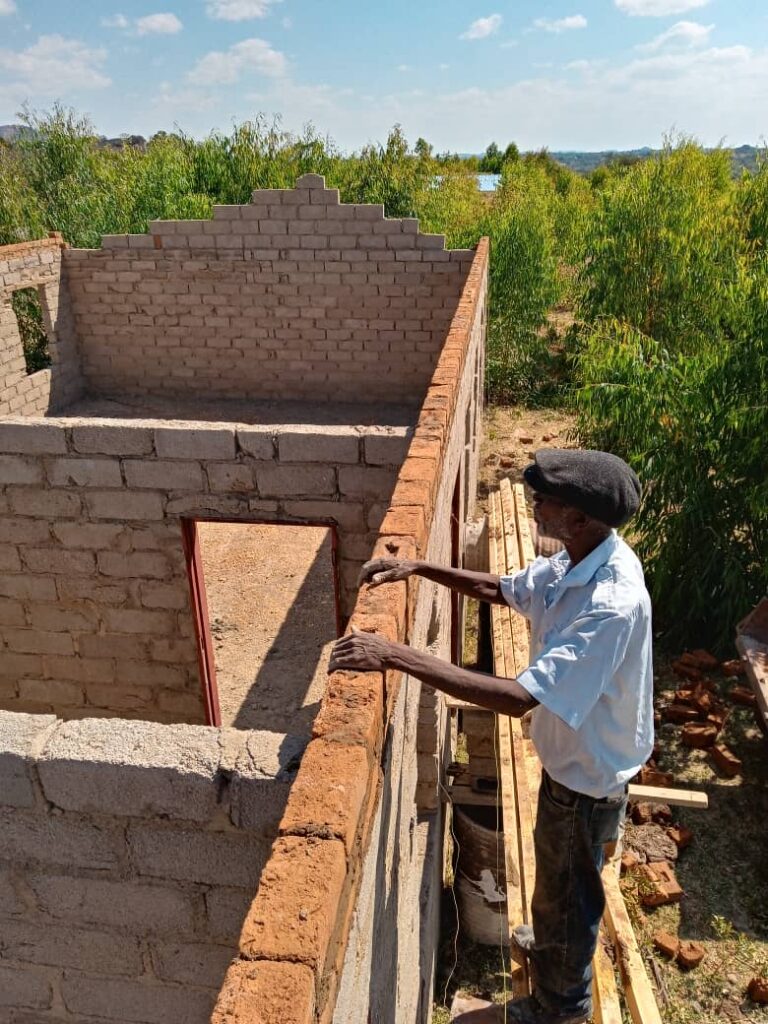
People contributed what they had. Some cleared the bush by hand while others brought stones, sand and water. In addition, families loaned donkey carts to move materials. Skilled builders, carpenters and artisans donated labour or accepted modest payments. Women cooked for volunteers.
One story remains close to Mr Sibanda — a South Africa-based community member, Junior Ngulube, and his wife Nokuthula marked a birthday by asking friends to donate cement for the school instead of hosting a party.
And then there were the elderly women who volunteered to build the fence. “One of them was already in her nineties, yet she was determined to contribute,” Mr Sibanda recalled. “Those women remind us that Mlomotsha was built through sacrifice, prayer and hard work, not simply through money.”
The greatest obstacle, Mr Sibanda says, was not convincing the community but it was money.
He said the vision was ambitious but the resources were almost non-existent and that instead of asking a struggling community for cash, the founders asked for what people could give: labour, skills, materials, tools and prayers.
Construction moved slowly. The philosophy was simple: do not wait until you have everything. “If we had enough money for one bag of cement, we built with one bag of cement’s worth. If someone donated 10 bricks, we used 10 bricks. Every gift, whether money, materials or labour, was treated as equally valuable,” he said.
When the school opened in 2022 it had 30 learners, four teachers and one general worker. Government support for teachers’ salaries that had been expected did not come instantly. The school had to survive on fees from a handful of learners.
“There were moments when we wondered how we would keep the school running,” Mr Sibanda admitted.
“However, giving up was never an option. Whenever I felt discouraged, I would remember the people who had already invested their time and labour. I thought about the elderly women who worked on the fence, the parents who volunteered, my father, managing the project, friends in America who sacrificed to support us, and the children who were depending on us. I believed God had entrusted this vision to us for a purpose.”
Matabeleland South, like many rural provinces, faces a shortage of learning facilities from early childhood development through to secondary school. Long distances, poor roads and limited resources mean many children either drop out or attend overcrowded schools far from home.
Mr Sibanda is among a growing number of private citizens stepping in alongside the Government to bridge that gap. Their work aligns with Vision 2030, which seeks to ensure that no community and no school-going child is left behind.
Today, where bush once stood, there are modern classrooms, science laboratories, computer labs, internet connectivity and boarding facilities. Children who would have travelled long distances now learn closer to home. The first teachers, who joined when there was no guarantee of success, are credited for believing in the vision before there was evidence it would work.
Mr Sibanda hopes that the future generations will remember how the school began.
“I hope they remember that Mlomotsha was not built by wealthy investors or powerful institutions. It was built by ordinary people with extraordinary faith.
“The parents who volunteered their labour, the elderly women who worked on the perimeter fence, the young man who turned his birthday into a fundraiser for cement, the churches that prayed, the friends who sacrificed. Their fingerprints are permanently embedded in this institution.”
The story of Mlomotsha carries a wider message for rural development. Big changes do not always start with big budgets. Sometimes it starts with patience, with a man who decided his life would stand for something, and with a community willing to give what little it had.
In a province still grappling with a shortage of schools, Mlomotsha is proof that progress is possible when vision meets perseverance. It is proof that when a community decides its children matter, it can turn a virgin bush into classrooms, and a dream into a foundation strong enough to carry generations.
As the laughter of learners now fills corridors that once existed only in imagination, the elderly woman in that 2015 photograph remains a symbol. Not of what was lacking, but of what faith, sacrifice and collective effort can build.