malvernmugadzikwa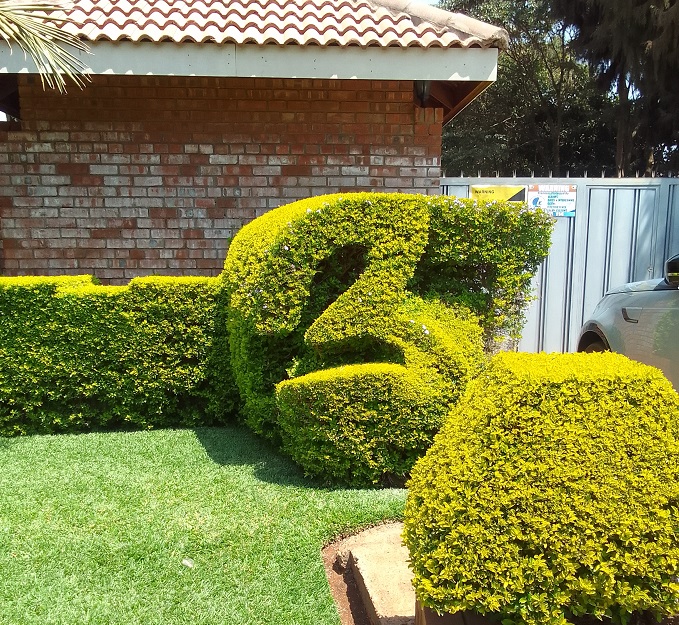
Andrew Mangwarara
IT was a delightful experience to visit Mr and Mrs Tachiwona’s residence in Mt Pleasant and witness first-hand the stunning topiary in their garden.
Their gardener, Tichaona Kaumbuku, meticulously prunes the duranta hedge to perfection.
Topiary is the art of training plants, typically evergreen shrubs or trees, into intricate shapes and forms. This ancient practice was prevalent in European and Roman gardens. It is now gaining popularity in modern gardens.

This artistry requires good hedge clippers, which are now often mechanised and available in both electric and petrol-powered versions at most garden shops.
The term “topiary” can also refer to clipped elements such as parterres, mazes, labyrinths and knot gardens.
Parterres are Italian Renaissance gardens featuring large, clipped specimens arranged around statues. In traditional parterres, the gaps between plants were left open and covered with gravel for a clean appearance.
The Romans introduced pleasure gardens with mazes and labyrinths formed from clipped plants.

British knot gardens, popular in the past, consisted of different coloured box plants arranged in crisscrossing patterns, resembling tied-up ribbons of hedges.
Various plants are suitable for topiary, but those with small evergreen leaves are particularly well-suited for this artistry. Examples are the duranta repens, buxus sempervirens, yew (taxus baccata), privet (ligustrum lucidum) and cypress. Bougainvillea, available in various colours, is another excellent choice.
A convenient way to train the plants is to use premade metal frames that provide a guide for shaping them. Regular clipping throughout the summer helps maintain the desired form. To ensure healthy growth, feed your plants adequately.

Topiary requires patience and perseverance.
A busy schedule may lead to occasional neglect, but this is reversible. Hard pruning in early spring or summer, followed by heavy feeding can help revitalise the plant. Avoid drought stress once the plant has established itself.
Containers are a versatile option for topiary, allowing you to move plants to different locations for variety. Ensure that the pot is large enough to accommodate the plant’s growth.
The primary drawback of topiary is the time investment required for maintenance and achieving the desired results. However, for dedicated garden enthusiasts, the rewards can be highly satisfying.
If you would like to be featured in our green-up campaign, contact us on the number above. Feedback: [email protected] or [email protected]



 Online Reporter