malvernmugadzikwa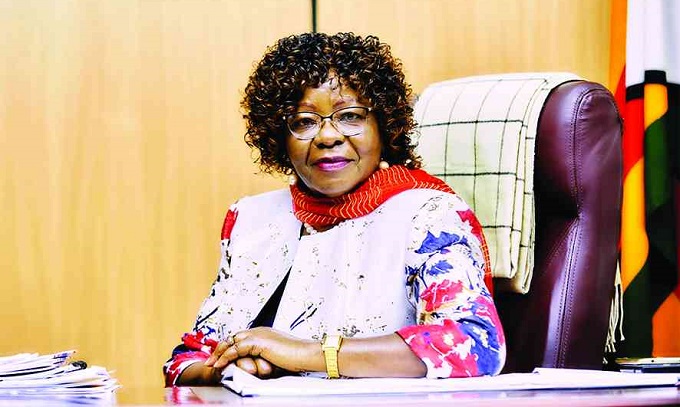
THE Ministry of Environment, Climate and Wildlife last week hosted the national pre-COP29 High-Level Technical Conference in preparation for Zimbabwe’s participation at the 29th Conference of Parties to the United Nations Framework Convention on Climate Change (UNFCCC). The meeting is set to be held in Baku, Azerbaijan, next month. The conference sought to discuss Zimbabwe’s priorities at COP29 and come up with a national position for the global meeting that will guide the country’s negotiators. The Sunday Mail’s TANYARADZWA RUSIKE spoke to Environment, Climate and Wildlife Minister DR SITHEMBISO NYONI on Zimbabwe’s preparations for COP29.
**********************
Q: As chair of the Southern African Development Community (SADC) region, how does Zimbabwe’s participation at COP29 contribute to the country’s position as a global leader in climate action?
A: Zimbabwe participates in the COP process as part of the Africa Group.
Being SADC chair means Zimbabwe has the convening power to bring together other SADC countries to discuss and make recommendations on common matters that affect the region, such as the proposed phaseout of coal and finance for building community resilience to climate change.
Q: What role can Zimbabwe play in influencing the regional and global climate agenda, especially as SADC chair?
A: As SADC chair, Zimbabwe can work with other member states to liaise with other regional blocs in Africa and beyond on a bilateral basis.
Zimbabwe can also propose and spearhead the strengthening of SADC institutions so that climate change becomes more prominent in discussions within SADC and with other regional entities.
Q: How will participating in COP29 benefit Zimbabwe in terms of knowledge exchange, learning from best practices and forming partnerships with other countries?
A: Participating at COP29 presents Zimbabwe with a significant opportunity to enhance its climate action efforts through knowledge exchange.
This global platform will allow our representatives to engage with leading experts and access the latest research on climate change adaptation and mitigation strategies.
By learning from these insights, Zimbabwe can better integrate best practices from other countries into our national policy frameworks, ensuring that our approach is informed by recent and best available science.
Additionally, COP29 will showcase successful case studies from various countries, providing valuable lessons on best practices in climate resilience.
By analysing these examples, Zimbabwe can identify strategies that align with our unique environmental and socio-economic context.
This tailored approach will help us implement more effective measures to combat climate change and promote sustainable development within our borders.
The conference also offers a crucial opportunity to form partnerships with other nations, non-governmental organisations and private sector stakeholders.
These connections can lead to collaborative projects, access to funding opportunities and technical support, all of which are essential for bolstering Zimbabwe’s climate initiatives.
By fostering these relationships at COP29, we can enhance our capacity to address climate challenges and advance our national goals for sustainable development.
Q: How has climate change affected Zimbabwe’s development, particularly in sectors like agriculture, energy and infrastructure?
A: Climate change impacts have continuously affected productivity and sustainability of our conventional sectors of the economy.
The recurrent prolonged droughts affect agricultural productivity in both crop and livestock enterprises.
This results in food and nutrition insecurity and reduced incomes for smallholder farmers, who largely rely on rain-fed agriculture for their livelihood.
On the flip side of droughts, due to climate change, we have been experiencing higher frequency and higher intensity tropical cyclones and the associated heavy rains, flooding and strong winds. This results in the destruction of infrastructure, including bridges, dams, schools, houses and clinics, thereby reversing developmental gains attained over time.
Much of the required reconstruction costs huge amounts of money, thereby affecting other socio-economic developments.
The reduction in rainfall amounts and seasonal shifts have an overall reduction of inflows into major sources of hydropower such as the Kariba Dam. This significantly reduces the contribution of hydropower to the energy mix and inevitably results in increased load-shedding.
Climate change is also associated with increased average temperatures over Zimbabwe. This has an opportunity to generate more solar energy, which is an ideal renewable energy form for climate change mitigation.
Q: What are Zimbabwe’s specific climate change goals, including targets for reducing greenhouse gas emissions (GHGs) and enhancing adaptation and resilience?
A: In the wake of climate change and the understanding that greenhouse emissions are the primary cause of climate change, Zimbabwe, being a party to the Convention on Climate Change and the Paris Agreement, has set goals and targets for reducing its greenhouse gas emissions while adapting to the impacts of the change.
The emission reduction targets are elaborated in the nationally determined contribution (NDC), which commits to a 40 percent per capita greenhouse gas emissions reduction below the projected business-as-usual scenario by 2030.
The National Adaptation Plan identifies climate change adaptation actions across seven highly vulnerable sectors, namely agriculture; water; health; human settlement; infrastructure; tourism; and forestry and biodiversity.
In Zimbabwe’s Low Emission Development Strategy and the NDC, the country prioritised 38 mitigation actions in the agriculture, forest and other land use (AFOLU); waste; energy; and industrial processes and product use (IPPU) sectors.
For example, in the energy sector, priority is on reducing the contribution of thermal power to the energy mix by development and adoption of renewable forms of energy such as biofuel, solar, biogas, wind and geothermal energy; reducing grid electricity transmission and distribution losses; and energy efficiency improvements.
In the AFOLU sector, priority is on increasing the area of forest land, reducing area burnt by veld fires, improved livestock and manure management, and adoption of climate-smart agricultural practices, including Pfumvudza/Intwasa.
While for the IPPU sector, priorities are on clinker substitution in cement manufacturing and phase down of the hydrofluorocarbons in refrigeration and air conditioning, among others.
As part of the climate change mainstreaming agenda to build resilience to climate change impacts, the country has begun modalities for climate-proofing developmental plans and budgets. Zimbabwe is updating its building codes for housing and social amenities to ensure that all structures are resilient to impacts such as heavy winds, strong rainfall, tropical cyclones and heat waves, amongst other climate hazards.
The overall goal for the country in terms of adaptation is to reduce vulnerability to the impacts of climate change, as well as mainstream climate change in development planning and budgeting.
The country’s vulnerability to the adverse effects of climate change makes adaptation a national priority, demanding policy direction at the highest level and implementation at the local level. Approval by Cabinet of the country’s National Adaptation Plan (NAP) is a clear testimony by the Government of the need to strengthen resilience.
Identified adaptation actions include development, implementation and scaling up of climate-smart agriculture solutions and strengthening agricultural value chains and markets; enhancement of early warning and climate-related disaster risk reduction systems (including information management systems); ensuring climate-resilient infrastructure designs; and development and promotion of resilient and sustainable water resources management.
An estimated US$10,3 billion is required to support the mainstreaming of climate change in the aforementioned sectors between now and 2030.
To fully meet the mitigation actions committed to the Paris Agreement, Zimbabwe will require up to US$4,8 billion up to 2030.
Q: Can you elaborate on the specific measures Zimbabwe is implementing to enhance its adaptation and resilience to climate change, such as early warning systems, sustainable land management and climate-smart agriculture?
A: As a country, we are taking proactive steps towards enhancing our adaptation and resilience to climate change.
To start with, the country has developed several policies and strategies to guide our response to climate change towards building resilience in a low carbon development.
We have indeed developed policies such as the National Climate Change Policy, the National Climate Change Response Strategy and several other strategies which outline the specific plans that we have to address the impacts of climate change.
Key measures in these various policies include enhancement of early warning systems. This has been evidenced by the procurement of five radars installed at our airports, which have resulted in a significant improvement in weather and climate predictions for early warning. Zimbabwe is also currently implementing the Government-led climate smart agriculture (Pfumvudza/Intwasa), which has resulted in communities becoming more resilient to climate change.
The Government, through the Ministry of Agriculture, also initiated the Agriculture 8.0 programme, which has eight pillars focusing on providing communities with livestock such as goats and poultry, as well as drought-tolerant crops, which are more resilient to climate change.
As a country, we are also practising sustainable land management through practices such as conservation agriculture to reduce land degradation and improve our soil fertility.
We have diverse climate-smart agriculture initiatives that we are currently undertaking towards the reduction of vulnerability.
These include crop diversification and irrigation development, thus enhancing food security and reducing vulnerability to climate-related shocks.
Q: What are some of the successes and challenges Zimbabwe has faced in implementing its climate change adaptation and resilience measures?
A: The Government of Zimbabwe, in collaboration with its stakeholders, development partners, donors, civil society organisations and communities, has made significant strides in implementing climate change adaptation interventions.
Through the process, the following success factors have been identified: strong interest and buy-in from stakeholders, including the target beneficiaries; collaborations and cooperation among stakeholders; and availability of some resources from various sources to support adaptation actions.
Against these success factors, some challenges have been faced, such as limited resources to cover all areas in need, limited or unavailability of technologies for adaptation, high cost of adaptation interventions and limited stakeholder awareness and acceptance of some adaptation interventions and technologies.
Q: What is Zimbabwe’s position on the need for climate-rich nations to provide financial support to developing countries for mitigation and adaptation efforts?
A: In the discourse on climate finance at the global negotiations, Zimbabwe has emphasised on the importance of the quality of climate finance.
We call for the provision of adequate, dependable and accessible finance from the global financial mechanisms created by the Conference of Parties to the Convention on Climate Change.
The available climate finance for adaptation and mitigation has been difficult to access, which has contributed to inequitable allocation of finance, with Africa particularly continuing to face access challenges, whether it is in the form of perceived risks that raise the cost of capital or undefined political considerations that always degrade rating of African countries.
Our climate change-related needs are realistic, despite having financial and fiscal limitations to address the challenges caused by climate change.
We call upon nations to focus on systemic and structural reforms on climate finance to address the factors that have made it difficult for our countries to access climate finance from the global funds such as the Green Climate Fund and the Adaptation Fund, as well as other bilateral finance windows.
At the core of this is the provision, mobilisation and delivery of finance on fair terms within the principles of the Convention on Climate Change and its Paris Agreement.
To date, Zimbabwe has received less than US$100 million from the funds that have been established by the Convention on Climate Change and the Paris Agreement.
Today’s reality is that Zimbabwe is already shouldering immense costs caused by losses and damage resulting from climate change, with clear examples of the impacts of the recent tropical cyclones that include Cyclone Idai, which devastated Manicaland province; and Cyclone Dineo, which hit Matabeleland North province, just to mention a few.
As Zimbabwe, we continually call for new and additional grant-based and highly concessional finance and non-debt instruments.
These funds should be provided and mobilised by developed countries, including through public interventions and a wide variety of sources and instruments.
Q: How has the Loss and Damage Fund established at COP28 benefitted Zimbabwe, and what are the country’s expectations for its future operation?
A: Since the decision to establish a funding mechanism and a fund for addressing loss and damage associated with the adverse impacts of climate change, parties under the UNFCCC and its agreement have been working on the operational modalities of the fund, which is yet to be fully operationalised.
Some pledges to the fund have been made. However, these still fall far too short of the financial needs to address loss and damage in developing countries.
Loss and damage are an important component of the global approach to climate change, and Zimbabwe strongly advocates a clear plan for its financing by developed countries.
While aware of the fear of developed countries on the issues of past “compensation” for climate loss and damage, there is need for negotiation.
Loss and damage can be negotiated separately from the climate catastrophe that countries such as Zimbabwe face now.
As I speak, no country has benefitted from the Loss and Damage Fund.
However, once the fund is fully operational, Zimbabwe expects to benefit from upfront financing to respond to predicted climate change hazards such as floods and droughts.
This support includes financing for climate-related early warnings dissemination to reach the last mile to the most vulnerable person, financing disaster mitigation actions, and post-disaster recovery and reconstruction/rebuilding efforts, including psycho-social support, something which is critical in disaster response.
Q: Has the Loss and Damage Fund been effective in addressing the needs of developing countries impacted by climate change?
A: As stated above, the Loss and Damage Fund is yet to be operationalised; therefore, at this point, I cannot tell if this has been effective or not.
But let me hasten to say that there is scope for the Loss and Damage Fund to facilitate and support the transition from high vulnerability towards enhanced adaptive capacity and resilience.
This will be achieved through the mandate and guiding principles of the fund, which align well with the need for a proactive response to climate change extreme events such as floods and slow onset events such as drought, which result in loss and damage at community level.
As a matter of fact, these questions really stimulate my thinking as a policymaker to guide the process and formulation of tapping into the Loss and Damage Fund and technical assistance arm, the Santiago network, for loss and damage to build national capacity to respond to future extreme events.
Q: Where is Zimbabwe currently in terms of implementing its carbon reduction targets, and what challenges or opportunities are there for achieving these goals?
A: Zimbabwe joins other nations that have agreed on the need to cut greenhouse gas emissions over the coming decades and adapt to the impacts of climate change.
It has also committed to a conditional 40 percent per capita greenhouse gas emissions reduction target below the projected business-as-usual scenario by 2030.
Zimbabwe regards low emission development strategies (LEDS) as indispensable to sustainable development and has, thus, developed forward-looking national development plans or strategies that encompass low-emission and climate-resilient economic growth.
Guided by our Vision 2030, the country has given itself an ambitious target of greening its economy by the year 2030.
The country’s Low Emissions Development Strategy, now under implementation, identified 38 climate change mitigation actions in the AFOLU, waste and industrial processes and product use sectors.
Q: Can you discuss some of the specific mitigation strategies Zimbabwe is pursuing, such as promoting renewable energy, improving energy efficiency and reducing deforestation?
A: In addition to the mitigation strategies highlighted above, the country has pursued further actions to enhance its mitigation ambitions, which include:
- Developing a short-lived climate pollutant (SLCP) strategy — SLCPs are pollutants that warm the climate but only spend a few days to a few years in the atmosphere once emitted. SLCPs include methane (enteric fermentation from livestock, waste and mining activities), hydrofluorocarbons (HFCs) from cooling and warming systems such as air conditioners and refrigerators; black carbon from veld fires and motor vehicles; and the tropospheric ozone. In addition to their climate impacts, many SLCPs are toxic air pollutants that damage our health.
- Water, energy and HFC audits — The country is piloting these audits in Government buildings, institutions of higher learning, mines and banks, amongst others, so as to improve efficient operational modalities of these entities. Efficient systems result in less demand for the consumption of the energy, water and HFC amenities, which subsequently results in less emissions of GHGs.
Q: Your ministry last week hosted a national pre-COP29 High-Level Technical Conference. What did this meeting seek to achieve?
A: Indeed, my ministry hosted a national climate change conference, in collaboration with our stakeholders.
The conference provided a platform for stakeholders to engage, share progress and developments with regard to climate change in Zimbabwe, as well as launch three strategic climate change documents — the National Climate Change Adaptation Plan; the Green Resilient Recovery Strategy; and the Nationally Determined Contribution Implementation Plan and Investment Framework.
The conference served as the national preparatory meeting for the 29th Conference of Parties to the United Nations Framework Convention on Climate Change.
Stakeholders, including youths and civil society, discussed Zimbabwe’s priorities at COP29 and came up with the national position for COP29 to guide our negotiators.
As you may be aware that we have lots of interested stakeholders, but not all of them can make it to the conference, hence the organisation of this consultative conference.



 Online Reporter