Online Reporter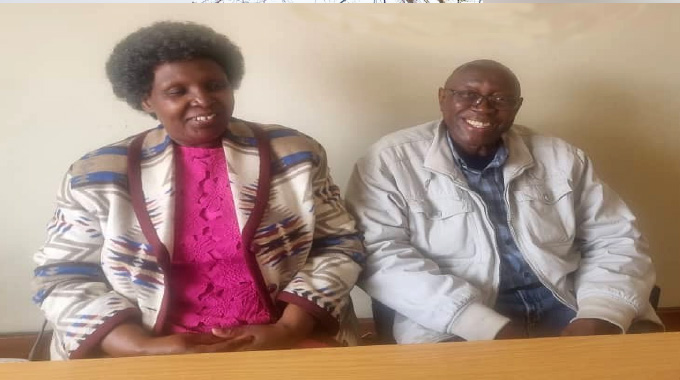
We continue our interview with former freedom fighter Cde Thokozile Nyoni (née Ndlovu) on her experiences during the armed struggle. Cde Nyoni, whose pseudonym was Cde Silabo Bonke, was inspired to join the liberation struggle by the role her family played in organising Zapu activities in Bulawayo, particularly at her family home in Mzilikazi suburb. Her vow to join the armed struggle took a serious turn when she witnessed her mother being subjected to a verbal attack by a white woman in Bulawayo’s Central Business District (CBD). After that incident, she resolved to cross the border into Botswana and then Zambia to join the armed struggle.
In our last edition, she narrated how she travelled from Bulawayo in the company of her cousin and his friend until they reached the last villages on the Zimbabwean side, after successfully fooling the Rhodesian security forces by claiming they were locals visiting their father, who was admitted to Brunapeg Mission Hospital in Mangwe District. Today, Cde Nyoni who also trained as an intelligence officer in Yugoslavia continues to recount her journey to Botswana, her stay at Victory Camp (VC) in Zambia, and the hardships she and her colleagues encountered there. She also speaks about the tough training she received at Mkushi, which she believes was not different from that given to their male counterparts at camps such as Mwembeshi and CGT. Below are excerpts from the interview. Read on…
MS: In our last interview, you spoke about being accommodated by villagers living near the border with Botswana. Let’s resume your story from there.
Cde Nyoni: We arrived at that place that is villages near Brunapeg around 11pm and spent the night there. We slept at a homestead where the owner guided us in the early hours of the morning to the border area. We then managed to cross into Botswana without any incident. In the villages across the border, we found both Tswana and Ndebele-speaking people. We eventually made our way to Francistown, where we reported our presence at a police station. The police then took us to a refugee camp in Francistown. The camp was divided into male and female sections. We found that people were being moved to Zambia for military training.
MS: How long did you stay in Francistown?
Cde Nyoni: I stayed in Francistown for about eight days before we were flown to Zambia. It was an exciting trip as it was my first time flying. At Lusaka International Airport, ZPRA personnel were waiting for us. From the airport, we boarded Kraz trucks. Female recruits were taken to Victory Camp, commonly known as VC. The camp had previously been used by our colleagues from the MPLA of Angola. They left the camp to ZPRA after gaining their independence in 1975. VC housed only female recruits, with men serving as security personnel and commanders.
MS: Tell us about VC. How was it?
Cde Nyoni: Besides the female recruits who were going through military training, there were also children. Some women had babies there. It was a refugee camp of sorts, and at the same time a transit camp for female combatants. The conditions, however, were far from pleasant. The barracks were made of zinc roofing sheets, and there was a big hall, which comrades called Big Bhawa. The camp was overcrowded because of the large number of people. It was also infested with lice, and over time it became less embarrassing to have lice in our clothes. Eventually, comrades even started calling the lice “comrade”. The good thing, though, was that there were no food shortages. The regular diet was isitshwala with kapenta fish, cooked in large drums. It was common to find snail shells among the fish. Comrades would simply pick the shells out, throw them away and continue eating. The situation hardened the girls. The camp was also supplied with beans and milk for the children.
MS: When was this?
Cde Nyoni: That was in 1977, and we found there the girls who had been taken from Manama Mission by the guerrillas.
MS: So, how did your day begin at VC?
Cde Nyoni: The day started with a road run, followed by toyi-toyi sessions and other rudimentary military drills. Later, came the time when we were selected to go for military training at Mkushi. We were the pioneers of that camp, which was an exclusively women’s military facility. The criteria used to select trainees were physical fitness and height. Our group cleared the bush and constructed the barracks at Mkushi. We prepared everything and it wasn’t easy. The camp was located deep in the bush, and the terrain was very difficult to navigate during the rainy season. Sometimes we would go for days without food because the vehicles bringing supplies would get stuck in the mud. We would then be ordered by the camp command to go and fetch the food ourselves. Despite being girls, we carried those 50kg bags on our shoulders.
MS: How was your training?
Cde Nyoni: The first camp commander at Mkushi was the late National Hero Cde Billy Mzamo, who was later succeeded by Cde Phinda (Lawrence Makwarimba). When Mkushi was bombed, Cde Phinda was the commander, and personally, I feel he was at fault. The disaster could have been avoided if he had acted in the best interests of the camp and the revolution. However, I will speak about that on another day. The training itself was the usual ZPRA type, tough. The instructors included both men and women. It was very rigorous; it was not child’s play. We were trained in weapon handling, including the use of firearms such as AK-47 assault rifles. We were introduced to judo for self-defence, focusing on landing, blocking, throws and kicks, which were encouraged to be vicious. We also trained in close combat, such as bayonet charges. There were obstacle courses involving jumping, crawling and negotiating various barriers. We did road runs carrying kit bags for endurance. We also had topography lessons where we mastered map reading, inland navigation (day and night), compass use and sketching. Everything the men did at their training camps such as Mwembeshi and CGT, we also did at Mkushi.
MS: Going through such a rigorous training regime, didn’t you regret joining the armed struggle?
Cde Nyoni: Not at all. It was tough, but we were determined to fight the colonial Government. Of course, we missed home, but regretting joining the armed struggle was never on our minds. The tough training we received is the reason the Smith regime failed to wipe us out when they bombed Mkushi on 19 October 1978. Even when the Rhodesian forces ordered us to surrender, we refused because we had been hardened. We remained on the positions we had concealed ourselves despite the uncertainty of the situation. Unfortunately, we lost quite a number of comrades during the bombing, but the majority of the casualties were from the second group that had only just begun training.
To be continued next week with Cde Nyoni talking about the bombing of Mkushi and her training as an intelligence officer in Yugoslavia.