Chronicle Editor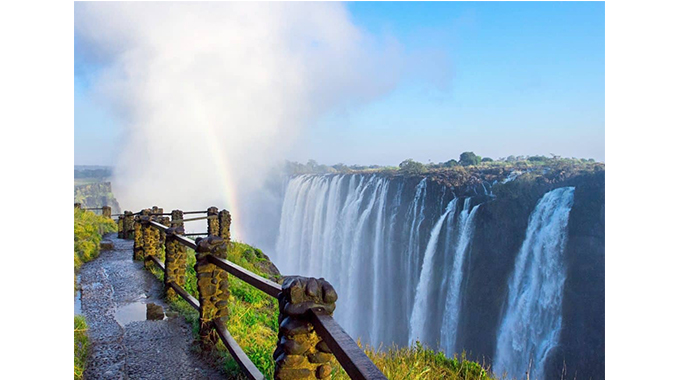
Zimbabwe’s majestic Victoria Falls is one of the world’s 7 Natural Wonders and a UNESCO World Heritage site.
While the breath-taking falls are neither the widest nor the highest in the world, when the river is in full flow it does form the largest cascading sheet of water. For millennia the falls existed undiscovered by anyone outside of Africa.
The first European to see the famous falls was David Livingstone who loyally named them after his Queen Victoria although the locals use the name Mosi Oa Tunya, which means “the smoke that thunders”, referring to the crashing noise of the falls and the towering mist that rises above it.
Signs of human inhabitation around the falls date back to 3 million years ago during the Stone Age. Further along the line, there is evidence of the Khoisan people and their descendants over the centuries.
The Khoisan were eventually displaced by Batoka tribe who still remain in the area today, joined by other tribes such as the Matabele, the Lozi and the Makololo. In 1855, it was the Makololo who introduced the falls to the missionary and explorer stone who went on to tell the rest of the world about their glory.
He famously said “No one can imagine the beauty of the view from anything witnessed in England. It had never been seen before by European eyes; but scenes so lovely must have been gazed upon by angels in their flight.”
Livingstone had his first sight of the falls from an island that now bears his name and can still be visited today. He reached the island by dugout canoe, escorted by Chief Sekeletu. After white settlers of Southern Africa heard of this amazing wonder to behold they started travelling to the area by horseback, ox wagon, and even on foot.-jenmansafaris


 Online Reporter