admin
admin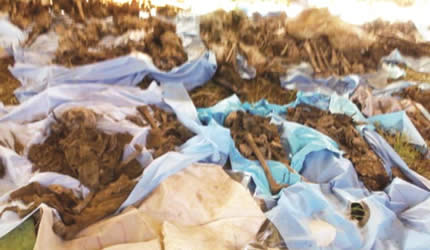
From there, ghostly figures sneaked into the country in the dead of the night, fighting for the liberation of their motherland, sacrificing their lives and at times, paying the ultimate price.
It was two-way traffic!
Firstly, boys and girls, men and women crossed into Zambia, Tanzania and Mozambique, among other countries.
Secondly, they would return after training and armed to fight self-proclaimed Rhodesian supremacy.
Others never got the chance to train, but still fought.
They came back into the country as Zanla and Zipra forces to fight, fight and fight, oblivious of the dangers of predatory Rhodesian forces that stalked them like lions stalking prey.
The Rhodesians, with their superior weaponry, sophisticated war planes and military hardware, were beginning to feel the heat. The revolution was becoming unstoppable.
Early one wintry morning at dawn, the time elephants bath and the time the village cock crows to announce imminent sunrise, women in Kambamura Village, Chahwanda communal lands in Mt Darwin, woke up to fetch water from a well on the outskirts, as usual.
The year was 1978.
It was common practice for village women to sweep the hearths of their homes early then trickle to the well to fetch water before it was disturbed by too many plunging buckets.
Each woman needed to fetch clean water. The first woman to visit the well was usually greeted by a chorus of discordant frogs that normally went suddenly quiet in protest. No one really cared about the protest, because no one understood whether the frogs did not want people to fetch water or they did not want to be disturbed from their uncharacteristic signing.
Elizabeth Plaxedes Deke, was one of the first few women to take to the well.
At the well she met freedom fighters and was impressed by the few females she saw in the group.
She had been dying to join the liberation struggle.
She had been dying to contribute to the birth of Zimbabwe. Many girls her age had joined the struggle.
It needed courage and substance. It needed determination. It needed patriotism. It needed sacrifice. It was the mantra of the time. She took up the opportunity and abandoned her bucket.
Her mother, Mbuya Chikadzi, waited at the house.
Old, frail with wiry dark and cracking skin, Mbuya Chikadzi now detested fetching water or firewood. Elizabeth did it for her. She was certainly towards the sunset of her life.
The sun rose but Elizabeth did not come back.
Other village women came back and performed their normal domestic chores. The women prophesied ignorance of Elizabeth’s whereabouts.
She hobbled to the well at around mid-morning. The bucket lay near the well. Elizabeth was not there. There was no trace. Mbuya Chikadzi learnt three days later that Elizabeth had joined the war.
That was the last she saw her. Elizabeth’s brother ran out of words. It was the in thing that time. After all she was brave. She wanted to see a free Zimbabwe.
She wanted to liberate her country.
At independence in 1980, freedom fighters came back from the bush. The bush meant Zimbabwe, Zambia, Mozambique, Tanzania and other regional countries but Elizabeth did not. Rumour was that she had been killed in combat.
No one really gave an official account.
Even the reserve force that had been left behind in the bush until independence, later returned home but she was nowhere to be found.
In 1981, one of Elizabeth’s brothers gave birth to a baby girl and named her after his sister.
Elizabeth Plaxedes Deke was born.
The family forever remained haunted by the whereabouts of Elizabeth senior.
In 1994, Elizabeth started her secondary education.
“While in class I felt hot and numb in the brain. I lost consciousness and when I regained consciousness I was home, sitting alongside my mother. The whole family was in the house. I was sweating. I was thirsty. It was like I was waking up from sleep. I could, however, not understand myself.
“I remembered that the last time I was in the form one classroom but I was now home. They all asked me if I was fine. My father explained to me that I had gotten possessed and came from school like a whirlwind, running, turning, twisting and demanding to be exhumed from Rushinga and be reburied in Kambamura near grandmother’s grave
“This was to repeat again and again until I dropped out of school. I then got married and it recurred until I was divorced, for it. The trances destroyed my marriage after just giving birth to my first child. Thereafter, I never liked men. Up to now I don’t date anyone,” explains Elizabeth.
Elizabeth Jnr’s mother Pedia Deke, remembers all the incidents when her daughter became possessed.
“The first day was shocking. We saw her come home running and shouting. Suddenly she sat down near me and her father and brothers quietly. She spoke in shriek of a voice.
She said she was Elizabeth senior. She died at a place called Magaranhewe in Rushinga and that she wanted to be reburied properly next to her mother’s grave.
“Later she would come back and demand that if we did not rebury her, there would be a curse bestowed upon the family. No one would prosper in any endeavour. In 2010, it became worse. And we were all forced to believe her story and we approached war veteran leaders here who agreed to accompany us to the place.
“As soon as we got to Magaranhewe, Elizabeth Jnr, jumped off the moving car and ran towards a valley near a hillock. There she lay on the ground, pointing to a stone. Everyone followed. By just removing the stone, we could see the shallow grave. There we found her remains.
“We then exhumed the remains and reburied her in Chahwanda. Since then, my daughter has been fine. She is now okay. I think the job was done because we are a family that believes in our tradition,’’ she said.
The village soothsayer the ageless fountain of wisdom and knowledge, says there are many who still lie shallow graves in the valleys and mountains, who should be a reminder to many of the blood that was shed for the liberation of Zimbabwe.
The war was never a joke. It was not a stroll in the park. It was dangerous.
It was for a free Zimbabwe.



 Online Reporter