

 Online Reporter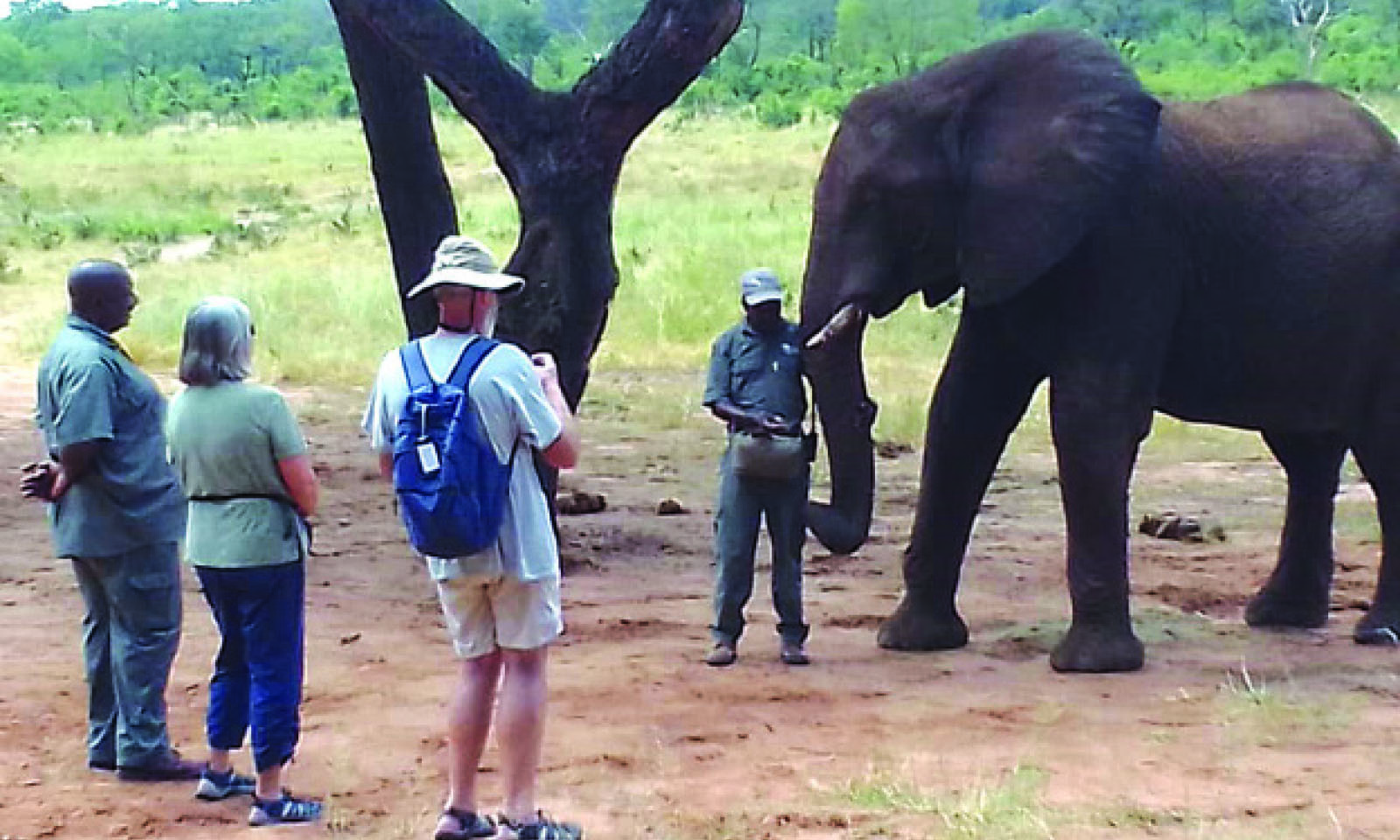
Rutendo Nyeve
Victoria Falls Reporter
THE sun rises over Jafuta, just on the outskirts of Victoria Falls, painting the vast landscape in hues of gold and amber.
The air hums with the distant rumble of elephants — gentle giants whose lives, once shaped by human demands, now tell a different story.
This is the story of Elephant Crew (Elecrew), a company that once offered elephant rides but now stands as a beacon of conservation, education and profound emotional connection between humans and elephants.
Years ago, the elephants under then Elephant Back Safari’s care knew a different existence. Their backs bore the weight of tourists, their days dictated by commands rather than choice.
The international backlash against elephant riding was fierce and unrelenting, voices rose in condemnation, calling it what it is: exploitation.
So it had to change. On Friday Zimpapers caught up with Elecrew’s general manager Liberty Nyaguse at the company’s base just outside Victoria Falls, who reflected on this turning point.
“The Elephant Crew is operating out of Jafuta here in Victoria Falls. We look after a herd of eight elephants every week. We started with 12, and we are now down to eight. The background of these elephants is that they were, some time back, being used for elephant rides,” he said.
“Until that activity received very bad publicity internationally, which obviously meant that it was not something that we could, or the company then, could continue with.”
Elecrew made a choice, not to abandon these elephants, but to protect them. Instead of releasing them into an uncertain wild, they chose conservation.
What emerged was not just a shift in activities but a transformation in philosophy. Elecrew became more than a tour operator, it became a sanctuary of learning, empathy, and harmony.
“We now have a conservation programme where we manage the elephants out of Jafuta. We also realised that we have population settlements around the estate, and in general terms, the settlements are affected by elephants.
“One of the things we do at Elecrew is to manage and mitigate human-wildlife conflict, elephant conflict actually,” he said.
The challenge was immense. Elephants, majestic yet misunderstood, often clashed with local communities. Crops were destroyed, fear festered, and resentment grew.
Elecrew knew that for conservation to succeed, people had to see elephants not as threats, but as fellow creatures deserving of respect.
The heart of Elecrew’s transformation lies in its signature experience: ‘Through the eyes of an elephant’.
This is not just a tour, it is an emotional pilgrimage into the soul of an elephant.
Visitors stand shoulder-to-trunk with these gentle giants, feeling the warmth of their breath, the rough texture of their skin, the deep, knowing gaze in their eyes. Here, humans do not command, they listen, they learn and they feel.
“Once you see the world through the eyes of an elephant, you begin to appreciate elephants a little bit more,” said Mr Nyaguse.
And what do these eyes reveal? Elephants are mirrors of emotion, they grieve, rejoice and form bonds deeper than many humans ever will.
“One of the things we have in common with elephants is the fact that they do tend to feel empathy and sympathy. We have had situations where people are in grief, and elephants tap into that grief. Their behaviour changes. You can feel that they are feeling the pain of the person,” he said.
There are moments when an elephant, sensing sorrow, will press its forehead gently against a weeping visitor, as if to say, “I understand.”
There are times when they rumble in laughter, their trunks playfully nudging those who smile.
They communicate in ways beyond words, through touch, through presence, through an emotional intelligence that humbles even the most sceptical observer, Mr Nyaguse narrated.
Elecrew’s mission extends beyond the elephants, it reaches into the hearts of the people who share the land with them.
“We do a lot of education. The idea being that whatever people do not understand, they can destroy,” he said.
Schoolchildren, tourists, and local farmers are taught not just to coexist with elephants, but to respect them.
Community guardians patrol the fields, using non-lethal methods to deter elephants from crops. The message is clear: elephants are not the enemy, they are neighbours.
“We have a community guardian in Ward 1 of Hwange who helps us monitor and protect fields from elephants. At the end of the day, we want communities to feel comfortable doing their agricultural work while living side by side with elephants,” Mr Nyaguse said.
The journey from elephant rides to elephant empathy was not easy. It required humility, courage, and an unshakable belief in redemption, for both humans and elephants.
Today, Elecrew stands as proof that change is possible. That an industry once built on exploitation can transform into one of education and emotional connection. That elephants, so often misunderstood, can teach humanity about compassion.
As the sun sets over Jafuta, the elephants gather, their rumbles vibrating through the earth like a shared heartbeat. They are no longer just attractions, they are teachers, and they are healers. They are living testaments to what happens when humans choose to see the world through the eyes of an elephant.
Meanwhile, stakeholders have called for this united approach to elephant management, emphasising the need for communities to benefit directly from conservation efforts.
The appeal was made during a recent elephant management review meeting in Hwange, where experts discussed strategies to sustainably manage Zimbabwe’s growing elephant population.
Zimbabwe Parks and Wildlife Management Authority spokesperson Mr Tinashe Farawo highlighted the importance of inclusive planning.
“We were gathered here in Hwange to discuss the review and upgrading of our elephant management plan. From 2020 to 2025, it was a five-year document,” he said.
“This process started in 1992, with plans guiding us on what needs to be done. We discussed emerging issues, technology, and how best to ensure our communities benefit while sustainably managing elephants.”
Mr Farawo cited financial challenges and called upon stakeholders and partners to help manage this resource for community benefit.
The new management plan has been extended to a 10-year strategy from 2026to 2036, ensuring broader stakeholder engagement.
“We have professional hunters, communities, photographers, and tourism operators all contributing. Tourists come to see elephants, so we must work together,” he said.
Echoing these sentiments, chairman of the Gwayi Valley Conservation Area Mr Mark Russell stressed that communities must be shareholders, not just stakeholders, in elephant conservation.
“Elephant management should be wholly involving.
“Communities living with elephants should be shareholders, appreciating their true value,” he said.
“Shareholding gives a sense of ownership, unlike stakeholders who have lesser influence. Communities are the custodians of these elephants and must not be excluded from planning or beneficiation.”


