malvernmugadzikwa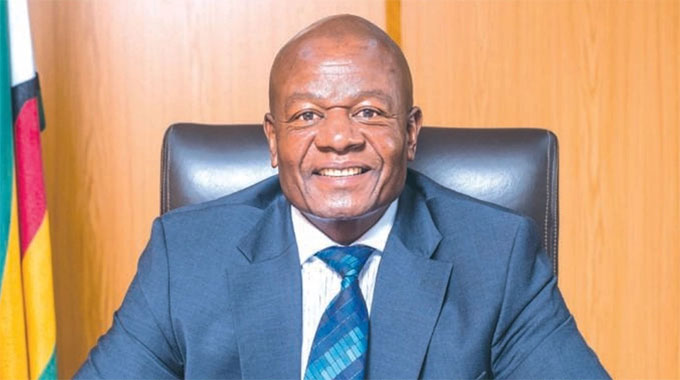
In recent reassignments made by President Mnangagwa, Mr DANIEL GARWE was appointed the Minister of Local Government and Public Works. In an interview with our reporter EMMANUEL KAFE, Minister Garwe shared his priorities and vision for the ministry.
*************
Q: You were recently reassigned to the Ministry of Local Government and Public Works. Can you outline your major priorities as you assume your new role?
A: The main priority revolves around the local authorities’ service delivery blueprint that was launched by President Mnangagwa on November 1, 2023.
The blueprint clearly outlines the major service delivery areas that we have to address and achieve as a sector.
The implementation of this blueprint is the panacea to the challenges of the whole sector.
In a nutshell, my immediate priority is to ensure that what is prescribed in the blueprint is achieved for the betterment of our communities.
If you look at the blueprint, there are four main issues that have to be achieved by local authorities before June 30.
These are the preparation of masterplans by all 92 local authorities; preparation of valuation rolls; establishment of departments of spatial planning and land management; and functional enterprise resource planning (ERP) systems.
Let me state now that I have no appetite to extend the deadline, so all local authorities must work towards achieving these.
We also have a number of construction projects dotted around the country.
The other priority is to ensure that these are completed and put to use for our people.
Most of these are Government complexes and once they are done, our civil servants will have conducive offices to work from as they implement our President’s vision to ensure that we achieve an upper middle-income economy by 2030.
Q: Access to clean water, sanitation and reliable waste management are crucial for residents. What strategies do you plan to put in place to improve these services?
A: To address a number of issues in local authorities, not just water, we are coming up with minimum service delivery standards for all local authorities.
So, at the moment, the ministry is finalising minimum service delivery standards that will guide local authorities and they will also act as a yardstick to determine whether a local authority is competent or not.
The following areas will be assessed starting this year: water supply, wastewater management, solid waste management, corporate governance, roads, and public safety and health.
Q: Most local authorities have been red-flagged for failure to abide by sound corporate governance. What will you do to ensure that there is proper corporate governance in local authorities?
A: During my tenure, I am going to ensure that local authorities become more accountable and transparent.
Those officials who do not adhere to good corporate governance will not be spared but will be made to account for their behaviour.
Local authorities lagging behind with their audits will be made to catch up, and those responsible for not meeting the statutory demands will be held accountable.
In addition, local authorities will be directed to increase the use of modern systems to deliver services, and this includes the adoption of the relevant enterprise resource planning.
Q: Last year, President Mnangagwa unveiled a blueprint to enhance service delivery — “A Call to Action, No Compromise to Service Delivery” — which all local authorities are expected to implement. Can you outline how much progress the local authorities have made in implementing the blueprint?
A: Teams comprising experts from the ministry have been dispatched to provinces to assess progress. And we have offices of district development coordinators working with local authorities to ensure that set targets are met and highlight where support is needed.
From preliminary observations, most local authorities are on course to meeting the targets set in the blueprint.
Q: Outline the Government’s plans for response planning and mitigation, particularly in light of the El Niño-induced drought and the need for mechanisms to protect the public from future disasters?
A: Zimbabwe, like most SADC (Southern African Development Community) countries, is in the grip of the 2023/2024 El Niño -induced drought, which has resulted in massive crop failure, as well as depletion of water resources and pastures.
The El Niño-induced drought has indeed affected most sectors of the economy, such as food security; nutrition; health; water, sanitation and hygiene (WASH); education; social protection; shelter; agriculture; energy and wildlife.
In light of the above, President Mnangagwa declared a State of Disaster with regard to the El Niño-induced drought for both the urban and rural areas of Zimbabwe.
The Government, as coordinated by the Ministry of Local Government and Public Works, developed a domestic and international appeal for assistance.
The appeal contains sector requirements to the tune of US$3,9 billion meant to address search and rescue, mitigation and resilience building within our communities.
Priority is being accorded to food mitigation strategies, where the Government will
import grain; provide water through borehole drilling and equipping, riding on the Presidential Borehole Drilling Programme; championing school-feeding programmes and strengthening the BEAM programme, among other initiatives.
Boreholes drilled under this programme shall be used to provide water for village business units, with a view to improving livelihoods during and after the El Niño drought.
All these initiatives shall ensure that no one and no place is left behind, particularly special interest groups such as persons with disabilities, women and children.
Q: Are there any initiatives to improve the welfare of traditional leaders?
A: As a ministry, and the Department of Traditional Leadership Support Services, we have a programme to improve the welfare of our traditional leaders and also their functionality. An example is the Presidential scheme that offered vehicles to facilitate their work.
Chiefs have also been certified to be marriage officers; hence, they are now in a position to solemnise marriages in their jurisdictions.
They have been trained by the Ministry of Justice, Legal and Parliamentary Affairs.
The Civil Registry Department also has a programme where all village heads have been allowed to notify them of any occurrence of a birth or death for its vital statistics programme.
We also have a programme to enhance capacity and welfare of traditional leaders through training for development, as these village heads chair the developmental committee, as well as provide community plans and programmes funded by devolution funds.
Q: Local economies are the backbone of national development. How is your ministry supporting local authorities in attracting investment and fostering economic growth within their jurisdictions?
A: Through the decentralisation and devolution agenda, the ministry has basically empowered local authorities to ensure that they grow their economies.
For example, the devolution funds are used to promote the services that are helping people at grassroots level, and this resultantly contributes towards the growth of the local GDP (gross domestic product).
We also facilitate investments by identifying potential investors that local authorities can engage so that they foster relations.
For example, whenever there are conferences, we also include officials from local authorities so that they have the opportunity to interact with investors and create links that can bring in development.
The ministry, apart from approving local authorities’ budgets every year, also provides technical support so that local authorities come up with sound budgets that conform to best practices.
So, in a nutshell, all the support we render to local authorities is meant to ensure they grow their economies at that level.
Q: What are your plans to address the growing menace of land barons, particularly in Harare and Chitungwiza?
A: The ministry’s position on land barons is clear — No to land barons!
Let me take this opportunity to warn those land barons that no matter your political standing, your time is up.
We will not allow this disorder that is caused by greedy and selfish people.
We are not in election mode, but we are in development mode and want to ensure that development in our cities is being done in a planned manner.
If you look at the “Call to Action”, it addresses this issue because local authorities are now mandated to come up with masterplans, and these plans will guide any development going forward, and we will not tolerate anything done outside the masterplans.
Q: What measures are you implementing to ensure effective and transparent utilisation of devolution funds?
A: Cabinet has approved the Zimbabwe Inter-Governmental Fiscal Transfer System Administrative
Manual, which basically spells out how the funds will be managed and
used.
For example, devolution funds will now be deposited into a dedicated ring-fenced bank account requiring up to six signatories and monthly audits by a designated senior official.
This will deal with unscrupulous local authorities that were using devolution funds to, say, pay salaries.
Devolution funds are not meant for salaries or any other uses except what is stipulated by the law.
So, in short, this manual will plug any loopholes that local authorities could have been using to divert the funds.
Q: What strategies do you have to improve the public transport management system in urban areas, including any potential revamping of the Zimbabwe United Passenger Company (Zupco)?
A: The ministry has come up with a number of strategies that are meant to improve urban transport systems.
We are developing and reviewing the regulations that guide operations of the urban transport sector (a draft Statutory Instrument was adopted by Cabinet).
While Zupco is now under the Mutapa Fund, we understand that they are also continuing to procure more buses, as well as facilitating the franchise system.
The Government is also facilitating the recapitalisation of bus companies through the waiver of import duty on buses for Zupco and private bus operators.
We also work with local authorities in coordinating the enforcement of the municipal/council traffic by-laws
and regulations by the relevant agencies.


 Online Reporter