

 admin
admin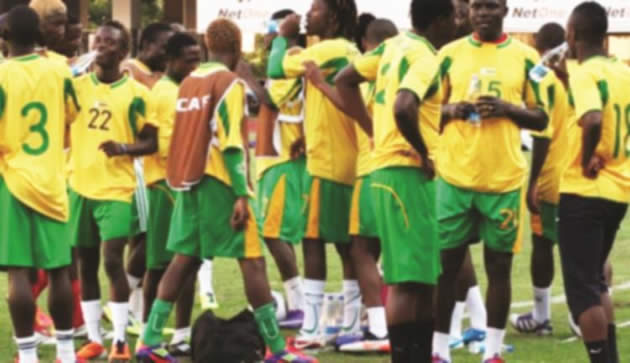
Tichaona Zindoga My Turn
There are moments that one thoroughly enjoys as a writer and columnist, like I am having these days. I have always taken the feedback on a story or issue that I raise as the ultimate barometer of the cogency or the pertinence of my ideas. You do not get the same when you are blithe or ambivalent.
I like to take strong positions.
Some people congratulate, commend me; others disagree and choose to confront me.
The latter did happen a couple of weeks ago when I decided to give my two cents’ worth in the whole prophets and miracle hullabaloo.
So early in my working day that Wednesday, I got a not so complimentary visitation from a member of a particular church who felt duty bound to defend the prophet whose church he goes to and whom he thought I had slighted.
We haggled.
My point was simply, and this always remains my best defence, I had a right to join a national debate and I was entitled to holding and expressing my opinions.
See, the beauty about the newspaper, and in particular the op-ed section, is that people get to have a chance to respond to issues and writers.
There is really no need to be personal, like this one guy that I rode the elevator with that happened to have been referenced in my prophets/miracle piece and he chose to confront me, reminding me to keep out of certain territory.
It is all very challenging and fun really when you pour out your heart in the manner of a column like this and people pour their hearts out to you.
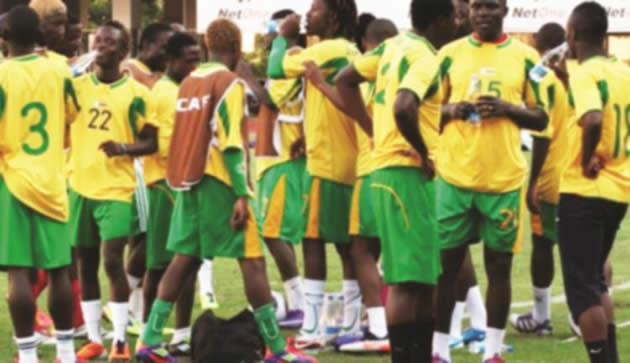
Like what happened after last week’s “Keep your Bryan Adams, we keep our Warriors” piece.
This piece elicited a lot of responses from the readers and our online platforms were abuzz with comments and reactions.
And boy, did I not court trouble for my poor soul!
I was accused of being racist.
Hamid Sirdar wrote a letter, which we duly published in The Herald in response to my Adams’ piece.
Yet someone called on the Minister of Information, Media and Broadcasting Services to sack me from my precious job.
Still, one invited me for a drink.
Here is what Friendly wrote:
“Dear Mr Zindoga,
As a white that grew up in the Rhodesian days, I am probably one of the people that you have the least respect for. I would be happy to meet you for a beer and chat about our shared history. You may walk away with a ‘I knew they were all evil’ attitude but I am willing to bet that you would probably have a few insights and a new mate. Leave your email address and I will send you my phone number. The beer is on me if you end up less happy and on you if you feel better! No agenda, no tricks . . . just an offer to talk. Cheers.”
Not all were this hospitable.
I was attacked.
I was called names.
I deserve all of this.
It is all because of the choice that I made as a writer and I know I must be challenged, which is natural because we do not live in a monolithic society, which is neither possible nor desirable.
I will not apologise.
I was actually shocked to be called “racist” because I do not consider myself such a depraved fellow, although I am pretty conscious of both the biological and political dynamics of race.
I am one of the millions of black Zimbabweans that love white people because we are naturally friendly, hospitable and accommodating.
This trait, ironically, led to the blacks of yore to lose their land, country and precious lives to the same whites.
But the black people of Zimbabwe are a forgiving lot and even after what happened during the war of liberation, few people hold racial grudges from that period.
It is even harder for those of us born well into Independence to hold the sins of the white ancestors against their scions.
Most Zimbabweans with white connections readily assimilate and call them “Murehwa”, a local totem.
The African, like me, is eternally looking for a relation and relationship, the antithesis of which philosophy is generally practiced elsewhere on the globe.
The other wrong basis for my being labelled racist was the failure to appreciate the simple literary device in which the Bryan Adams show, which was held at a premier venue in the capital and was fortunately or unfortunately attended by whites to the exclusion of blacks whether intentionally or otherwise, became a symbol on its own being juxtaposed with a football match that engrossed the whole nation.
Exclusion and segregation, where it is done intentionally, is deplorable.
We must strive for inclusivity and cohesion.
Zimbabwe has been polarised for long.
This is unfortunate.
We have been polarised, nay, polarised ourselves, along tribe, religion, politics and gender.
Religious intolerance is going to be the next big, sad thing.
Mark my words.
There should be more things that unite Zimbabweans than divide them.
The fundamental things should be working for the good of mankind.
This stems from certain inalienable imperatives such as the sanctity of human life; respect for the nation, respect for our diversity and commitment to pursue peace and harmony and happiness individually or as a collective.
The Constitution provides some of the guidelines to this outcome by guaranteeing rights and freedoms, among them freedom of conscience, freedom of expression and freedom of movement and freedom of association.
Yes, you can have your Bryan Adams or the Warriors or both!
The useful caveat is that one’s enjoyment of freedoms and rights should not impinge on the enjoyment of the same by the others.
So no one really is, will be, forced to support things that they do not like.
Some have chosen not to like our own sovereignty, for example, and have worked with those seeking to destroy the same. Yet the biggest counsel would be that we all strive to do whatever promotes love, peace and harmony.
For all its disparities, South Africa presents a model “multi-racial” society, in certain aspects more than others, which is quite commendable.
The recognition that Zimbabwe is for us all is critical. And being Zimbabwean goes deeper than residence in the country, or say an enclave within it.
Meanwhile, I await my beer from Friendly who grew up in Rhodesia who I guess I have much respect for, to show how interested I am in national unity and cohesion even if a beer becomes a common denominator.



 Online Reporter