admin
admin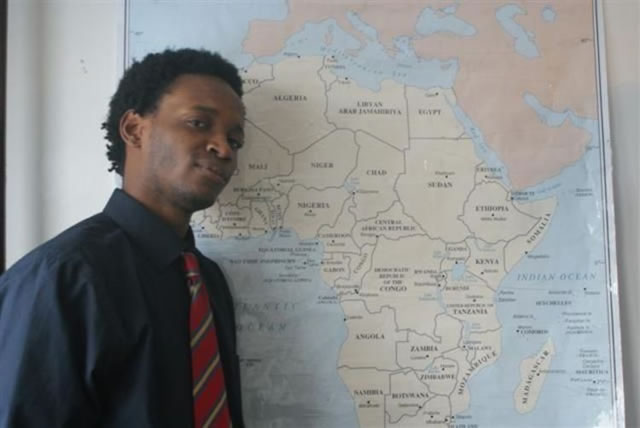

THE Book of African Records is a new brand that has been hitting the airwaves in recent months. It recently hosted the National Schools Quiz tournament won by St Faith’s School. BAR is also responsible for the titbits that appear on ZBCTV before the main news at eight; they have partnered ZBC, Gtel and Chena Millers to bring an SMS competition on the national television.
However, little is known about BAR apart from their programmes on radio and television. The Herald’s Entertainment Reporter Jonathan Mbiriyamveka (JM) sat down with the founder and editor-in-chief of BAR, Errol Muzawazi (EM), to discuss a number of issues including their programmes that viewers can expect to see on the small screen. Below are excerpts of the interview
JM: Who or what exactly is the Book of African Records?
EM: We are an organisation that was officially launched in July 2012 in Harare and is working on gathering, collating, documenting, publishing and publicising information about Africa, particularly positive information.
This effectively means we are here to counteract negative — and often false — publicity of the motherland by global media organisations who base their reports on sensationalism and stereotyping. This negative campaign must be comprehensively replied to through cold facts, hence our tag line “All facts African”.
JM: On what basis do you claim the global media reports are false?
EM: It is public knowledge my brother; the facts speak for themselves.
As a preliminary step in launching BAR, we did a research on 1 000 people in eight European capitals in January 2010, on what the residents there immediately think of when they hear the word “Africa”.
The participants were randomly chosen whilst walking in the streets. Another category said they had never been to Africa. Their responses can be categorised into five common associations with Africa which we call WDWHH: Wars, Diseases, Wild Animals, Hunger, Hot Climate. All this information, they said, is what they read in the European newspapers or watched on their televisions.
But if you think these are “street views” that are inconsequential as far as research is concerned, then I can quote you a learned Oxford University professor of history, who not a long time ago said this of African history: “The history of Africa cannot be studied beyond the advance of colonisation in that continent because African history begins with the conquest of the coloniser over locals; before that it’s all darkness and darkness is not a subject of history”.
This convenient ignorance must be met not with passivity on our side but a robust campaign because at the end of the day it has huge implications economically and even — globally — as far as our dignity and perception is concerned.
JM: What programmes are in place to drive your message home?
EM: We currently have three pilot projects that we are implementing on a Zimbabwean level pending a major launch into the region. We have this year launched “Zim Firsts”, which is a daily infomercial flighted on ZBCTV just before the main news bulletin, in partnership with the Rainbow Tourism Group. Here we identify pioneering heroes in Zimbabwe who were the first persons to achieve something ahead of all other Zimbabweans.
We are also currently in partnership with G-TEL , Chena Millers and ZBCTV in an SMS competition whose main purpose is to educate the public on local pioneers with prizes of smartphones, HD televisions and cars as incentives for participation.
Then we have also revived televised schools’ quiz; we shall utilise quiz as a vehicle of dissemination pan-African knowledge amongst the younger generation so that they grow up knowing that being African and living in Africa is a blessing.
Humanity began in Africa and as such, we have underneath, hidden underground, such history and treasure that are the envy of the world. It’s time to let these hidden treasures roar like the African. These programmes are, however, just pilot projects as we are sharpening our tools and getting ready for a bigger job in the future.
JM: What more can Zimbabwe and Africa expect from the Book of African Records in the future?
EM: Zimbabwe and Africa can expect big things from us from educational, entertaining and quality programming.
JM: How do you gather the records, considering that Africa is a huge continent and you are an organisation based in one country?
EM: We are taking one step at a time. Indeed gathering records in Africa is a huge challenge, which even much bigger organisations with huge budgets face in a similar manner. This is due to the sheer vastness of the African continent coupled with yet-developing communication infrastructure in some of the countries. But with time and improvements in technology, this task will become surmountable by the day. BAR is not a five-year project; it’s an inter-generational project that we want to see going further decades and centuries beyond our own.
We must always tell the African story ourselves. Remember the African proverb: “The lion must tell its own story otherwise the narrative will always glorify the hunter”.
In fact we should not blame the global media for false and negative publicity. Rather, we should ask ourselves what we have done about it as Africans. If a Zimbabwean relies entirely on the BBC or CNN to know what’s happening in Congo or Tanzania, then we have a major problem.
This scenario must be changed as a matter of urgency within the wider context of pan-Africanism or what others like to call “African renaissance”.
JM: What more can Zimbabwe and Africa expect from the Book of African Records in the future?
EM: Zimbabwe and Africa can expect big things from us from educational, entertaining and quality programming.


 Online Reporter